
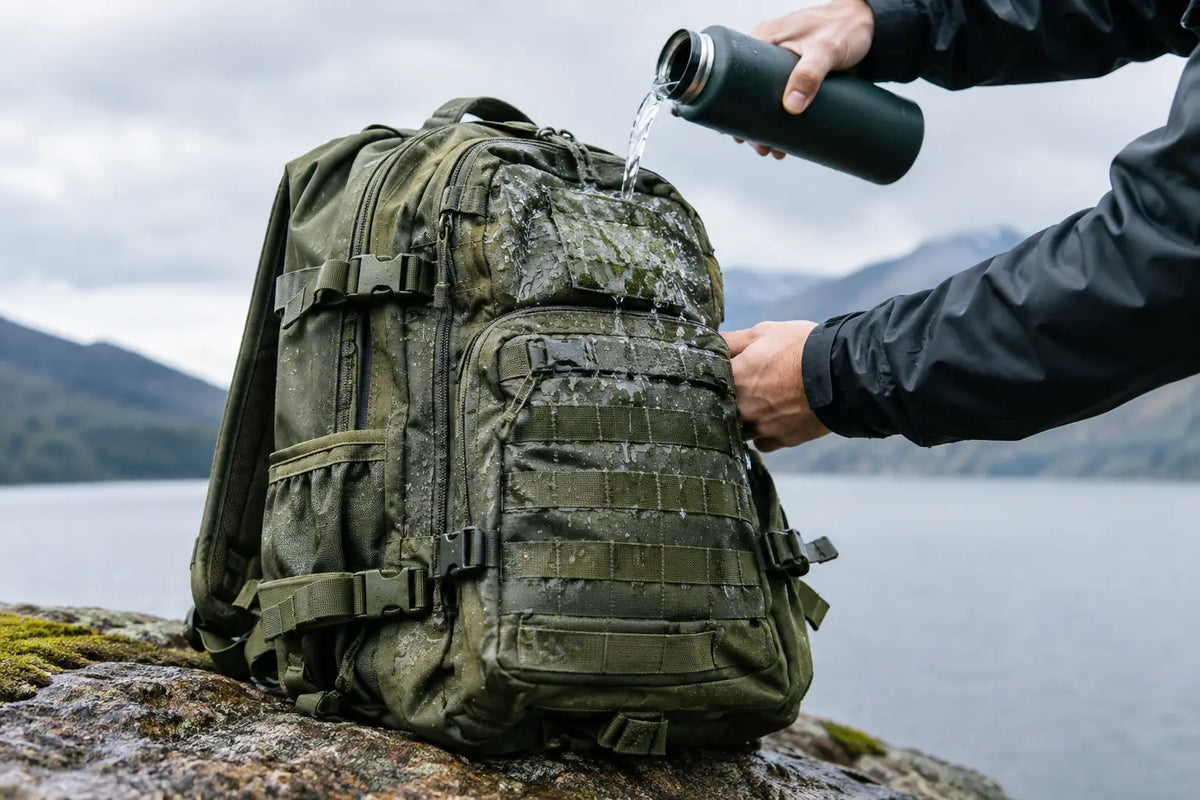
A tactical pack can look ready for any weather, but appearances are not a water rating. So, are tactical backpacks waterproof? Usually, no. Most are water-resistant to a degree, designed to shed a shower and cope with damp ground, but very few will keep every item dry during sustained rain, river crossings or full immersion.
For field use, patrol work, cadet exercises, airsoft weekends or hill days, that distinction matters. A wet change of clothing is inconvenient. Wet navigation equipment, electronics, medical supplies or sleeping kit can stop a trip or compromise your readiness. The right answer is not simply buying the heaviest-looking pack. It is understanding what the materials and construction can realistically handle, then protecting the contents properly.
Are Tactical Backpacks Waterproof or Water-Resistant?
A waterproof backpack should prevent water entering the main compartment even in prolonged wet conditions. That normally requires waterproof fabric, welded or taped seams, and a properly sealed closure such as a roll-top system, watertight zip or dry-bag-style opening. Packs built to this standard are often intended for watersports, canoeing, motorcycling or maritime work.
Most tactical backpacks are water-resistant instead. Their nylon or polyester outer fabric may have a polyurethane backing, a durable water-repellent finish, or both. This makes rain bead and run off initially. It also gives useful protection against mud, spray and a wet vehicle floor. However, water can still find its way through stitched seams, standard zips, drain holes and the back panel when the rain persists.
That does not make a water-resistant tactical pack poor kit. In many cases, it is the more practical choice. Tactical packs need load-carrying strength, abrasion resistance, accessible pockets, MOLLE attachment points and dependable shoulder systems. Fully waterproof construction can add cost and weight, while reducing quick access and making a pack less versatile for general field use.
Where Water Gets Into a Tactical Pack
Fabric is only one part of the equation. A pack made from a tough, coated material can still leak at its weakest points.
Stitched seams
Every conventional stitched seam creates needle holes. On a rain jacket or waterproof dry bag, these are sealed with tape or welding. Many tactical backpacks do not have taped seams because they are not designed as submersible equipment. Under a light shower this may not be noticeable. Under steady rain, especially when the pack is full and seams are under tension, moisture can work through.
Zips and pocket openings
Standard coil zips are a common entry point. Storm flaps can reduce exposure, while reverse-coil or water-resistant zips give better protection, but neither automatically makes a compartment waterproof. Admin pockets, concealed carry sections and quick-access top pockets are particularly worth checking because they often hold the small items most affected by water.
The base and back panel
Putting a pack down on wet grass, a soaked range floor or the bed of a vehicle can drive moisture into the base. The padded back panel can also retain rainwater against the pack when it is worn for long periods. A reinforced base improves durability, but it is not necessarily waterproof.
Openings, webbing and attachments
Hydration tube ports, cable exits, external webbing and side pockets all add useful function. They also create areas where water can collect or enter. The more external organisation a pack has, the more care is needed when judging its weather protection.
What the Product Specification Should Tell You
Do not rely on terms such as “weatherproof”, “all-weather” or “rain-resistant” without looking at the details. A good product description should make clear whether the pack has a water-repellent coating, an internal waterproof lining, a supplied rain cover, taped seams or waterproof zips.
Fabric denier is relevant to toughness, not waterproofing. A 1000D nylon pack is generally highly abrasion-resistant, but it may still leak through its seams and zips. Equally, a lighter pack can be very waterproof if it uses welded construction and a proper roll-top closure.
If a hydrostatic head rating is provided, it indicates the pressure a fabric can resist before water penetrates. It is useful information, though it does not cover the whole pack unless the seams and closures are also designed to the same standard. A strong fabric rating with unsealed seams still leaves vulnerable points.
Be cautious with the word “waterproof” where the manufacturer does not explain how that claim is achieved. For expensive or essential contents, assume that a conventional tactical pack needs an additional layer of protection unless it is specifically described as fully waterproof.
How to Keep Kit Dry in a Tactical Backpack
A rain cover is a sensible first line of defence. It protects the outer fabric, reduces water pressure on seams and keeps much of the rain away from zips. Choose one that properly covers the pack, including its sides, and secure it in windy conditions. A cover will not protect the harness against rain, and water can still enter from the gap between cover and back panel, but it makes a substantial difference in prolonged weather.
For the contents, use waterproof dry bags or roll-top stuff sacks inside the pack. This is the most reliable approach for a field pack because it separates critical items into manageable groups. Keep sleeping gear and dry clothing in one bag, food in another, and electronic or medical equipment in suitably protected pouches. Clear or colour-coded dry bags make organisation faster when working from a pack in poor conditions.
A heavy-duty pack liner is another effective option. This is especially useful when carrying bulky kit that does not suit several small dry bags. Line the main compartment, load your gear inside, then roll or fold the liner shut before closing the pack. A liner protects against rain entering the top and against water coming through the base or seams.
For maps, mobile phones, batteries and documents, use dedicated waterproof cases or pouches. Do not place these loose in an admin pocket and assume a rain cover will be enough. Navigation and communications equipment are often the first items needed when conditions deteriorate, so they should be protected and accessible.
Match the Protection to the Task
For commuting, dog walking, routine airsoft use or short training sessions, a water-resistant pack with a decent rain cover may be all that is required. You are unlikely to need fully waterproof construction if you can dry kit at home or in accommodation shortly afterwards.
For multi-day exercises, wild camping, winter hill travel or deployments where replacement kit is not readily available, internal waterproofing becomes far more important. A soaked sleeping bag or spare base layer can quickly become a welfare issue. In these settings, use both an external cover and dry bags or a liner.
For river crossings, waterborne activity, open boats or work where a pack may be dropped into water, choose a purpose-built waterproof dry bag or waterproof rucksack. A tactical day pack with coated fabric is not a substitute. Even a good rain cover will trap air and shift in moving water rather than seal the pack.
There is also a security consideration. Rain covers can conceal external pouches and make access slower, which may be unsuitable for some patrol, security or tactical applications. In that case, keeping mission-critical items in individual waterproof pouches provides protection without covering the whole pack.
Maintaining Water Resistance
Water-repellent finishes wear down with use, dirt and repeated cleaning. If rain stops beading and begins soaking into the outer material, clean the pack according to its care instructions and consider a suitable reproofing treatment. Do not use harsh detergents, as these can damage coatings and leave residues that attract water.
Inspect stitching, zip tracks and the pack base before a wet-weather trip. Remove grit from zips, repair loose stitching promptly and check that a rain cover has no tears or stretched elastic. Dry the pack fully after use, including the padding and back panel. Storing damp kit in a vehicle, garage or cupboard encourages odour, mildew and deterioration of coatings.
A tactical backpack does not need to be fully waterproof to be dependable. It needs to suit the job, carry its load securely and work with a protection system that keeps essential kit dry. Treat the pack as the durable outer shell, then use covers, liners and dry bags to protect what cannot afford to get wet.