
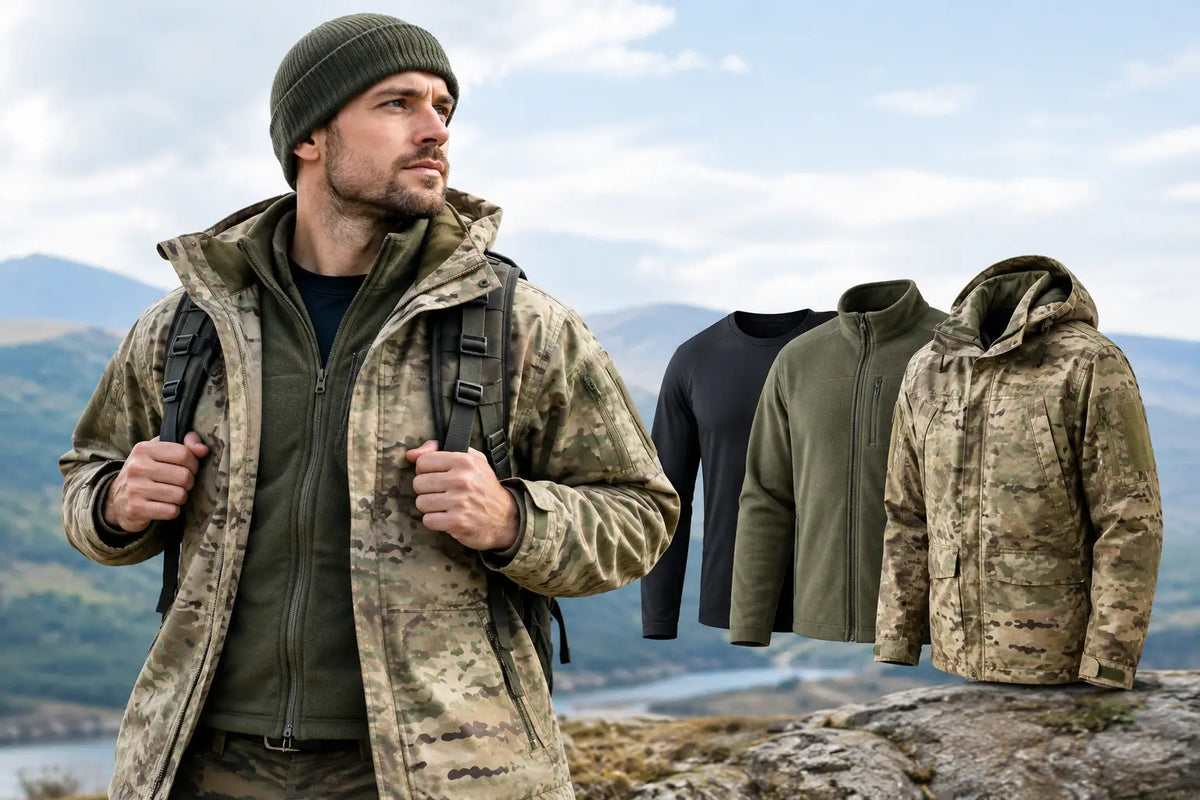
A good army jacket layering guide starts with a hard truth: the jacket is only as useful as the layers beneath it. A field jacket that performs well on a wet patrol can feel clammy during tabbing, and an insulated smock that is ideal on stag can be far too warm for a fast-paced exercise. Build the system around your activity, expected weather and how long you will be static.
For service personnel, always work within current dress regulations and unit policy. For cadets, outdoor users, security staff and airsoft players, the same principles apply: manage moisture first, retain warmth when you stop moving, and protect the whole system from wind and rain.
Start With the Job, Not the Jacket
Army-style clothing is often bought for its toughness, camouflage pattern or familiar cut. Those matter, but layering is principally about temperature control. Before choosing an outer layer, consider the pace of the day. A route march, range day, vehicle-based task and overnight harbour area place very different demands on the same kit.
High-output work produces heat quickly. Wearing a heavy fleece and insulated jacket from the start usually leads to sweat-soaked clothing, followed by a rapid chill once activity slows. In this situation, a breathable base layer, a light combat shirt or fleece, and a windproof or waterproof shell carried in the daysack is normally the more dependable arrangement.
For static tasks, cold sentry duties, fishing, fieldcraft or long periods observing, insulation becomes more valuable. Your body is no longer generating enough heat to compensate for wind, damp and ground-level cold. A lightweight insulated jacket or warm mid-layer kept dry in your pack can make the difference when the temperature drops.
The Army Jacket Layering Guide: Build From the Skin Out
The most reliable setup uses separate layers with separate jobs. This is more effective than relying on one thick jacket to deal with every condition.
Base layer: move moisture away
The base layer sits against the skin, so its priority is moisture management. Merino wool and quality synthetic fabrics both work well. Synthetic base layers dry quickly and suit high exertion. Merino is comfortable over long periods, manages odour well and retains some warmth when damp, though it can take longer to dry and may be less hard-wearing under repeated abrasion.
Avoid cotton for cold and wet field use. Once soaked with sweat or rain, it holds moisture against the body and loses its insulating value. A cotton T-shirt may be acceptable for a warm, dry training day, but it is a poor starting point for changeable British weather.
A close fit is useful, but not restrictive. If the fabric bunches under body armour, webbing or a combat shirt, it will become uncomfortable over distance.
Mid-layer: hold warm air
The mid-layer provides insulation. A fleece is the standard working option because it is breathable, easy to wear and still offers warmth when damp. Choose the weight to suit the task. A thin grid fleece or lightweight fleece works well under a field shirt or smock during active movement. A heavier fleece earns its place in cooler weather when the pace is slower.
Softshell jackets can bridge the gap between a fleece and outer shell. They cut light wind, resist brief showers and offer good freedom of movement. Their limitation is sustained rain. A softshell is not a replacement for a proper waterproof jacket when prolonged wet weather is likely.
For rest periods and cold camps, a synthetic insulated jacket is often more practical than down. Synthetic fill continues to perform better when exposed to damp conditions and is easier to manage in the field. Down offers excellent warmth for its weight, but needs careful protection from rain and condensation.
Outer layer: stop wind and weather
Your outer layer should protect the layers below without trapping unnecessary moisture. There are three common approaches.
A windproof smock is a strong choice for dry, breezy conditions, fieldcraft and general outdoor use. It is quiet, durable and usually provides useful pocket space. It is not designed for heavy rain, so carry a waterproof if the forecast or ground conditions demand it.
A waterproof breathable jacket is the correct choice for persistent rain, exposed ground and wet transport phases. Look for an adjustable hood, storm flap or protected zip, sufficient length at the back, and cuffs that seal over or under gloves. Pit zips are particularly useful when moving under load, as they release heat without fully opening the front.
A combat jacket or field jacket offers versatile everyday protection, especially when paired with a suitable base and fleece layer. It may be shower-resistant, but do not assume it will replace a waterproof shell. Check the fabric specification rather than judging by appearance alone.
Fit Matters Under Webbing and Armour
Layering fails when the clothing cannot work together. A waterproof jacket that is too tight across the shoulders will pull when wearing a rucksack. An oversized fleece may trap air effectively, yet bunch under webbing and restrict access to belt kit. Test the complete system, not individual garments on a hanger.
Put on the base layer, mid-layer and jacket, then add your daysack, chest rig, plate carrier or webbing if you use it. Raise your arms, crouch, shoulder a rifle replica or training aid, and reach into the jacket pockets. Check whether the waist belt covers the pockets you need and whether the hood still turns with your head.
A little room is necessary for insulation, but excess bulk is a liability. It slows drying, snags on equipment and makes temperature adjustment harder. In most cases, it is better to carry one compressible warm layer than wear several bulky layers all day.
Adjust Before You Sweat
The best time to remove a layer is before you feel overheated. Sweat is manageable while moving, but it becomes a problem at the first halt. Open the main zip, loosen cuffs, use pit zips or remove your fleece early rather than waiting until you are drenched.
This is especially relevant when moving from a vehicle to a march, climbing ground with a loaded pack, or starting work after a cold morning. Begin slightly cool rather than comfortably warm. Within ten minutes of hard movement, your insulation requirement will change.
At halts, reverse the process promptly. Put on your warm layer before your core temperature falls. Keep it in a dry bag inside your pack, not loose in an external mesh pocket where it can become soaked by rain, mud or spray.
Weather Changes the Priorities
British conditions frequently bring wind, rain and temperature changes in the same day. Wind can strip warmth from a fleece quickly, which is why a light windproof layer is so useful even when there is no rain. In wet weather, protect dry layers first. Once your spare insulation is saturated, it is no longer a reserve.
In cold, dry conditions, breathability usually matters more than full waterproofing. In mild, wet weather, a shell with good ventilation may be more useful than a thick jacket. In freezing conditions, avoid compressing all your insulation beneath tight webbing for long periods, as compressed fabric holds less warm air.
Camouflage and colour choice may also matter. Match the environment and any organisational requirement, but keep performance ahead of appearance. A practical olive, MTP-compatible or approved field layer is of little use if its fit prevents movement or its fabric cannot cope with the conditions.
Look After the System
Dirty fabric breathes less effectively and water-repellent finishes eventually wear down. Follow the care label, avoid ordinary fabric conditioner on technical garments, and clean mud and salt from zips, cuffs and hook-and-loop closures. Reproof waterproof outer layers when water stops beading on the surface.
Inspect high-wear areas before an exercise or trip: shoulder panels under pack straps, elbows, cuffs, hem drawcords and zip pulls. Small repairs made early prevent a jacket becoming unreliable when you are already exposed to poor weather.
John Bull Clothing customers often need kit that can move between training, patrol-style work, fieldcraft and everyday outdoor use. A sensible layering system does that better than a single expensive jacket because each piece can be worn, packed or replaced according to the conditions.
The practical test is simple: if you can move freely, stay dry enough to retain warmth, and add insulation immediately when you stop, your jacket system is doing its job. Set it up before the weather turns, not after.