
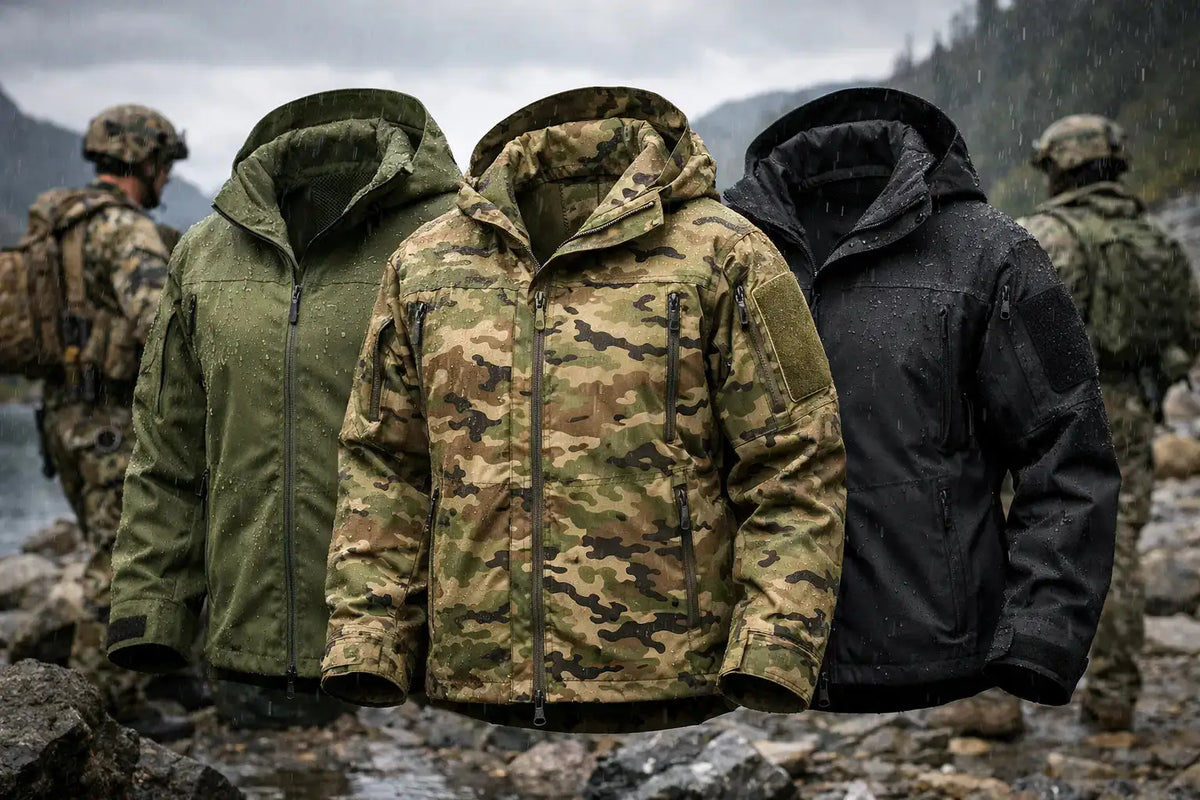
Rain usually finds the weak point first - the shoulders under a bergen, the zip you trusted once too often, or the cuffs that looked fine until the wind turned. That is why choosing the best military waterproof jackets is less about fashion and more about staying effective when the weather closes in. If a jacket cannot keep water out, vent heat, and work properly with the rest of your kit, it becomes dead weight.
A good military waterproof is not always the thickest jacket or the most expensive one. The right choice depends on how you use it. Patrol and field use place different demands on a jacket than range work, cadet training, dog handling, hill walking or static sentry duty. Some users need a hard-wearing outer shell that can cope with webbing and repeated abrasion. Others need something lighter that packs down into a bergen and comes out only when the weather turns.
What makes the best military waterproof jackets
The best military waterproof jackets balance protection, durability and practicality. Waterproof fabric matters, but so does the whole design. A jacket can have a strong membrane and still let you down if the hood does not move with your head, the cuffs are poorly sealed, or the zip storm flap is awkward with gloves.
For military and tactical use, fabric choice often comes down to a trade-off. A heavier shell usually gives better durability and confidence under straps, armour or load carriage, but it can feel warmer and less packable. A lighter shell is easier to carry and faster to dry, though it may not stand up to prolonged abrasion in the same way. There is no perfect answer for every user.
Breathability also needs a realistic view. Every jacket claims it, but breathability drops fast once you are moving hard uphill with a loaded pack. Pit zips, two-way front zips and sensible venting matter just as much as technical figures on a label. If you run hot, ventilation can be the difference between staying dry from rain and getting soaked from sweat.
Best military waterproof jackets for different roles
Field and patrol jackets
For field use, look for a longer cut, proper hood adjustment, reinforced or hard-wearing face fabric, and enough room to layer over a smock or insulation. A patrol jacket needs to work with webbing, chest rigs and bergens without riding up or chafing at the shoulders. Quiet fabric is also worth considering. A shell that crackles every time you move may be fine on the hill, but less useful where noise discipline matters.
Pocket layout is often overlooked. High hand pockets that stay accessible above a belt or harness are more useful than low civilian-style pockets. Large chest pockets can be handy, but only if they do not interfere with slings, straps or plate carriers.
Lightweight packable jackets
If you need a waterproof that lives in your bergen until required, weight and pack size move up the list. These jackets suit shorter tasks, travel, cadet activities and general outdoor use where keeping bulk down matters. The compromise is usually durability. They are ideal as emergency weather protection, but may not be the best choice for repeated heavy field use with rough ground, wire and constant load-bearing.
Cold and wet weather options
Winter use changes the brief. If you are standing around for long periods, a shell alone will not do the job. In cold, wet conditions, the jacket must layer cleanly over fleece or insulated kit without restricting movement. A bit more space through the shoulders and sleeves becomes an advantage. Adjustable cuffs and a hem drawcord become more important too, because gaps that seem minor in mild weather become obvious in driving rain and wind.
Jackets for police, security and general duty
For patrol, security and day-to-day professional use, clean design and mobility often matter as much as outright field toughness. A waterproof jacket for this role should be easy to put on over uniform, comfortable in a vehicle, and smart enough for regular duty wear. Dark colourways, subdued branding and straightforward pocket access are usually more practical than heavily featured mountain shells.
Features worth paying for
Not every premium feature justifies the extra cost, but some do. Taped seams are essential. If the seams are not properly sealed, the rest is irrelevant. A good hood with wired peak or structured brim is also worth having, especially if you work outdoors in sustained rain. It should adjust easily and move with your head rather than blocking side vision.
Front zip protection matters more than many buyers expect. A reliable water-resistant zip or proper storm flap gives real benefit in prolonged rain. Cheap zips are often the first failure point, particularly when dirt, salt and repeated packing start to take their toll.
Cuffs, hem adjustment and sleeve articulation all play a part in real-world comfort. A waterproof jacket should not fight you when reaching, kneeling or handling equipment. If you regularly wear gloves, test whether the cuff closure can actually be adjusted with cold hands.
Best military waterproof jackets by fabric type
Hard shell jackets
Hard shells are the standard choice for serious wet-weather protection. They give the best barrier against wind and sustained rain and are usually the strongest option for harsh use. If you are after one jacket to cover military training, general fieldcraft, outdoor work and hill use, this is often the safest category.
The downside is feel and noise. Some hard shells are stiff, louder in movement and less comfortable for all-day wear in mixed conditions. They excel when the weather is poor, but may feel excessive in lighter drizzle or warmer months.
Soft shell and water-resistant alternatives
Soft shell jackets are often confused with waterproofs. Many are shower-resistant rather than fully waterproof. They can be excellent for active use, range days and cool, changeable conditions because they breathe better and feel less restrictive. But if you are expecting hours of steady rain, a soft shell is not a substitute for a proper waterproof shell.
This is where buyers sometimes get caught out. A jacket can look tactical, feel substantial and still not offer true waterproof performance. Always check whether it is actually waterproof, not simply water-repellent.
How to judge fit properly
The best military waterproof jackets should fit your role, not just your chest size. If you wear body armour, layers or a smock underneath, account for that before buying. A shell that fits neatly over a T-shirt indoors may be too tight once you add cold-weather clothing.
Length matters as well. Shorter jackets work better in vehicles and for fast movement, while longer cuts give better coverage when crouching, kneeling or carrying a bergen. Sleeve length should cover the wrist fully when reaching forward. If it pulls back too far, rain will find the gap quickly.
Do not ignore the hood. Wear it with your usual cap or helmet-compatible layer if that is how you operate. A hood that fits bare-headed but fails over normal headwear is not much use in the field.
Price, brand and real value
Price often reflects better materials, better construction and more reliable weather protection, but only up to a point. Some buyers pay for mountaineering features they will never use. Others save too much and end up replacing a jacket after one hard season. Real value sits in the middle - a jacket built for the conditions you actually face, from a proven brand with a track record in military or professional outdoor kit.
Established names such as Keela and Snugpak are popular for good reason. They are known by users who expect practical performance rather than showroom appeal. When buying from a specialist outfitter such as John Bull Clothing, the advantage is category depth. You can compare proper field-relevant options instead of sorting through general outdoor jackets dressed up as tactical kit.
Common mistakes when buying military waterproofs
One common mistake is buying too heavy for the job. If your waterproof spends most of its life packed away, a bulky shell may be more burden than benefit. Another is buying too light for hard field use and expecting it to survive repeated abrasion under load carriage.
Camouflage choice can also be overthought. Pattern matters if it matches your use, but the cut, weather protection and durability matter more. A poor jacket in the right pattern is still a poor jacket.
The last mistake is judging performance straight out of the packet and then neglecting maintenance. Waterproof jackets need cleaning and reproofing at the right intervals. Dirt, oil and ground-in grime reduce performance over time, particularly breathability.
If you are choosing between several options, focus on your likely conditions, the layers you wear, and how the jacket will interact with your kit. The right waterproof should earn its place every time the weather turns, not just look the part on a product page.