
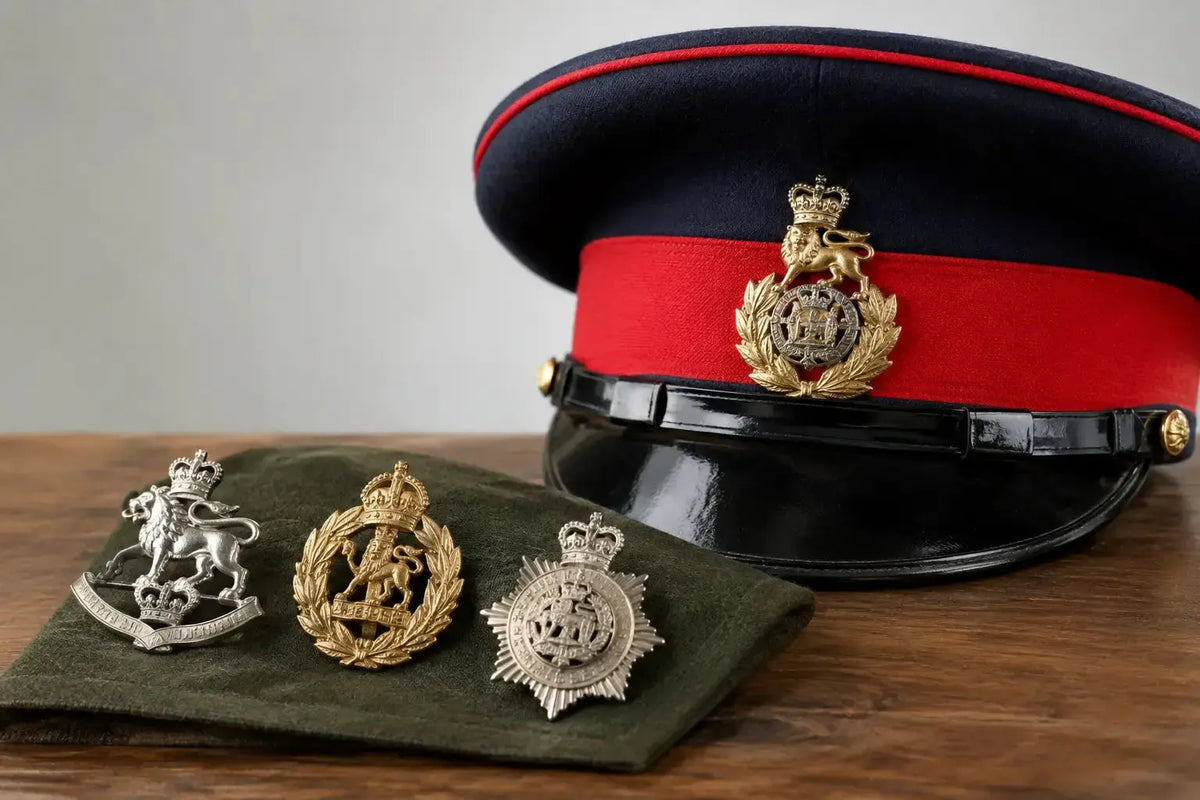
A British Army cap badge is a small piece of insignia with a great deal riding on it. It identifies a regiment or corps, connects the wearer to its history and traditions, and gives a beret or headdress its proper finish. Whether you are replacing a lost badge, preparing cadet uniform, building a display or choosing a presentation gift, getting the detail right matters.
What British Army cap badges represent
Cap badges have long been used to distinguish units at a glance. Their designs often carry battle honours, royal cyphers, animals, weapons, county associations and mottos that reflect the regiment or corps they represent. The Royal Artillery's gun, the Grenadier Guards' grenade and the Royal Engineers' cypher are immediately recognisable examples of designs that have become part of British military identity.
For serving personnel, insignia must be worn in accordance with current dress regulations and unit direction. Regiments have their own customs, while authorised patterns and methods of wear can differ between forms of dress. For veterans, cadets, collectors and families, the appeal is equally clear: a correctly chosen badge is a tangible connection to service, heritage and affiliation.
The badge is not simply decorative. On a well-prepared beret, it provides the visual centre point and makes the difference between a generally military look and correctly presented regimental headwear.
Types of British Army cap badges
The term covers several constructions. They may look similar from a distance, but the fitting method, finish and intended use can be very different.
Staybrite badges
Staybrite badges are lightweight, bright-finish metal badges, usually fitted with lugs to the rear. They are widely associated with service dress and ceremonial presentation. Their crisp detail makes them a popular choice for displays, regiment frames and gifts, particularly where the badge will be seen up close.
Because they are relatively light, staybrite badges can be well suited to berets when fitted with the correct backing and secured properly. The trade-off is that their polished finish can show scratches if stored loose with other metal items.
Anodised aluminium badges
Anodised badges offer a smart, durable finish and are often chosen for uniform presentation. They are usually lighter than traditional brass designs and less prone to tarnishing. The exact pattern, colour and fitting arrangement depend on the regiment or corps and the period represented.
For a commemorative display, check that the badge style matches the era you want to represent. A modern anodised pattern beside older brass buttons and cloth insignia can look out of place unless the display is deliberately showing a progression through service.
Brass and bi-metal badges
Older British Army cap badges were commonly produced in brass, white metal or bi-metal construction. These have substantial weight, strong character and considerable appeal for collectors. Many original examples feature a separate badge and scroll, or multiple metal elements joined together.
Authenticity and condition are especially relevant here. Original badges may show age, polishing marks, darkening or repaired lugs. Those features are not necessarily faults, but they affect value and suitability. A clean reproduction can be the sensible option for a working display, reenactment use or a gift where a uniform appearance is preferred.
Cloth and subdued insignia
Field conditions call for a lower-profile approach. Cloth, embroidered or subdued insignia reduces shine and integrates more effectively with camouflage equipment. These items may be intended for particular tactical headwear or load-carrying equipment rather than traditional berets, so always confirm the intended application before fitting.
How to identify the right cap badge
Start with the regiment or corps, not simply the name printed on a listing. Army reorganisations, amalgamations and name changes mean a familiar title may relate to a historic unit, a predecessor regiment or a current regiment with several recognised antecedents.
Look closely at the design. A crown, sphinx, castle, antelope, bugle horn or wreath may point towards a particular branch of service, but the full badge and its scroll are what establish the precise identity. Mottos are useful too, although some are in Latin, French or other historic forms and can be difficult to read on smaller badges.
The rear fitting is equally useful when selecting a replacement. Traditional lugs normally require a backing plate or retaining device, while slider fittings pass through a vertical slit or loop. Do not force a lugged badge through a beret that is set up for a slider. It can damage the fabric and leave the badge sitting unevenly.
If you are buying for someone else, confirm three details before choosing: their regiment or corps, whether the item is for wear or display, and whether they need a current or historic pattern. Those checks prevent most costly mistakes.
Fitting a cap badge to a beret
A cap badge should sit securely and squarely, not tilt forwards or pull the beret out of shape. The usual position is above the left eye, though the correct placement and preparation should follow the relevant unit's current instructions. Cadet detachments should also follow the guidance of their chain of command rather than relying on general advice alone.
Before fitting, shape and dry the beret properly. A badge fitted before the material has settled can end up off-centre once the beret takes its final shape. Check the badge against the front of the beret in a mirror, then mark or locate the fitting point carefully.
With lug fittings, use the appropriate backing rather than bending the lugs repeatedly against the fabric. Repeated bending weakens metal and can cause an otherwise sound badge to fail. Ensure the backing sits flat inside the beret, with no sharp points exposed. For slider fittings, make certain the slider is fully engaged and does not move when the beret is handled.
Avoid adhesive for anything intended to be worn. It can stain wool, fail in wet weather and make a later replacement difficult. Adhesive has a place in a fixed display case, but even then it should be used sparingly and away from the visible face of the badge.
Buying for wear, collecting or presentation
The right British Army cap badge depends on its job. For current-style dress, choose a clean, correctly finished badge with the right fitting arrangement. For a cadet beret, durability and secure fixing are generally more useful than chasing a scarce older pattern.
Collectors may place greater value on original manufacture, period-correct construction, maker marks and provenance. A badge described as vintage is not automatically original, and an original badge is not automatically suitable for everyday wear. Examine the photographs, construction and condition carefully, particularly the lugs, slider and fine detail around the crown and scroll.
For a gift, presentation often matters as much as the badge itself. A regiment frame, display board or military statue can turn a cap badge into a lasting commemorative piece. Pairing it with a rank slide, unit patch or engraved message can work well, provided the regiment and period are consistent.
John Bull Clothing customers often buy regimental accessories alongside berets, patches and presentation items. Keeping those details matched creates a smarter result than mixing unrelated insignia from different units or eras.
Looking after metal cap badges
Store badges dry, separately wrapped or mounted, and away from damp kit. Brass and white metal can tarnish naturally, while bright anodised finishes can pick up scratches from keys, buckles and loose change. A soft dry cloth is normally enough for routine care.
Be cautious with metal polish, especially on older pieces. Aggressive polishing can remove desirable age, flatten fine detail and reduce collector appeal. If a badge has historical value, leave serious conservation to a specialist. For a badge intended for uniform wear, clean presentation and secure fittings matter more than a mirror finish.
A correctly selected cap badge does more than complete headwear. It shows respect for the regiment, the occasion and the person connected to it. Take the time to confirm the pattern, fit it properly and care for it well, and it will remain a smart piece of military insignia for years to come.