
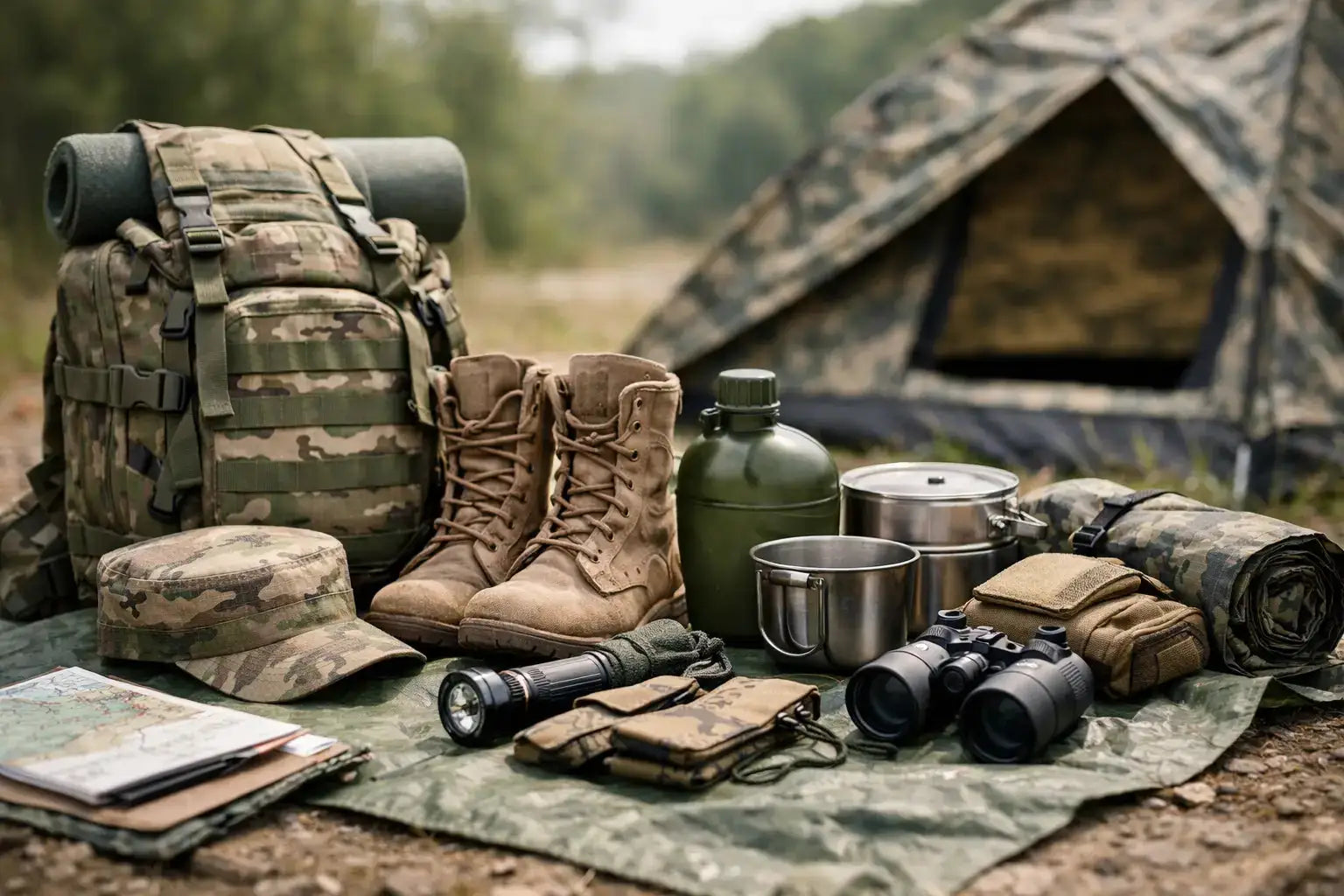
A wet training area, a cold evening and a rucksack packed in a hurry will expose weak kit choices quickly. This cadet field kit guide sets out the practical equipment that earns its place on a training weekend, what can wait at home, and where your detachment’s joining instructions must take priority.
Cadet kit is not about carrying the most tactical-looking equipment. It is about staying dry, warm, fed, rested and able to complete the programme safely. Buy dependable items in stages, use them on exercises, and learn how they work before relying on them in poor weather.
Start With the Joining Instructions
Every field exercise has its own requirements. Duration, season, accommodation, training activity and local standing orders all affect the kit list. A one-night exercise from a training centre is different from a multi-day expedition or a weekend involving blank firing, navigation and field cooking.
Read the joining instructions first, then lay out the required equipment on the floor before packing it. If the list specifies particular clothing, safety equipment or ration arrangements, follow it. Cadets should also check what is issued by their detachment and what they are expected to provide themselves. There is no value in buying duplicate equipment simply because it appears on a generic online checklist.
Name tapes or clear markings on personal kit are worthwhile. Identical bergen covers, water bottles and sleeping bags are easily mixed up in a troop harbour or accommodation block. Keep medical information, consent documents and any prescribed medication handled exactly as directed by the unit.
Cadet Field Kit Guide: Build Around the Basics
For most UK training weekends, the priority is a sound clothing system, properly fitted boots, a practical pack, a sleeping system and enough water-carrying capacity. Navigation tools, wash kit, head torch and personal admin complete the core load.
The right order matters. Expensive accessories cannot compensate for cold feet, wet layers or an uncomfortable rucksack. Start with the items that affect comfort and safety over several hours outdoors.
Boots and socks come first
Field boots must fit correctly, support the ankle without causing pressure points, and have a sole suited to wet grass, mud and uneven ground. New boots should be broken in gradually before an exercise. Wearing them for a full weekend straight from the box is a reliable route to blisters.
Use good quality walking or military socks rather than thin everyday sports socks. Take spare pairs in a dry bag, particularly in colder months. If boots become saturated, clean and dry them properly afterwards, then treat the leather or fabric according to the manufacturer’s guidance. Waterproof footwear helps, but no boot remains comfortable if water enters from the top or wet socks are left unchanged.
Dress for changing conditions
British weather rarely stays with the forecast. A simple layering system is more useful than one heavy item: a wicking base layer, insulating mid-layer, combat shirt or field layer, and waterproof outer layer. Avoid cotton next to the skin where possible, as it holds moisture and dries slowly.
Pack a warm hat and gloves even when the day begins mild. Once activity stops, body temperature drops quickly. A lightweight insulated jacket can be particularly useful in the evening, but it must be protected from rain and packed dry. Keep spare underwear and socks sealed separately from wet or dirty kit.
Issued or authorised combat clothing should be worn as directed. Cadets should not assume that every commercially available camouflage item is suitable for detachment use. Fit, durability, colour and unit policy all matter.
Choose a pack you can carry well
A day sack is suitable for short sessions where the main sleeping kit is transported separately. For a self-contained weekend, a larger bergen or rucksack may be required. The best capacity is the smallest one that carries the required equipment without forcing items to hang externally.
Adjust the shoulder straps, hip belt and chest strap before leaving home. Most of the load should sit close to the back and be carried through the hips, not pulled down from the shoulders. Heavy items such as water, stove equipment where authorised, or rations should be placed close to the spine. Waterproofs, gloves and a head torch need to be accessible without unpacking everything.
Use dry bags or sturdy waterproof liners inside the pack. A rain cover is useful, but it is not a substitute for lining the rucksack, especially when it is set down in mud or sustained rain.
Sleeping Kit That Works in the Field
A sleeping bag rated for the expected temperature is one of the most worthwhile purchases a cadet can make. Temperature ratings vary, so consider the season, whether you sleep cold, and the type of shelter being used. A compact summer bag may be adequate for a warm indoor hall, but it is not the right choice for a cold field weekend.
A roll mat or self-inflating mat is equally important. It insulates you from the ground as well as adding comfort. Without it, even a capable sleeping bag loses much of its effectiveness. Pack the sleeping bag in a waterproof compression sack and keep it separate from damp clothing.
Bivvy bags, bashas and shelters should only be carried where the exercise instructions require them. Learn the unit-approved method for setting up any shelter, including how to select a safe site and how to secure it in wind. Never take shortcuts with fire, stoves or ventilation around sleeping areas.
Water, Food and Personal Admin
Hydration is a routine discipline, not something to address once thirst starts. Carry the water capacity specified for the activity, using bottles or a hydration system that you have already cleaned and tested. Refill only where staff direct. In cold conditions, insulated storage or keeping bottles inside the pack can help prevent freezing.
Food arrangements vary. Some exercises use ration packs, others require a packed meal, and some may include group cooking under supervision. Bring the correct mug, spoon or spork and any authorised eating equipment. Keep snacks practical, durable and easy to eat in poor weather. High-sugar sweets may give a brief lift, but they are not a replacement for proper meals.
Personal admin should be compact and organised: a toothbrush, toothpaste, small towel, tissues, hand sanitiser, sun cream when appropriate, insect repellent in season, and any unit-required documents. A small notebook and pencil are more dependable than a mobile phone for notes, bearings and timings. Mobile phones should not be treated as primary navigation or illumination tools unless staff have specifically directed otherwise.
Navigation, Light and Useful Small Items
A compass and map case are fundamental when navigation is on the programme. Protect maps from rain, use a lanyard where appropriate, and practise orientating the map before the exercise. A quality baseplate compass is generally more useful to a cadet than a feature-heavy gadget that has not been taught on the syllabus.
A head torch with fresh batteries leaves both hands free for setting up kit, reading a map or carrying out personal admin after dark. Check the beam, controls and battery compartment before packing it. Carry spare batteries in a small waterproof pouch, but avoid overly bright settings around others at night.
Other small items prove useful because they solve ordinary field problems. A watch helps with timings, a small repair kit can deal with loose straps or minor clothing damage, and a simple waterproof notebook protects written information. Do not overload pockets with gadgets. If an item has no task, leave it out.
Pack, Test, Then Refine
Pack the same way each time so you can find critical equipment by touch and notice when something is missing. Before departure, put on the loaded rucksack and walk around for ten minutes. Check that straps are not rubbing, weight is balanced and nothing rattles or catches.
After each weekend, clean mud from boots and webbing, air the sleeping bag, dry waterproofs fully and replace used consumables. Make a short note of what went unused and what you wished you had packed. That is how a basic load becomes a dependable personal system.
John Bull Clothing stocks field-ready equipment across boots, waterproof layers, rucksacks, sleeping systems and navigation essentials, allowing cadets and families to select kit by practical requirement rather than appearance. Start with fit and weather protection, then add capability as training develops.
The most useful field kit is the kit you can carry comfortably, use confidently and maintain properly. Get those three things right, and a training weekend becomes a chance to learn rather than an exercise in managing avoidable discomfort.