
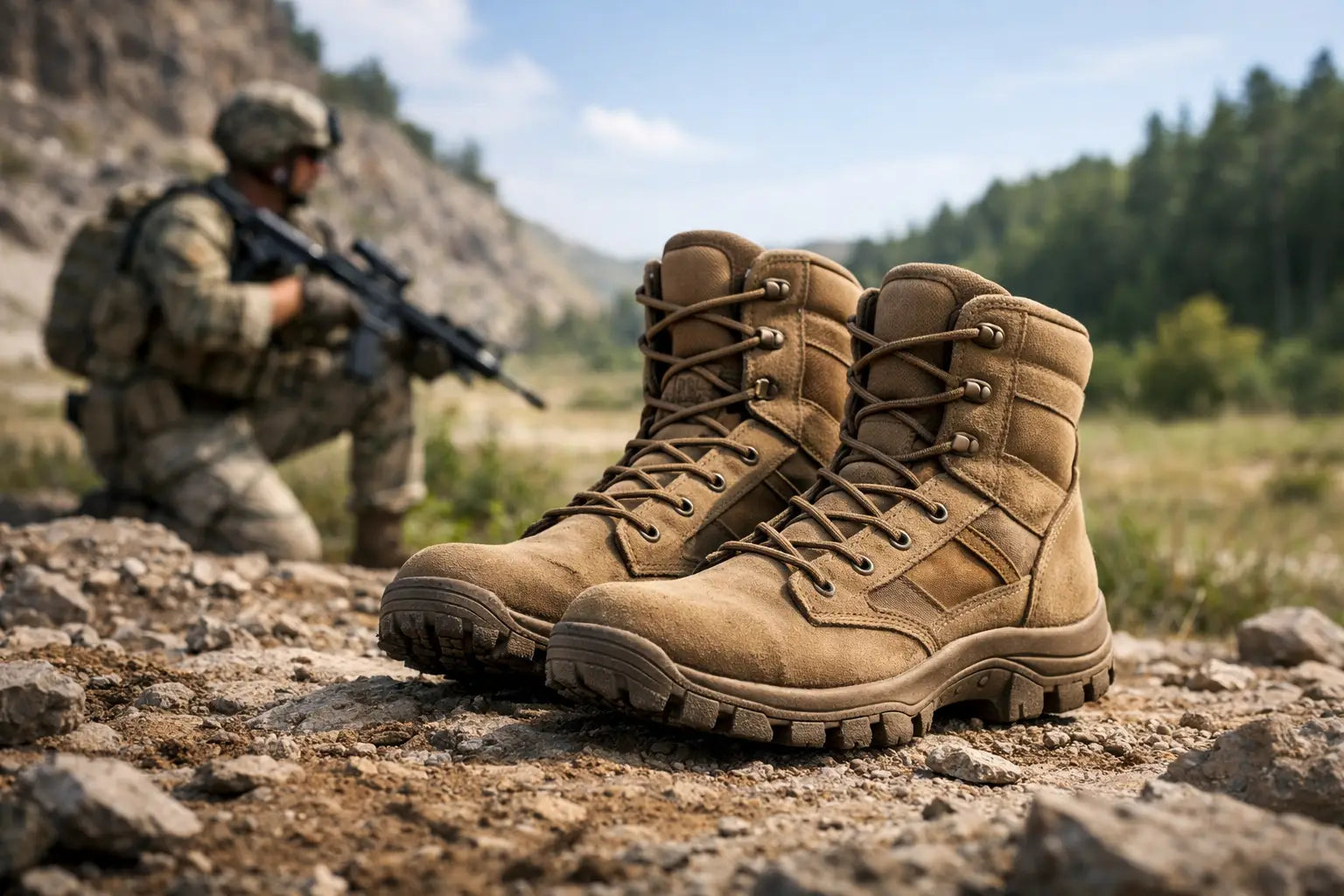
A combat boot that feels acceptable on the shop floor can become a problem after six hours under weight, on wet ground or during repeated vehicle work. Combat boots are not simply hard-wearing footwear with a military appearance. The right pair must work with your foot shape, socks, load, terrain and the conditions you expect to meet.
For service personnel, cadets, security staff and outdoor users alike, the priority is dependable performance. That means a secure fit without pressure points, a sole suited to the ground, sufficient support for the job and materials that can cope with regular use. The most expensive boot is not automatically the right one. A lighter patrol boot may suit one role perfectly, while a more substantial leather boot is the sensible choice for another.
Start With the Ground You Will Cover
Before looking at brands, finishes or height, consider the terrain. Firm tracks, barrack areas and urban patrol routes place different demands on footwear than wet woodland, broken hillside or muddy training areas. A boot built for dry, fast movement may feel flexible and comfortable, but its sole can wear more quickly on abrasive surfaces and may offer less protection under a heavy pack.
Deep-lug soles are useful where mud clearance and grip matter. They generally perform well on soft ground, loose earth and wet grass, although no sole can make slick rock, ice or polished indoor flooring completely safe. A flatter, more closely patterned sole can be more stable on hard surfaces and may feel less cumbersome for day-to-day duty, but it is less effective when the ground becomes soft and churned up.
Think about the route rather than the label. A woodland exercise, a patrol shift, a hill day and an airsoft event can all involve walking, but the distance, speed, load and weather can be entirely different. Buying for the hardest realistic use is usually sensible, provided the boot is not so heavy or stiff that it becomes a burden for routine wear.
Combat Boots Need the Right Fit First
Fit is where good boots earn their place. There should be enough room at the front for your toes to move slightly, particularly when descending slopes, but not so much volume that your foot slides forward. Your heel should remain held in place when walking uphill and downhill. Repeated heel lift is a common cause of blisters and can make an otherwise well-made boot unusable.
Try boots on later in the day if possible, when feet are naturally a little fuller. Wear the socks you intend to use in the field. A thin dress sock gives a misleading impression of space and can hide a fit issue that will become obvious once you add a proper military or trekking sock.
Width matters as much as length. A boot that is too narrow can create pressure across the forefoot, numbness and rubbing around the little toe. One that is too wide can allow unwanted movement, even if the length appears correct. Different manufacturers use different lasts, so a stated size alone should not decide the purchase.
Lacing is part of the fit system, not an afterthought. Tighten the lower section enough to secure the forefoot, then use the upper eyelets or hooks to lock the heel and ankle in place. Avoid pulling the whole boot excessively tight from toe to collar. That can restrict circulation, create pressure across the instep and make long days less comfortable.
Socks, Insoles and Volume
A quality sock helps manage moisture, cushions high-pressure areas and reduces friction. Merino blends and purpose-made technical socks are often more effective than ordinary cotton, which can hold moisture and increase the chance of rubbing. Carrying a spare dry pair remains one of the simplest ways to improve foot comfort during a wet or extended day.
Insoles can fine-tune a boot, but they are not a cure for the wrong size or shape. An aftermarket insole may improve cushioning or arch support, yet it also takes up internal volume. If the boot already feels close across the top of the foot, adding a thicker insole can make matters worse. Where persistent pain develops, reassess the fit rather than simply adding more padding.
Support Has a Trade-Off
Higher-cut combat boots can provide useful ankle coverage, help keep debris out and give a more secure feel when carrying weight over uneven ground. They are often the better option for field use, longer distances and loose terrain. However, more support usually means more material, weight and a longer break-in period.
Lower or more flexible tactical boots can suit vehicle-based work, warm weather and jobs requiring frequent movement on hard surfaces. They may feel quicker and less tiring over a short shift. The trade-off is reduced protection from water, vegetation and knocks, along with less structure when the ground is uneven or your load is heavier.
Do not confuse a high collar with guaranteed ankle protection. A boot supports best when the heel is properly seated, the midsole is stable and the lacing is correctly adjusted. Good movement habits and sensible loading still matter. No boot removes the risk of an awkward step on rutted ground.
Leather, Fabric and Waterproof Linings
Full-grain leather combat boots remain a proven choice for demanding field conditions. They offer abrasion resistance, structure and the potential for a long service life when cleaned and treated properly. Leather may take longer to break in and can be warmer than lightweight fabric, but it is often the right answer where durability and protection come first.
Fabric and mixed-material boots usually reduce weight and dry faster once wet. They can be more comfortable straight from the box and are popular for patrol, warm conditions and users covering ground at pace. Their lighter construction may not withstand repeated abrasion as well as heavier leather, particularly around the toe, sides and flex points.
Waterproof membranes are valuable in rain, wet grass and shallow standing water. They also have limits. Water entering over the collar will remain inside longer, and waterproof boots can feel warmer during hard work in mild conditions. For hot, dry use, a breathable non-waterproof boot may be the better choice. Match the lining to the weather you actually expect, not the weather you hope to avoid.
Breaking In Without Ruining Your Feet
New boots should be introduced progressively. Start with short walks on familiar ground, then build up distance and add the socks, insoles and load you plan to use. Check known friction areas after each outing: heel, Achilles, instep, little toe and the ball of the foot. A small hot spot is useful information. Ignore it and it becomes a blister.
Do not soak boots, bake them near a radiator or rely on harsh shortcuts to soften leather. Excess heat can damage adhesives, dry the leather excessively and affect the shape of the boot. A controlled break-in gives the upper time to flex naturally around your foot while allowing you to identify problems before an exercise or long shift.
If a boot causes sharp pain, persistent numbness or severe rubbing after a reasonable bedding-in period, it may be the wrong last or size. Boots should settle and become more familiar with use. They should not require you to endure an injury to make them work.
Care Extends the Life of Combat Boots
Field care is straightforward, but neglect shortens service life quickly. Remove mud after use, especially from the tread, stitching and lace hardware. Let boots dry at room temperature in a ventilated place, with insoles removed if practical. Stuffing them loosely with paper can help draw out moisture, but change it if it becomes saturated.
Once dry, use an appropriate cleaner and treatment for the boot material. Leather needs conditioning and suitable water-repellent treatment to prevent it becoming dry and prone to cracking. Fabric boots benefit from cleaning and reproofing as their water-repellent finish wears away. Apply products sparingly and follow the boot manufacturer's guidance, particularly where a waterproof membrane is involved.
Inspect laces, eyelets, soles and stitching before a trip or duty period. Replacing worn laces is inexpensive and avoids a preventable failure. If the sole is badly worn, split or beginning to separate, deal with it before grip and stability are compromised. Well-selected kit deserves the same routine attention as the rest of your field equipment.
A dependable pair of boots should disappear into the background once you are moving: no slipping heel, no wet socks from avoidable neglect and no second thoughts when the ground turns rough. Choose for the work ahead, wear them in properly and keep them ready for the next outing.