
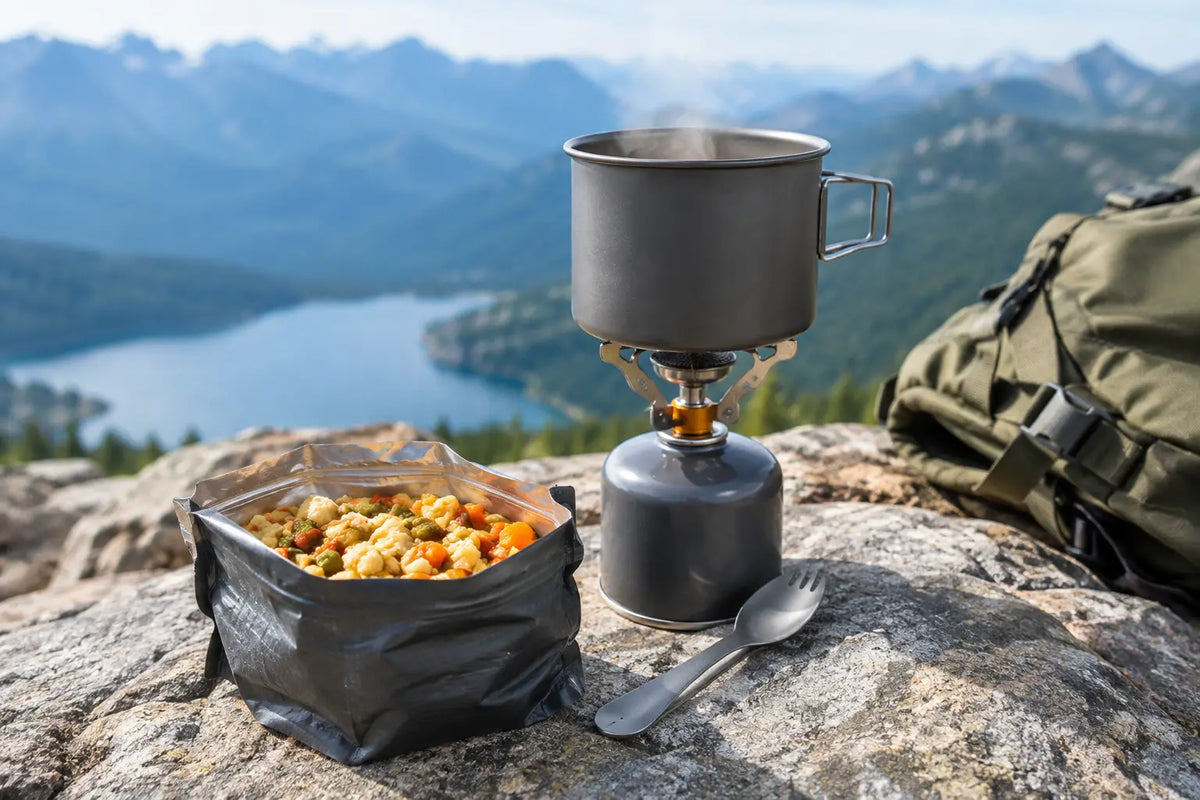
A hot meal at the end of a wet tab, a long patrol exercise or a cold night under a basha does more than fill a gap. It restores morale, warmth and useful energy. This field ration cooking guide covers the practical methods that work with common ration packs, whether you are carrying a gas stove, using a flameless heater or relying on a simple mess tin.
The principle is straightforward: choose the heating method before you leave, carry only the fuel and water you can support, and keep the cooking routine clean and controlled. A ration meal is designed for field use, but poor preparation can still mean wasted food, burnt hands or a stove running dry when it is most needed.
Start with the Ration and the Environment
Check the ration pack before packing it into your bergan. Look for damaged pouches, broken seals, swollen packaging and expired components. Retort pouches are tough, but they are not indestructible. A pouch that has been punctured by a tin, stove leg or loose knife should not be saved for later.
Decide what needs heating and what does not. Main meals usually benefit from heat, particularly in poor weather. Oatmeal, hot drinks, soup powders and some desserts may need boiled water, while biscuits, trail mix, fruit items and energy bars can be kept for halts. Separating your food into an evening meal bag and a daytime snack bag prevents you from unpacking the entire ration pack in wind and rain.
Your environment sets the method. In a sheltered harbour area with adequate water, a stove and mess tins provide the most control. On a short movement or where flame discipline matters, a flameless ration heater may be more suitable. In cold weather, build time into the plan: fuel can perform less efficiently, water takes longer to boil, and chilled pouches need more warming than those kept inside a pack close to the body.
Field Ration Cooking Guide: Choose Your Heat Source
Gas stove and mess tin
A compact gas stove is the most flexible option for individual field cooking. It can boil water quickly, heat a ration pouch in a water bath and make a proper brew without carrying a separate cooker. Use it on stable, level ground, clear of dry grass, tent fabric, ammunition, fuel containers and loose webbing.
For pouch meals, place the sealed pouch in a mess tin or pan of water. The water should be hot, not violently boiling. A rolling boil can split the pouch seam or make handling awkward. Heat for roughly eight to 12 minutes, turning the pouch with a utensil where possible. Times vary by pouch thickness, starting temperature and altitude, so follow the printed guidance if supplied.
Do not place a ration pouch directly onto a stove burner or into a dry pan. It will scorch, melt or burst before the centre is hot. Keep the lid loose when heating water. A sealed vessel can build pressure, and a lid clamped tight makes a simple job needlessly hazardous.
Gas is efficient, but it requires sensible fuel management. If the meal needs 500 ml of water, do not boil a full litre out of habit. Use a windbreak only where it is designed for your stove and does not enclose the cartridge. Overheating a gas cartridge is a serious risk, particularly with improvised foil screens.
Solid fuel tablets
Solid fuel is light, compact and dependable as a back-up. It is slower and less controllable than gas, and it leaves soot on cooking gear, but it can heat water when cartridges are empty or damaged. Use tablets on a proper folding stove or stable fire tray, not directly on the ground.
A mess tin with a lid will conserve heat, though it should not be sealed. Shield the flame from wind with the cooker body rather than a close-fitting barrier. Tablets can produce fumes and an unpleasant residue, so use them outdoors or in a fully ventilated area. Never cook with them inside a tent, vehicle, bivvy bag or enclosed shelter.
Flameless ration heaters
Flameless ration heaters are useful when an open flame is unsuitable or time is limited. They generally activate with a measured amount of water and use a chemical reaction to warm the pouch. Read the instructions on that specific heater. Some require the pouch and heater to sit in a sleeve, while others need a set activation time before serving.
They are not safe for enclosed spaces. The reaction can release flammable hydrogen gas, so keep the heater outside, away from naked flames and away from your sleeping area. Place it on the ground or a heat-resistant surface, not on a plastic map case, dry kit bag or your lap. The pouch and water can become very hot, and the heater should be allowed to finish reacting before disposal as directed by its manufacturer.
Water Discipline Makes Cooking Easier
Cooking water is only part of your water requirement. You may need water for a hot drink, washing your spoon, cleaning the mess tin and rehydrating additional food. In a dry location, that adds up quickly. Plan meals around your confirmed water supply rather than assuming a stream will be available or safe to use.
Where natural water is used, treat it correctly before drinking or preparing food. A clear-looking source is not automatically clean. Follow the instructions for your chosen filtration or purification system and allow enough time for chemical treatments to work. Boiling can be effective, but it also consumes fuel, so it is rarely the only part of the plan.
Avoid pouring used cooking water near your sleeping position or directly into a water source. If the meal has left oil, sauce or food particles in the tin, disperse waste water well away from watercourses and follow site, exercise or local land-management rules. Good field hygiene is part of being welcome on the ground.
Pack a Small, Useful Cooking Set
A capable cooking setup need not be heavy. The best selection depends on duration, season and the group plan, but a few items consistently earn their space:
- A stove matched to the fuel you are carrying, with a reliable ignition source and a spare lighter.
- One metal mess tin or compact pot, plus a lid that can be handled safely.
- A long-handled spoon or spork for hot pouches and deep tins.
- A folding mug for brews, soups and measuring water where marked.
- A small cloth or heat-resistant pouch for handling hot kit and cleaning up.
Cook Cleanly, Even When Conditions Are Poor
Mud, wet gloves and cramped shelters are normal field conditions, not excuses to ignore food hygiene. Clean your hands before handling opened food. If water is limited, use suitable hand sanitiser first, then avoid touching the eating end of your spoon or the inside of pouches.
Open food only when you are ready to eat it. Once a pouch is opened, treat it as a perishable meal. Do not leave half-eaten food in a warm bergen for later, especially in summer. If you cannot finish it, pack the waste out in a sealable bag. Food scraps attract wildlife and leave an unnecessary trace around a harbour area or campsite.
A mess tin does not need to be polished after every meal, but it should not be left coated in residue. Heat a small amount of clean water, wipe the tin with a cloth and dry it before packing. This prevents lingering smells, mould and contamination of the next meal. Keep the cleaning cloth separate from your personal wash kit.
Build the Meal Around the Task
A warm main meal is valuable after sustained movement, but timing matters. Eating a heavy ration immediately before a hard tab can feel uncomfortable and slow you down. Use lighter, accessible items during movement, then prepare the main meal when there is time to sit, drink and recover properly.
In winter, hot drinks and soup can be as useful as a main pouch because they help restore warmth and encourage fluid intake. In summer, consider whether heating every component is worth the water and fuel demand. A cold ration meal is not glamorous, but it may be the sensible choice when the priority is movement, heat avoidance or conserving supplies.
For pairs and small groups, agree who carries what before setting off. One person carrying all the stove fuel while another carries all the water creates an obvious problem if the team separates. Share critical items or ensure each person has a workable individual contingency.
The best field meal is not the most elaborate one. It is the meal you can heat safely, eat without fuss and clear away completely. Practise with your cooker and ration type before an exercise or overnight trip, and the first hot meal in poor weather will feel routine rather than improvised.