
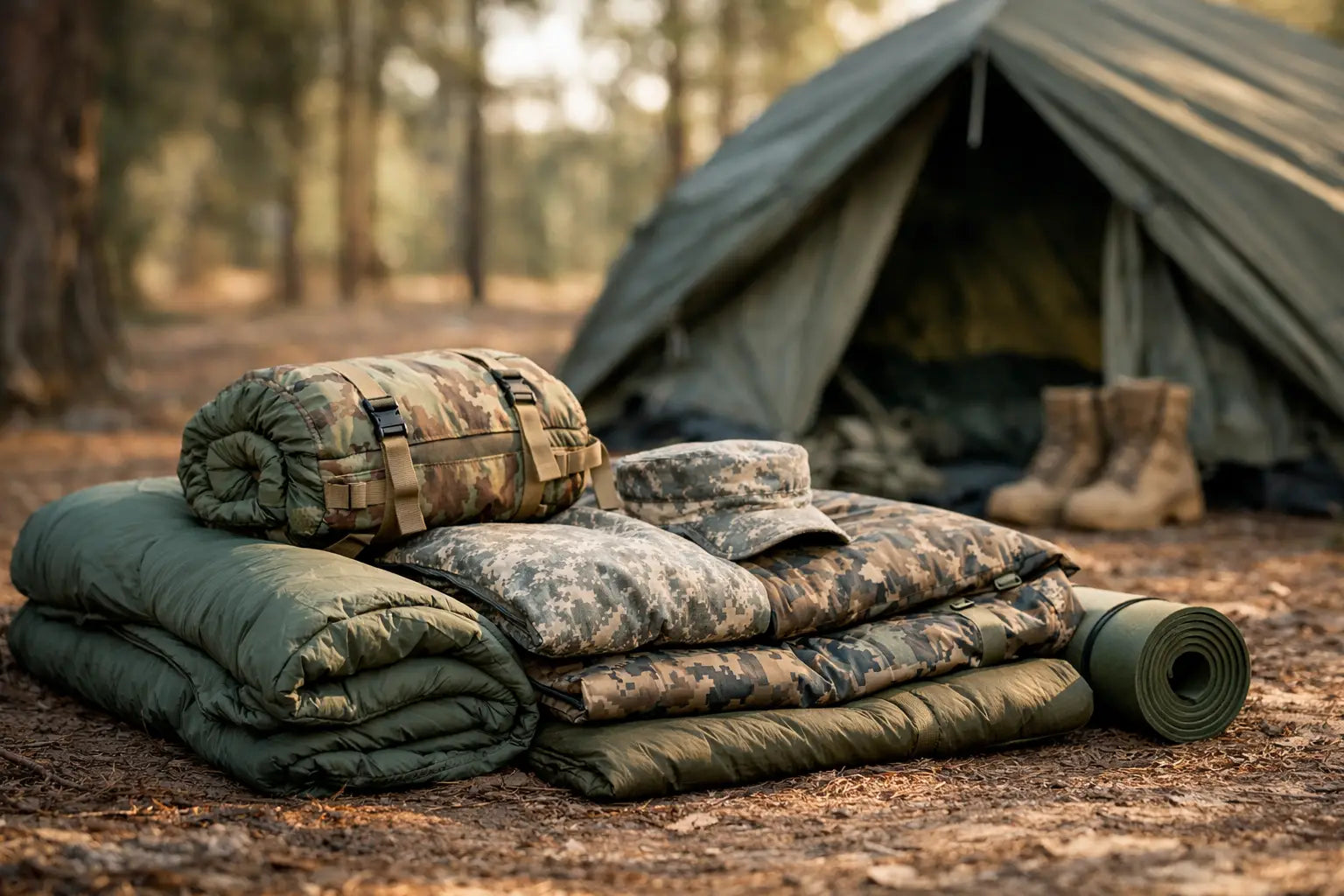
A poor night’s sleep affects judgement, morale and recovery long before it becomes a comfort issue. Knowing how to choose army sleeping system kit means looking beyond a bag labelled “four season” and matching the whole setup to the ground, weather, duration and load you will carry.
For British field use, the right choice is rarely the warmest or bulkiest option available. It is the system that gives you a realistic margin against cold and wet conditions while remaining practical to pack, dry, maintain and carry.
Start with the conditions, not the bag
Think about where and when the system will be used. A sleeping bag that works well for a dry summer camp can be completely wrong for a wet autumn exercise on exposed ground. British conditions are particularly demanding because damp air, rain, wind and saturated ground can make temperatures feel considerably colder than the forecast suggests.
Begin with the expected overnight low, then allow a safety margin for fatigue, wet kit, limited food intake and wind chill. If you sleep cold, are lightly built, or expect to be static for long periods, choose more insulation than the minimum rating suggests. A person coming off a hard tab with a hot meal inside them may sleep warmer than someone standing sentry, travelling light or bedding down after little food.
Also consider whether you are sleeping under a poncho, in a basha, in a tent, in a vehicle or in the open. Shelter changes how much wind and rain reach the bag, but it does not remove the need for insulation underneath you.
Understand army sleeping system temperature ratings
Temperature claims need reading carefully. Quality civilian and military-style sleeping bags may use EN or ISO testing, often showing a comfort rating, limit rating and extreme rating. The comfort figure is the more useful starting point for most users. The limit figure assumes a warmer sleeper in a curled position, wearing layers, and should not be treated as a guaranteed comfortable night.
The extreme rating is a survival indication, not an operational working temperature. Selecting a bag by its extreme figure is a common and avoidable mistake.
Military surplus bags do not always display a modern tested rating, particularly older issue examples. In that case, assess the construction, fill condition and intended role rather than relying on a seller’s broad season description. A genuine cold-weather bag may still underperform if the insulation has been compressed for years, the lining is damp, or the zip and draught baffles are damaged.
Synthetic insulation remains the practical choice for much military and tactical use. It retains more usable warmth when damp, dries more readily and stands up better to repeated field handling than down. Down offers excellent warmth for its weight and pack size, but it needs disciplined moisture management. For wet UK exercises, synthetic systems are often the safer, lower-maintenance option.
Choose a modular system where conditions vary
A complete army sleeping system is more than one insulated bag. It may include a lightweight inner bag, a heavier outer bag, a bivvy bag, compression sack and sleeping mat. The advantage is flexibility: use one layer in mild weather, combine layers in colder conditions, and add weather protection when sleeping under a basha or in the open.
This approach suits personnel, cadets and outdoor users whose kit needs change through the year. It also allows damaged or worn components to be replaced without discarding the entire setup. The trade-off is bulk. Two bags, a bivvy and a mat can occupy a serious amount of rucksack space, especially when wet or poorly packed.
If your use is predictable, a single well-rated bag may be more efficient. A regular user sleeping in cool but not freezing woodland, for example, may prefer one reliable three-season synthetic bag with a proper mat and bivvy cover. For winter exercises, extended static tasks or colder overseas conditions, a layered system gives greater control and a more useful safety margin.
The bivvy bag is weather protection, not extra insulation
A waterproof breathable bivvy bag protects the sleeping bag from rain, mud, dew and wind-driven moisture. It is especially useful under a basha or when there is no tent inner to keep your bag clean and dry. It can add a little warmth by reducing draughts, but it should not be bought as a substitute for a properly insulated bag.
Breathability matters. A fully waterproof cover that traps body moisture can leave the sleeping bag damp inside after a night or two. Use ventilation where conditions allow, avoid breathing directly into the bag, and make sure wet outer clothing is not packed inside with your insulation.
Do not neglect the sleeping mat
Cold ground will draw heat from your body faster than many people expect. Even the best army sleeping bag cannot perform properly if it is compressed beneath you and you are lying directly on frozen, wet or bare ground.
The mat provides insulation as well as comfort. Closed-cell foam mats are simple, durable and continue working if punctured. They are a sound choice for hard use, vehicle carriage and training environments where kit takes abuse. Inflatable and self-inflating mats are generally more comfortable and can offer higher insulation for their packed size, but they need protection from punctures and should be checked before deployment.
Look at a mat’s R-value where it is provided. A higher figure means better resistance to ground heat loss. For cool three-season UK use, moderate insulation may be enough. For winter conditions, snow or frozen ground, choose a higher-rated mat or combine an inflatable mat with a foam layer. This adds bulk, but it can make more difference to warmth than upgrading one sleeping-bag season.
Check fit, zip arrangement and practical details
A bag should allow enough room to wear dry base layers and move slightly without leaving excessive dead air to heat. Too tight and insulation gets compressed at the shoulders, hips and feet. Too large and it can feel colder, especially for smaller users. Women, younger cadets and leaner sleepers may benefit from a narrower fit or additional layered clothing rather than an oversized standard bag.
A hood, insulated collar and full-length draught tube are useful features for cold conditions. Heat loss around the neck and through the zip can be significant. Check whether the zip suits your preferred side and whether it can be operated easily with cold hands. A snagging zip is more than an annoyance when you need to get out quickly in darkness.
For military-style use, consider the exterior fabric and colour as well. A hard-wearing shell copes better with repeated field use, while subdued colours are more suitable for tactical environments than bright expedition finishes. Pack size matters just as much. Measure the bag in its compression sack and compare it with your bergan capacity alongside waterproofs, food, water, spare clothing and any required equipment.
Build warmth with dry layers, not wet clothing
Use clean, dry sleep clothing where possible. A moisture-wicking base layer, dry socks and a hat can improve warmth considerably without adding much weight. Avoid getting into the bag wearing soaked combat clothing, damp boots or sweat-heavy layers. They transfer moisture into the insulation and make the bag harder to dry the following day.
Do not rely on wearing every item in your bergen as a permanent solution to an under-rated sleeping bag. Extra layers can help, but tight clothing may restrict circulation and reduce the loft of the bag. Keep tomorrow’s clothing protected in a dry bag or waterproof liner, and use a warm water bottle only when it can be sealed securely and positioned safely.
Inspect surplus and maintain your system
When buying army surplus, condition is central to value. Check for flattened insulation, mildew smell, staining, repaired seams, damaged zips and missing compression sacks. A bag that has been stored compressed, damp or dirty may look serviceable but offer reduced insulation.
After use, air the system as soon as conditions permit. Dry the bivvy separately, brush off mud, and store the sleeping bag loosely at home rather than tightly compressed in its sack. Follow the care instructions for washing, as harsh detergents and poor drying can affect insulation performance.
For dependable field kit, select a sleeping system around the worst realistic conditions you expect, then test it before it matters. A night close to home will show whether the bag, bivvy, mat and dry layers work together properly. That is far better than finding a gap in your system at 0200 on a wet, cold exercise.