
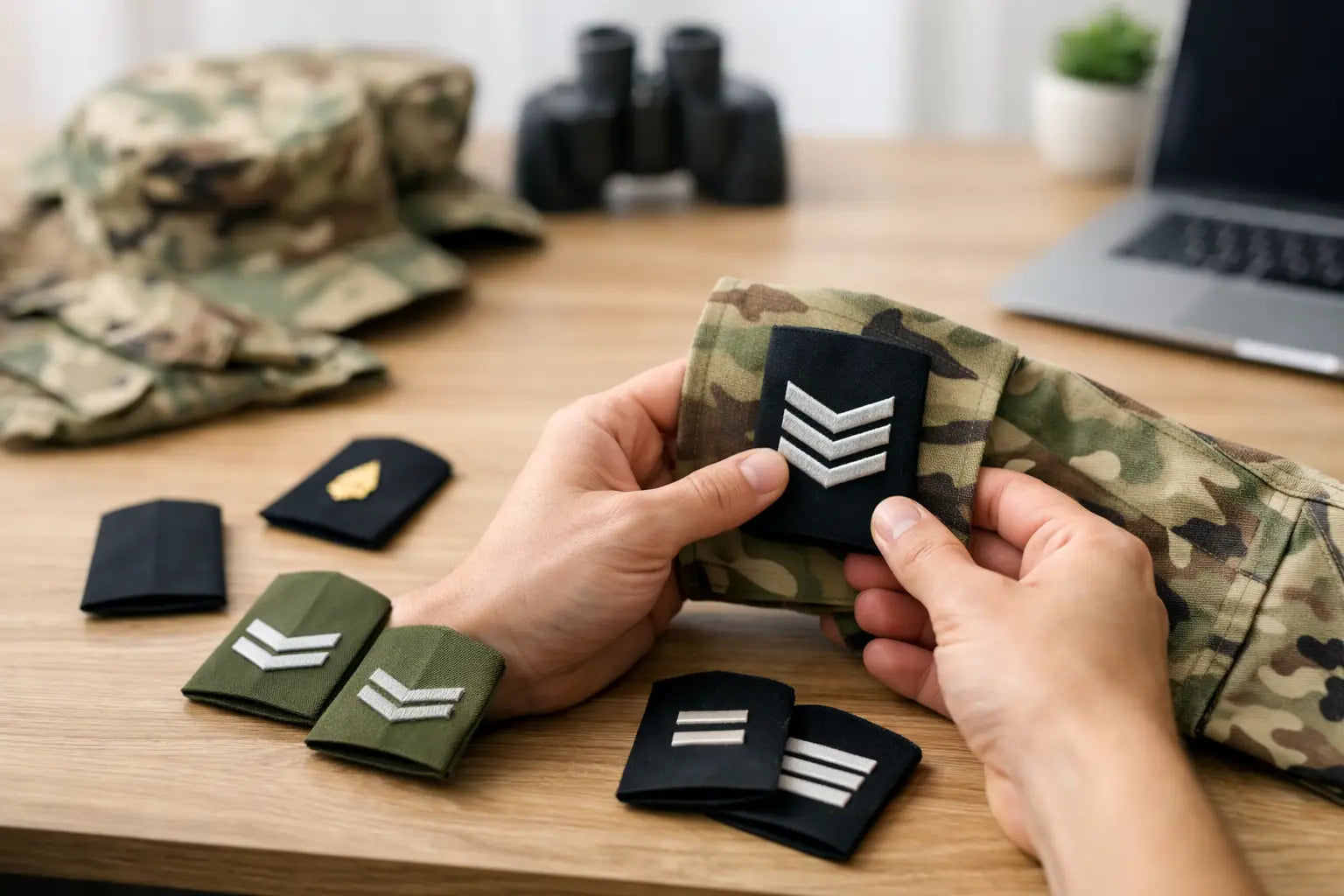
A rank slide is a small part of a uniform, but the wrong one is immediately noticeable. A slide that is too wide, the wrong colour, or marked for the wrong service can look untidy on parade and may not meet unit dress requirements. Whether replacing a worn pair for working dress, preparing cadet uniform, or completing a ceremonial display, choosing rank slides starts with the garment they will be worn on.
What Rank Slides Are Designed to Do
Rank slides display rank insignia on an epaulette or shoulder strap. They are commonly used on shirts, jerseys, combat clothing, smocks and outer layers fitted with shoulder loops. Unlike sewn-on insignia, they can be removed when garments are washed, changed between ranks where appropriate, or transferred between compatible items of clothing.
For serving personnel, the correct pattern is determined by service dress regulations, local orders and the item of uniform in question. British Army, RAF, police, security and cadet insignia are not interchangeable simply because the slide appears to be the same size. Colours, embroidery, rank design and backing material can all differ.
This matters particularly with field clothing. A subdued slide suited to combat dress may be unsuitable for barrack dress or a formal occasion, while bright embroidery intended for a shirt can be out of place on tactical outerwear. Check the relevant unit instruction before ordering if the slides are for service use.
Choosing Rank Slides for the Garment
The practical question is not only which rank is required, but where the slides will sit. Most standard slides are made to pass over an epaulette, then sit securely below the shoulder seam. The opening must be large enough for the strap, but not so loose that the slide shifts, creases or hangs below its intended position.
Measure the width of the epaulette at its broadest point and compare it with the slide dimensions where these are supplied. Military shirts, lightweight jackets and knitwear can use different shoulder-strap widths, even within similar-looking uniforms. Older surplus clothing may also vary from current-issue patterns.
Consider the thickness of the garment as well. A slide that fits neatly over a shirt epaulette may be difficult to pull over the padded strap of a cold-weather layer. For field use, a close fit is generally preferable: it reduces movement and helps prevent the slide catching on webbing, body armour, rucksack straps or a rifle sling.
Match the Pattern to the Duty
Rank slides are available in several finishes. The correct choice depends on the role, the uniform order and the environment.
Embroidered slides with clear, contrasting insignia are generally intended for smart presentation on appropriate dress items. They are easy to identify and give a clean finish when paired correctly with a service shirt or jersey. Subdued or low-visibility patterns are better suited to field clothing where a less conspicuous appearance is required.
Some slides use hook-and-loop fastening rather than a traditional tubular sleeve. These can be useful on garments or plate carriers with compatible loop panels, but they should not be treated as a replacement for epaulette slides unless the uniform is designed for them. A hook-and-loop patch on a shoulder panel and a conventional rank slide perform the same identification role, yet use different fittings.
For cadet forces, always check the current requirements of the detachment, school contingent or training establishment. Cadet rank and appointment insignia can have specific approved designs, and a purchase based solely on an online photograph can lead to a mismatch.
Getting the Fit and Position Right
A properly fitted rank slide should lie flat and square, with the insignia facing outwards and clearly readable from the front. It should not twist around the epaulette or sit so low that it exposes the end of the strap. On a pair of slides, make sure both are aligned at the same point on each shoulder.
Before putting the garment on, open the shoulder fastening if the design allows it. Feed the slide from the outer end of the epaulette towards the collar, rather than forcing it over a button or tab. Once in place, re-secure the epaulette and smooth the fabric beneath the slide. This simple approach avoids pulling threads or distorting embroidered insignia.
If the slide feels excessively tight, do not stretch it aggressively. The embroidery and backing can deform, particularly on lower-cost slides or older stock. It is better to confirm that the garment has the expected epaulette width and select a compatible size or format.
The same applies to slides that are too loose. Tucking, pinning or taping them in place may seem like a short-term fix, but it often gives an untidy result and can damage the uniform. A correct-fitting slide should remain secure through normal movement without improvised alterations.
Check These Details Before Ordering
When replacing or buying rank slides, take a moment to confirm the following points:
- the service, regiment, corps, force or cadet organisation the insignia is for;
- the rank or appointment required, including any relevant specialist or instructor designation;
- whether the garment uses shoulder epaulettes or a hook-and-loop panel;
- the width and thickness of the shoulder strap; and
- whether the item is for field dress, working dress, parade wear, collection or presentation.
Care for Rank Slides in Service
Rank slides are exposed to sweat, rain, abrasion and repeated washing, especially when worn on field shirts and lightweight layers. Remove them before laundering whenever possible. This protects the embroidery, prevents colour transfer and keeps the slides from becoming misshapen around the garment strap.
If they need cleaning, use a soft brush or lightly damp cloth to remove surface dirt. Avoid harsh bleach, high heat and unnecessary tumble drying, which can affect thread colour, backing fabric and hook-and-loop material. Let them dry naturally and flat before storing them.
Inspect slides regularly for loose stitching, frayed edges and worn fastening. A damaged slide can make an otherwise well-maintained uniform look neglected. For operational users, it is sensible to keep a spare set with the relevant shirt, smock or deployment kit, particularly when travelling or heading away on exercise.
When One Pair Is Not Enough
Many personnel keep separate rank slides for different orders of dress. A clean pair can be reserved for inspections, formal duties or parade, while another pair is used on field clothing. This reduces wear on presentation slides and avoids last-minute searches before an early start.
It can also be practical to keep slides with the garments they belong to. Store a subdued pair with combat clothing, a brighter pair with service dress items, and any specialist hook-and-loop insignia with the relevant patrol or protective equipment. Good kit organisation saves time and reduces the risk of wearing an unsuitable pattern.
John Bull Clothing stocks military-focused uniform accessories alongside field kit, boots and regimental items, making it easier to source the practical details that complete a serviceable setup.
The best rank slides are not necessarily the most elaborate. They are the correct pattern, correctly fitted and kept in good order. Confirm the dress requirement, check the epaulette dimensions, and choose a pair that is ready for the job rather than merely close enough.