
A gas stove that lights first time is worth far more than one that only looks clean in the kit cupboard. Knowing how to maintain gas stove equipment properly means fewer failed brews in bad weather, less wasted fuel and a safer cooking routine at camp, on exercise or during a weekend in the hills.
Most stove faults come down to three things: food residue blocking burner ports, dirt in the fuel connection, or damaged seals. None requires complicated workshop work, but each needs regular attention. A quick check after use is usually enough to keep dependable field kit working as intended.
How to maintain a gas stove after every use
Start maintenance only once the stove is fully cool and the gas canister has been removed. Do not clean or inspect a stove near an open flame, inside a tent, vehicle or enclosed shelter. Even a small amount of residual gas demands sensible handling.
Wipe the pan supports, burner head and body with a soft cloth after cooking. A little warm water and mild washing-up liquid will shift grease, dried food and soot. Avoid soaking the stove, especially around valve controls, piezo ignition components and fuel fittings. These areas are designed for outdoor use, not for being left submerged.
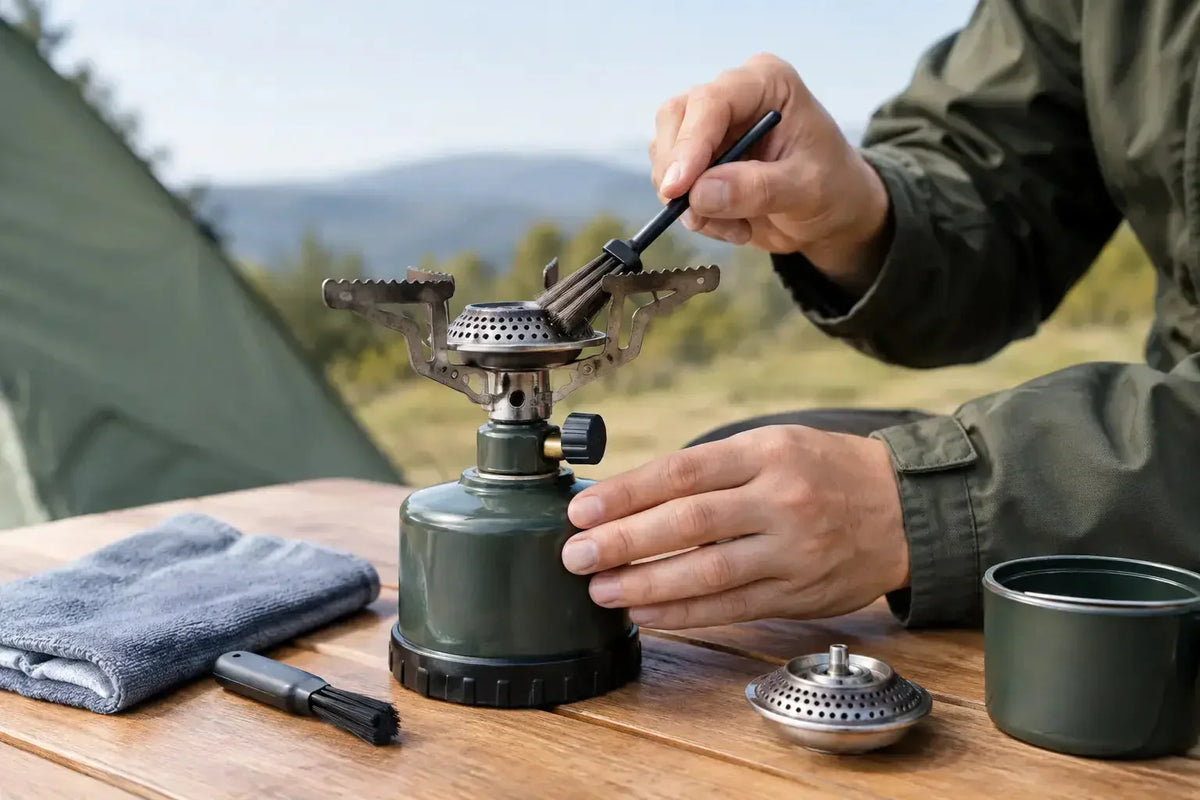
If food has boiled over, deal with it before it hardens. Lift off removable pan supports where the design allows, then use a soft nylon brush or an old toothbrush to clean around the burner ports. Do not force a pin, knife point or wire into the jet or burner holes. It is easy to enlarge or damage these precisely sized openings, which can affect the flame pattern.
Dry every part thoroughly before reassembly. Moisture trapped around a burner can encourage corrosion over time, particularly on older steel components. A dry cloth and a few minutes in a well-ventilated place is generally all that is needed.
Inspect the fuel connection and seals
The fuel connection is the part of the stove that deserves the closest attention. Whether your model screws directly onto a threaded canister, clips into a bayonet fitting or connects to a remote cylinder by hose, check that the fitting is clean and undamaged before use.
Look at the O-ring or rubber seal inside the stove connection. It should sit evenly, feel flexible and show no cracks, flattening, cuts or missing sections. A worn seal is inexpensive compared with the risk of a leak. Replace it only with the correct type specified for the stove, rather than fitting a random rubber ring from a mixed repair pack.
Before lighting, attach the canister outdoors and listen carefully for hissing. A faint smell of gas or any persistent hiss means stop immediately. Turn the control off, disconnect the canister if safe to do so and inspect the seal and threads. Never test a suspected leak with a flame. A small amount of soapy water applied around the connection can reveal bubbles, but follow the stove manufacturer's guidance and keep the valve closed during the check.
Threaded fittings should screw together smoothly. If they cross-thread, feel gritty or need force, remove the canister and inspect both sides. Dirt on a fitting can damage threads and prevent a proper seal. Wipe it clean with a dry lint-free cloth before trying again.
Check hoses on remote-canister stoves
Remote stoves are useful when a larger pan, windscreen or low-temperature setup calls for greater stability. Their hose is another component to inspect. Run it gently through your fingers and look for abrasions, kinks, crushed sections, stiffness or cracking near the connector and burner end.
Do not tape over damaged hose sections as a field repair. Take the stove out of service until it can be repaired by the manufacturer or replaced. Gas equipment is not an area for improvised fixes.
Keep the burner and jet clear
A healthy burner produces a steady, mostly blue flame that spreads evenly around the burner head. Yellow flames, repeated sputtering, poor simmer control or a flame that favours one side can indicate blocked ports, contamination or unsuitable fuel performance in the cold.
First, make sure the canister is not near empty and is appropriate for the temperature. Butane-heavy blends can lose pressure in cold conditions, even when the stove itself is clean. In those conditions, a suitable four-season blend or a liquid-fuel stove may be the better tool. Maintenance cannot overcome the limitations of the wrong fuel for the task.
For ordinary contamination, brush the burner head carefully and clear loose debris from around the ports. If the stove has a removable burner cap, lift it off only as directed in its instructions, clean beneath it and refit it correctly. Misalignment can create an uneven flame.
The jet is more sensitive. Some stoves include a supplied cleaning needle or a shaker-jet mechanism, while others should not be dismantled by the user. Follow the instructions for your exact model. If cleaning does not restore a normal flame, do not keep stripping components down in the field. A specialist service or replacement part is the safer course.
Look after ignition without relying on it
Piezo igniters are convenient, especially when hands are cold or wet, but they are not a substitute for carrying a reliable lighter or stormproof matches. Keep the igniter electrode clean and check that it sits at the correct distance from the burner, as set by the manufacturer. A greasy burner head or a bent electrode can prevent a spark reaching the gas.
If the igniter clicks but does not spark, let the stove dry fully and clean visible grime from the electrode with a dry soft brush. If there is no click, the piezo mechanism may have failed. The stove can often still be lit manually outdoors with the valve opened carefully and a flame applied at the burner, but only if the manufacturer's instructions permit it. Never lean over the stove while attempting this.
Use the right cookware and avoid overheating
A gas stove works hard enough without being overloaded. Use cookware that sits securely on the supports and stays within the maximum pot diameter stated for the model. An oversized pan can trap heat around the valve and canister, particularly on compact top-mounted stoves.
Windshields need the same caution. A purpose-made windshield positioned as instructed can improve fuel efficiency, but wrapping a windshield tightly around a canister stove can reflect dangerous heat back onto the fuel canister. If conditions are windy, seek natural shelter where safe, use a stove designed for a windshield, or choose a remote-canister model that keeps the fuel farther from the burner.
Avoid running the burner flat out for longer than necessary. Once water is boiling, turn it down. This preserves fuel, reduces scorching on cookware and puts less heat through the stove assembly. Efficient cooking is part of stove care, not just fuel management.
Store your stove dry, protected and separate from fuel
Before packing away, make certain the control valve is fully closed and the stove has cooled. Brush away grit, fold or collapse the pan supports as designed, and place the stove in its protective pouch or hard cooking kit. This prevents the valve, burner and igniter from being knocked about among metal mugs, tent pegs and cookware.
Store gas canisters upright in a cool, dry and well-ventilated area away from direct sunlight, heat sources and ignition sources. Do not leave them in a hot vehicle or near a radiator. Keep canisters separate from the stove during long-term storage unless the manufacturer specifically states otherwise. Removing the canister also reduces the chance of damaging the connector in transit.
For a cooking setup that is used only occasionally, carry out a proper inspection before every trip rather than assuming last season's kit remains ready. Check the seal, ignition, burner ports, pan supports and fuel supply at home. Finding a fault on a workbench is preferable to finding it in rain with a ration pouch waiting to heat.
When to stop using the stove
Retire the stove from use and seek the manufacturer's advice if you find a cracked valve body, damaged threads, a recurring leak, a loose burner, severe corrosion or a hose fault. Equally, do not ignore a change in performance that cleaning and a fresh canister do not resolve.
A simple routine keeps most gas stoves dependable: clean it while residue is fresh, inspect the seal before fitting fuel, protect it in transit and test it before heading out. Treated as essential field equipment rather than an afterthought, a good stove will give reliable service when hot food and a warm drink matter most.