
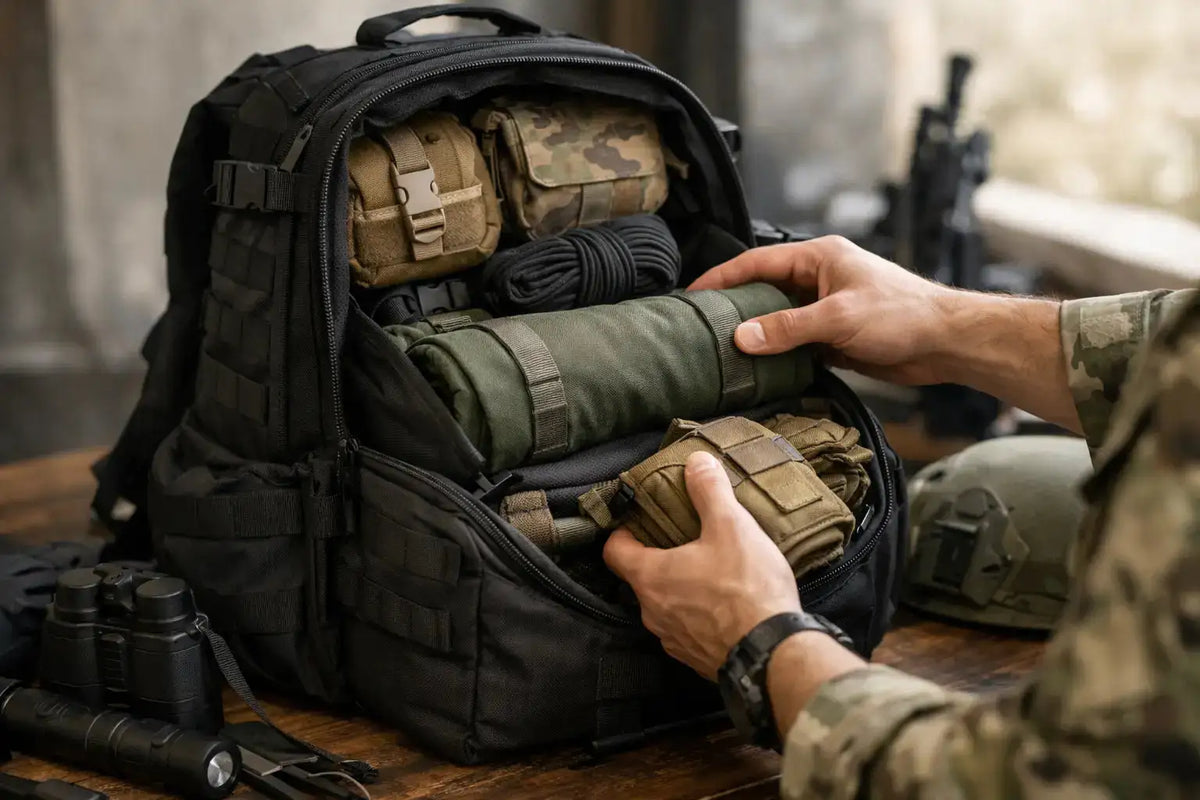
A badly packed patrol pack tells on you before the first mile is done. The straps start pulling in the wrong places, hard items dig into your back, and the one bit of kit you need quickly is buried under everything else. If you are working out how to pack patrol backpack loads properly, the aim is simple - keep the weight stable, protect essential kit, and make sure high-priority items are easy to reach.
There is no single packing layout that suits every patrol, exercise or role. A short tab in dry conditions is not the same as an overnight exercise, and a cadet fieldcraft weekend is not the same as professional use. Still, the packing principles stay much the same. Build the load around balance, access and weather protection, then adjust for task, duration and terrain.
How to pack patrol backpack loads for stability
The biggest mistake is treating the patrol pack like a general holdall and stuffing gear wherever it fits. A patrol backpack works best when the load sits close to your centre of gravity and stays there. That means heavier items should usually ride high and close to the back panel, not slung low at the bottom or hanging off the outside.
If the pack is too bottom-heavy, it drags backwards and makes each step less efficient. If heavy kit sits too far away from your back, the pack feels heavier than it is. You will notice it on climbs, uneven ground and any movement that needs pace. A properly packed load should feel compact and controlled rather than loose or toppling.
Start with the items you are least likely to need on the move. Spare clothing, a sleeping layer or rest kit can go lower down, provided it is compressed and waterproofed. From there, place denser items nearer the middle of the pack and close to the spine. Rations, water, stove components, ammunition pouches where relevant to training use, or batteries all need sensible positioning because they add up quickly.
Softer items are useful as buffers. A rolled smock, fleece or poncho liner can stop hard edges pressing into the back panel and help prevent gear shifting in transit. The point is not to make the pack look tidy for inspection alone. It is to stop movement inside the bag, because movement wastes energy.
Build the load by priority, not just by size
A good patrol pack is organised in layers of use. Think in terms of immediate, routine and delayed access.
Immediate access covers the items you may need without emptying the bag. That might be waterproofs, a warm layer, first aid essentials, navigation aids, gloves, eye protection, torch, notebook or a quick ration item. These belong in the top lid, external pocket, or the upper part of the main compartment if your pack design is fairly simple.
Routine access covers items you may reach during halts. Stove kit, brew kit, spare socks, wash kit, lunch ration or admin items can sit deeper, but they should still be easy to find. Delayed access is the kit you will not need until harbour, overnight stop or end of task. That is where sleeping kit, spare base layers and non-essential extras belong.
This sounds obvious, but many poor packing jobs come from packing by shape instead of purpose. A square item goes into a square gap, then another item gets forced on top, and before long the whole pack is working against you. Pack according to when you need something, then make it fit properly.
Waterproof everything that matters
British conditions are not kind to field kit. Even if the forecast looks decent, water finds its way in through zips, seams and repeated ground contact. Dry bags, waterproof liners or heavy-duty stash bags are not optional if your kit needs to stay serviceable.
Do not rely on the backpack fabric alone, even if it is marketed as weather resistant. Separate critical gear inside the pack. Sleeping gear, spare clothing, admin items and electronics should each have their own waterproof protection. This also helps with organisation. Instead of rummaging through one large compartment, you can identify kit by pouch or bag type straight away.
There is a trade-off here. Too many stuff sacks can slow access and add bulk. The answer is not to bag every sock individually. Use a system with a clear purpose - one for sleep kit, one for dry clothing, one for admin or tech, one for food if required. Keep it disciplined.
What goes outside the patrol backpack
External carriage should be limited to items that are either designed for it or can tolerate exposure. A patrol pack covered in dangling gear might look busy, but it catches on branches, makes noise, shifts weight and can cost you kit if straps work loose.
If you need to carry a roll mat, helmet, basha or wet weather layer externally, secure it tightly and keep the profile as neat as possible. Side pockets should stay balanced. If one side carries a water bottle or heavy pouch, the other side needs to counter it or the pack will sit unevenly.
Some packs allow plenty of attachment points, but that does not mean every loop should be used. Restraint usually gives a better result. The cleaner the exterior, the easier the move.
Water placement matters more than many realise
Water is often the heaviest single part of the load. Where it sits affects balance from the first step. Hydration bladders work well because they place weight close to the back and allow drinking on the move. Bottles in side pockets can also work, but only if the pack remains balanced and the pockets actually secure them properly.
For shorter patrols, your water plan may be straightforward. For longer tasks, the load changes through the day as water is consumed. That means the pack that felt fine at step-off can sit differently after several hours. It is worth checking your adjustment during halts, particularly if one side is emptying faster than the other.
Fit the pack after you pack it
Knowing how to pack patrol backpack kit is only half the job. Once loaded, the pack needs to be adjusted to your body. Shoulder straps, waist belt if fitted, sternum strap and load lifters all need setting with the actual patrol load in place.
A common error is tightening the shoulders to carry everything. That usually leads to fatigue and restricted movement. The load should sit close and secure, with the belt and back system doing the work they are designed for. If the pack has an adjustable back length, take the time to set it properly before heading out.
Then walk with it. Not for thirty seconds in a hallway, but long enough to spot rubbing, bounce or pressure points. Minor repacking before deployment is far easier than dealing with hot spots once you are committed to route.
Packing for role, season and duration
The right layout depends on the task. A day patrol pack may prioritise water, waterproofs, navigation and a bit of sustainment kit. An overnight pack needs a more careful split between patrol essentials and sleep system items. Winter packing demands more volume for insulation and spare dry layers, while summer loads may shift weight towards hydration and sun protection.
Cadets and newer users often make one of two mistakes. They either overpack because they are unsure what matters, or they underpack because they want a lighter load. Neither is ideal. Every item should earn its space. If a piece of kit is critical, carry it properly. If it has no real job on that patrol, leave it behind.
This is where good equipment selection helps. A well-designed patrol backpack with sensible compartments, solid compression straps and dependable fabric makes packing easier from the outset. Trusted field kit tends to reward disciplined use.
A simple check before stepping off
Before you move, lift the pack, put it on, and ask three questions. Can you reach the items you are likely to need quickly? Is the heaviest weight close to the back and stable? Is everything that must stay dry actually protected from weather?
If the answer to any one of those is no, repack it. Five extra minutes sorting the load is worth far more than carrying a badly balanced pack for the rest of the day. That applies whether you are heading to a training area, preparing for cadet fieldcraft, or sorting dependable field kit from a specialist outfitter such as John Bull Clothing.
A patrol backpack should work quietly in the background. When it is packed properly, you stop thinking about the bag and get on with the job.