
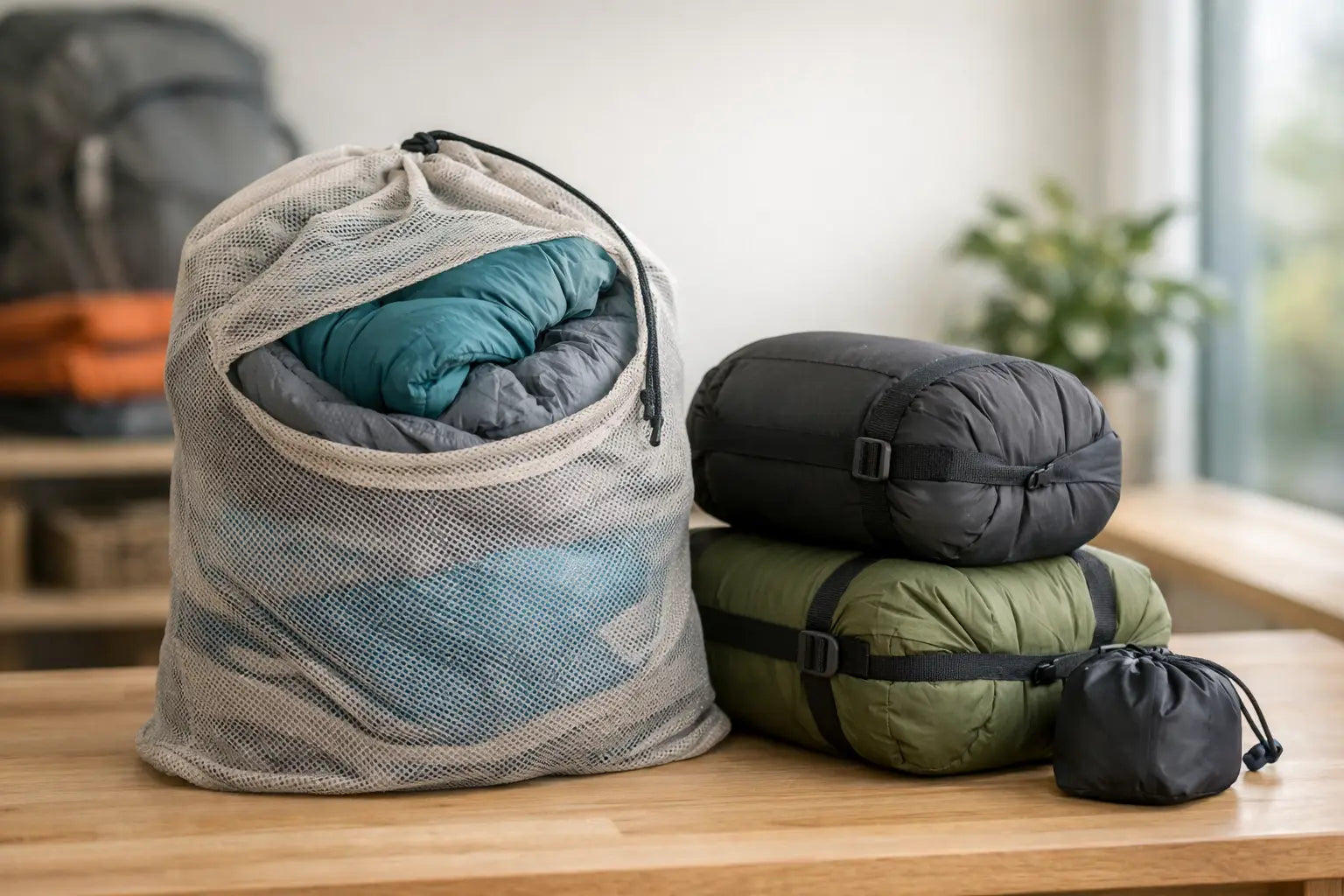
A sleeping bag can be warm, compact and dependable in the field, then lose much of its performance through poor storage at home. Knowing how to store a sleeping bag properly protects the insulation that traps warm air around you. Whether it is a lightweight patrol bag, a three-season synthetic model or a down-filled sleeping system, the same rule applies: pack it small for transport, but store it loose for the long term.
A compression sack is useful when space in a Bergen, holdall or vehicle is limited. It is not where the bag should live between exercises, expeditions or camps. Months of compression can leave insulation flattened, reducing loft and creating cold spots when you need reliable warmth.
Dry the sleeping bag completely first
Never put a sleeping bag away damp. That includes obvious rainwater, condensation from a tent, sweat after a warm night, and moisture picked up while airing kit on a humid day. Even a bag that feels mostly dry can retain enough moisture in its fill to develop mildew, smell musty or lose insulating efficiency.
After use, turn the bag inside out if the lining is damp and air it in a dry, ventilated space. Hang it over a clothes airer or lay it flat where air can circulate. Avoid leaving it directly on a radiator, in front of a fire or in intense sunlight for long periods. Excessive direct heat can damage shell fabrics, coatings and synthetic fibres, while prolonged sunlight can weaken nylon and polyester.
If the bag has been used on a wet exercise or stored in a damp vehicle, give it more time than you think it needs. Check the footbox, hood, zip baffle and areas around the shoulders carefully. These sections commonly hold moisture after a night in the field.
Store a sleeping bag loose, clean and dry
The best place to store a sleeping bag is somewhere clean, dry and reasonably cool, such as a cupboard, spare room or dry loft space with stable conditions. Do not store it in a damp garage, garden shed, cellar or the boot of a car. Temperature swings and moisture are hard on both insulation and fabric.
Many sleeping bags are supplied with a large mesh storage sack or cotton bag. Use it. These allow the insulation to remain expanded and let any trace moisture escape. If yours did not come with one, a large breathable cotton laundry bag is a practical alternative, provided it is clean and has plenty of room.
For bags without a suitable storage sack, hang the sleeping bag loosely from a wide hanger or drape it over a rail. Do not suspend it by a small hanging loop unless the manufacturer specifically states that the loop is designed for long-term storage. Over time, the weight of the bag can strain stitching or distort the shell.
A large plastic storage box can work only if the bag is thoroughly dry and the box is clean and dry inside. Leave the lid slightly ventilated where practical rather than sealing the bag in an airtight environment. Breathability is usually the safer choice for stored insulation.
Why the compression sack is for travel only
Compression sacks are part of good load carriage. They reduce bulk, help keep a pack organised and make it easier to carry a sleeping system alongside clothing, rations and waterproof layers. For a weekend away or deployment movement, compressing the bag is entirely normal.
The issue is duration. Synthetic insulation consists of fine fibres that create pockets of air. Down works through clusters that expand and trap even more air. When either fill is held tightly compressed for extended periods, it may not fully recover. A bag can still look acceptable when unpacked but feel noticeably colder because its loft has reduced.
This matters most with older bags and lower-quality fill, but even premium equipment benefits from correct storage. If space is genuinely limited, avoid fully tightening the compression straps and take the sleeping bag out to loft whenever possible. That is a compromise, not an ideal long-term solution.
Down and synthetic bags need slightly different care
Down sleeping bags offer an excellent warmth-to-weight ratio and pack down very small. Their insulation is particularly dependent on loft, so loose storage is essential. Keep down away from moisture and avoid storing it in a compressed waterproof dry bag. A dry bag is ideal in wet conditions on the move, but not for months in a cupboard.
Synthetic sleeping bags generally handle damp conditions better and dry more quickly. They remain the practical choice for many cadet camps, vehicle-based trips and wet UK conditions. However, synthetic fill is more prone to permanent compression over time, especially if it is continually packed tight. Give it room to expand after every outing.
For both types, close the zip before storage to help maintain its shape and protect the zip teeth. Do not force a snagged zip or leave grit in the zip track. Brush away dirt and check the drawcords, hood, baffles and stitching while the bag is laid out.
Clean it only when it needs cleaning
A sleeping bag does not need washing after every use. Frequent washing can wear the fabrics and, if done incorrectly, affect the insulation. Instead, air it after use and deal with small marks using a damp cloth and a mild cleaner suitable for technical fabrics.
Wash the full bag when it is visibly soiled, smells persistently after airing, or the insulation is affected by body oils and grime. Always follow the care label. Down bags need a down-specific wash product, while synthetic bags should be washed with a cleaner appropriate for synthetic insulation. Standard detergent, fabric conditioner and bleach can leave residues or damage performance.
Use a large front-loading machine if the label permits it. A top-loading machine with a central agitator can be rough on baffles and fabric. Drying takes time. For down, low heat and clean dryer balls can help separate clumps and restore loft, but the bag must be completely dry before storage. If in doubt, use a specialist cleaning service rather than risking a costly sleeping system.
Keep pests, mould and kit-room smells away
Do not add strongly scented moth products, fragranced dryer sheets or oils directly to a sleeping bag. Their smell can transfer to the lining and may be unwelcome on field kit. Clean, dry storage is more useful than masking odours.
Before putting the bag away, remove leaves, grass, sand and food debris from the shell and footbox. Field rations, snack crumbs and damp socks should never share the storage sack. Rodents and insects are more likely to investigate stored kit that carries food residue, while trapped dirt can abrade the fabric.
If you find a small patch of mould, isolate the bag rather than storing it with other equipment. Clean it according to the manufacturer’s instructions and make sure it is thoroughly dried. Widespread mould, a strong persistent odour or degraded coating may justify professional advice or replacement, particularly where the bag is relied upon for cold-weather use.
Check the bag before the next outing
A quick inspection before packing saves problems at camp. Take the sleeping bag from its storage sack, shake it out and allow it to loft for several hours if possible. Test the zip, inspect seams and look for thin sections in the fill. On a down bag, gently work any clumps apart with your fingers.
For regular users, this is also the right time to reassess the system rather than just the bag. A sleeping mat with adequate insulation, a dry base layer and sensible shelter ventilation all affect overnight warmth. A well-stored sleeping bag performs as designed, but it cannot compensate for a poor ground mat or being put away wet after every trip.
Treat the storage sack as part of the sleeping system, not disposable packaging. A dry, loose and properly lofted bag will be ready when the temperature drops, the ground is hard and dependable kit matters most.