
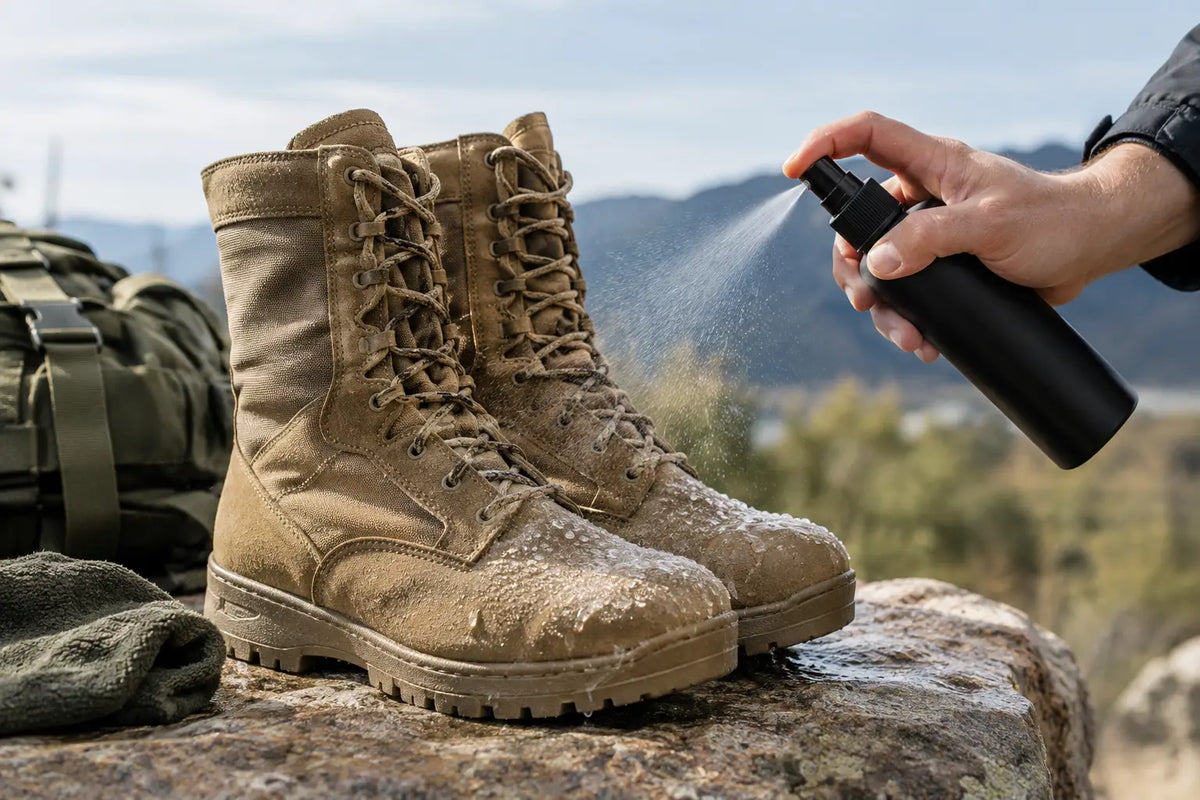
A wet boot does more than make a tab, patrol or day on the range unpleasant. Once water gets through the leather, insulation loses effectiveness, feet soften, friction increases and blisters follow. Knowing how to waterproof military boots properly helps protect the boot, maintain comfort and keep your footwear dependable when the ground turns wet.
The method depends on what your boots are made from. Full-grain leather, nubuck, suede and membrane-lined boots each need the right treatment. The common mistake is applying a heavy wax or oil to every pair. It may stop water for a while, but it can also damage the finish, block breathability or reduce the performance of a waterproof membrane.
Start by identifying the boot material
Check the manufacturer’s care label before choosing a treatment. Smooth leather boots generally respond well to wax-based creams or leather conditioners formulated for waterproofing. These replenish the leather while creating a barrier against rain, standing water and wet grass.
Nubuck and suede require a lighter spray-on protector. Wax will darken the surface, flatten the nap and permanently alter the appearance. That may not matter on a hard-used field boot, but it can affect breathability and is usually outside the maker’s recommended care routine.
For boots with a waterproof and breathable lining, such as a membrane system, use products specifically stated as suitable for membrane footwear. The membrane sits behind the outer material. If the leather or fabric face soaks up water, the boot may feel cold and clammy even when the lining has not leaked. Maintaining the outer water-repellent finish is therefore part of looking after the whole system.
What you need to waterproof military boots
Prepare the boots before reaching for treatment. A few basic items will do the job properly:
- A stiff boot brush or old nail brush
- Clean water and a mild footwear cleaner
- A clean cloth or sponge
- The correct waterproofing wax, cream or spray for the boot material
- Newspaper or boot-drying paper
Clean the boots first
Waterproofing over dried mud is wasted effort. Dirt holds moisture against the upper, works into stitching and prevents treatment from bonding evenly with the surface.
Remove the laces so you can clean the tongue, eyelet rows and flex points. Brush off loose mud, grit and salt residue, then use lukewarm water and an appropriate cleaner to deal with stubborn marks. Pay close attention to the welt or sole edge, the seam where the upper joins the sole, and any folded leather around the tongue. These are common entry points for water.
Do not soak the boots in a bucket and do not put them through a washing machine. Excessive water can affect adhesives, linings and leather shape. Once clean, wipe off surplus moisture and allow the boots to become damp rather than dripping wet. Many waxes and creams apply best to slightly warm, damp leather because it accepts treatment more evenly.
Apply wax or cream to smooth leather
With clean hands, a cloth or a small applicator brush, work a small amount of waterproofing wax into the leather. Start at the toe and move across the vamp, sides and heel. Use firm circular motions, paying particular attention to creases, stitched seams and the area around lace hooks.
Thin, even coats are better than one thick layer. A heavy build-up can leave leather greasy, attract dirt and make the upper less able to release moisture from inside. Let the first coat settle for a few minutes, then inspect the boot. If dry areas remain, add a second light coat.
Do not forget the tongue. On many military boots, the tongue is gusseted to keep out water and debris, but only up to a certain height. Treat the leather folds and the stitching where the tongue joins the upper. Water can still enter over the top in deep water, so waterproofing is not a substitute for gaiters or sensible route choice.
A gentle warmth can help wax absorb, but keep it controlled. Place boots in a warm room, not directly against a radiator, heater or fire. Direct heat can shrink leather, crack it and weaken bonding around the sole.
Use spray treatment on nubuck, suede and fabric panels
For nubuck, suede or mixed leather-and-fabric boots, use a footwear protector spray made for that material. Brush the upper clean and allow it to dry fully unless the product instructions say otherwise. Spray outside or in a well-ventilated area, holding the can at the stated distance and covering the upper in a light, consistent layer.
Do not saturate the boot. One even coat, followed by a second if directed, is usually enough. Allow the boots to cure for the full time on the product label before wearing them. If the surface has a nap, restore it gently with a suitable brush once dry.
Spray treatments need more frequent renewal than a good leather wax, especially on boots exposed to wet vegetation, rough ground and repeated cleaning. That is the trade-off for retaining the original finish and better breathability.
Dry boots properly after wet use
Waterproofing reduces water ingress, but every boot will eventually get wet in prolonged rain, deep puddles or stream crossings. How you dry them makes a major difference to their service life.
Remove the insoles and loosen the laces. Empty out grit and place newspaper or absorbent paper inside the boots, replacing it when saturated. Leave them in a dry, ventilated place at room temperature. A boot dryer with gentle, unheated airflow is also useful.
Never force-dry military boots on a radiator, in an airing cupboard against a hot pipe, or with a hairdryer. Leather can become brittle, while rapid heat can distort the sole and affect the adhesive bond. Once dry, brush the boots down and check whether water still beads on the outer. If it darkens and absorbs immediately, it is time to reapply the relevant treatment.
How often should military boots be waterproofed?
There is no fixed interval because conditions dictate the routine. Boots worn occasionally for dog walking or weekend airsoft may only need attention at the start of the wetter season and after a thorough clean. Boots used regularly for field training, security work, cadet activities or outdoor employment may need treatment every few weeks.
Use the beading test rather than relying on the calendar. Sprinkle a little clean water over the upper. On a well-protected boot, droplets should sit on the surface and roll away. If the leather or fabric darkens quickly, the durable water-repellent finish has worn off and the upper needs cleaning and retreating.
It is also worth checking the condition of stitching, randing and sole edges. A waterproof upper cannot compensate for split seams, a separating sole or damaged lining. These faults need professional repair or replacement, particularly where reliable footing and dry feet are part of the job.
Avoid the common waterproofing mistakes
Over-treating is as unhelpful as neglecting the boots. Too much wax can make leather overly soft, reduce support and collect dust. The aim is conditioned, water-shedding leather, not a thick shiny coating.
Using the wrong product causes equally predictable problems. A heavy wax on suede changes the finish, while standard wax on a membrane-lined fabric boot can restrict the outer material. If you are unsure, follow the boot manufacturer’s recommendation rather than assuming all military-style footwear is built the same way.
Finally, do not treat waterproofing as a cure for poor sock choice. Quality moisture-wicking socks, correctly fitted boots and dry spare socks in your pack all help prevent foot problems. On long wet days, that simple preparation can matter as much as the treatment on the boot.
A well-maintained pair of boots should shed rain, dry sensibly and remain comfortable under load. Clean them after hard use, choose treatment that matches the material, and renew it when water stops beading. That is the practical routine that keeps dependable military footwear ready for the next wet day.