
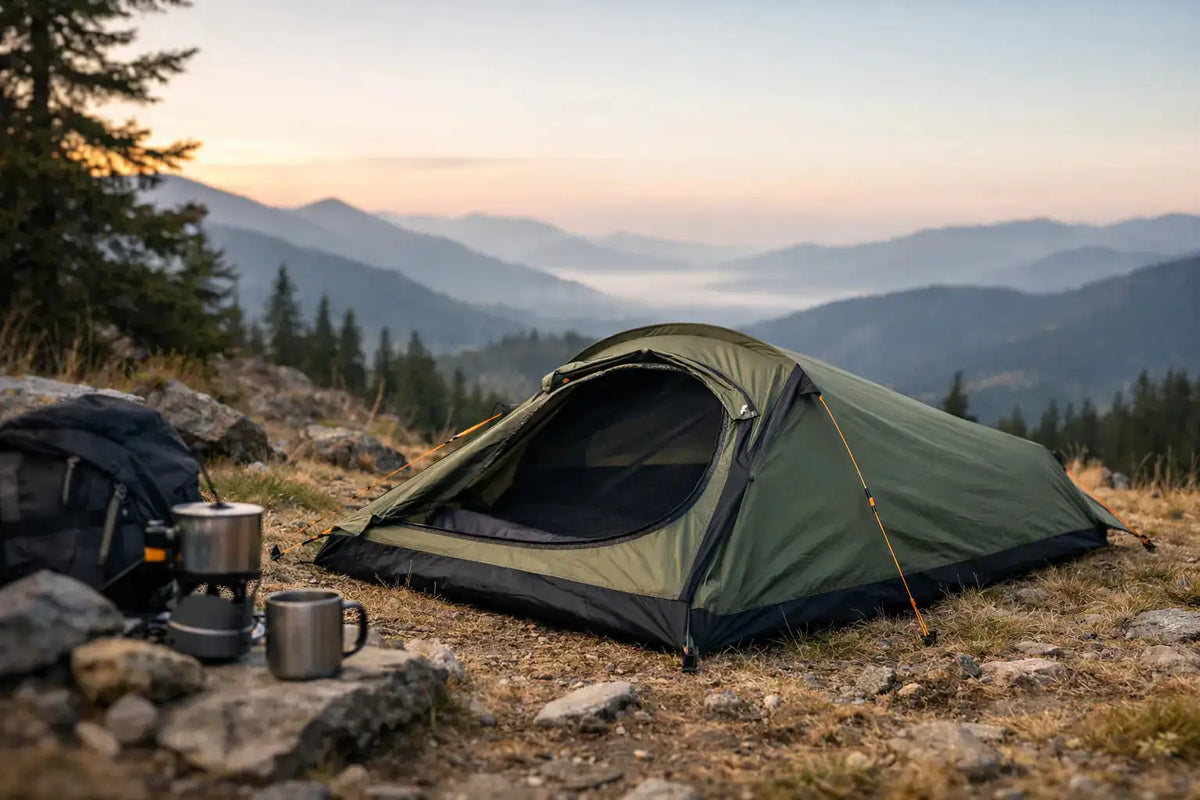
A one-man tent earns its place by doing a difficult job well: keeping one person, their sleeping system and essential kit protected without adding needless bulk to the bergen. So, just how good is the Snugpak Ionosphere tent? For the right user, it is a highly capable, weather-focused shelter with a proven military and expedition-minded design. It is not a comfortable base camp tent, and it makes no attempt to be one.
The Ionosphere is best understood as a low-profile, four-season solo shelter for wild camping, fieldcraft, fishing, motorcycle touring and overnight exercises where pack space, concealment and dependable weather protection matter more than room to stand up. Its strength is the balance it strikes. It is appreciably more protective than a basic lightweight bivvy, while remaining far less bulky than many conventional two-person tents.
What the Ionosphere is designed to do
The Ionosphere is a compact, single-occupant tent with a low silhouette, a separate flysheet and inner, plus a small porch for boots, rucksack and wet equipment. Its profile is deliberately restrained. That reduces wind resistance, makes it easier to site discreetly and helps it suit users who prefer practical field kit over campsite comfort.
Snugpak rates the flysheet and groundsheet with substantial waterproof protection, and the tent is intended for year-round use when pitched correctly. The tunnel-style arrangement uses two poles and relies on being properly pegged and tensioned. This is not a tent to throw down loosely at dusk and expect to perform at its best. Give it a sound pitch, use the supplied guy points when conditions demand it, and it becomes a notably secure small shelter.
At around 1.5 kg, depending on the version and supplied components, it sits in a sensible middle ground. Ultralight hikers can find lighter shelters, especially trekking-pole designs or minimal tarps. Those options often require compromises in weather coverage, pitching flexibility, durability or ease of use. The Ionosphere carries a small weight penalty in return for a fully enclosed, self-contained shelter that is better suited to poor British weather.
Just how good is the Snugpak Ionosphere tent in bad weather?
This is where the tent makes its case. The low profile sheds wind well when the narrow end is pointed into the prevailing weather. The flysheet extends close to the ground, limiting draughts and wind-driven rain, while the bathtub-style groundsheet helps protect against wet or saturated ground.
For a solo user on exposed moorland, woodland edges or open training areas, that matters more than it may on a managed campsite. A tent that is slightly heavier but remains settled through a wet, windy night is often the better choice. The Ionosphere has the design credentials for that role, provided the site is chosen sensibly and the tent is fully secured.
There are limits. No compact fabric tent is invulnerable to severe gales, flooding or poor siting. Pitching in a hollow where water collects, leaving the fly loose, or relying on the minimum number of pegs in high wind will undermine any shelter. In prolonged rain, take time to tension the flysheet evenly and ensure it is not resting against the inner. This is the simplest way to maintain airflow and reduce the chance of moisture transferring through contact.
The tent's low height is also an advantage in rough weather, but it creates an obvious trade-off: there is limited room for changing clothes or sorting kit inside. Users accustomed to larger backpacking tents will notice the difference immediately.
Interior space: enough for one, not generous
The Ionosphere is correctly described as a one-person tent. A standard sleeping mat, sleeping bag and a user of average build fit well enough, while the porch takes footwear and a compact rucksack. Longer or broader users should pay close attention to the published internal dimensions before buying. There is little spare room at either end once a winter sleeping bag and thick mat are in place.
For an overnight patrol-style load, a lightweight walking pack or a stripped-down wild-camping set-up, the arrangement works. Larger bergens may need to sit partly in the porch, be covered outside, or have selected equipment brought into the inner with the user. That is manageable, but it requires sensible kit discipline.
The porch is useful rather than spacious. It gives a sheltered place to remove muddy boots, store wet layers and prepare simple food with the door open. As with any tent, do not use a stove inside the enclosed sleeping area. Ventilation, flame risk and carbon monoxide are non-negotiable considerations.
For users who are claustrophobic, exceptionally tall, or planning to spend long periods tent-bound in foul weather, a roomier one-and-a-half or two-person tent will be the better investment. Extra internal volume is not a luxury when a multi-day trip brings persistent rain.
Pitching and field use
The Ionosphere is straightforward once practised, but it is worth doing a few dry runs before relying on it for a trip or exercise. The basic process is to lay out the footprint, peg the corners, insert the poles, attach or raise the inner as required by the model configuration, then fit and tension the flysheet. In poor conditions, an organised pitch saves time and keeps the inner from becoming wet before you settle in.
Choose firm, well-drained ground and clear away sharp stones, sticks and debris. A separate footprint can provide extra protection for the groundsheet and keep the packed tent cleaner, though it should not extend beyond the tent's edges where it can collect rainwater. In soft ground, longer or wider pegs may be worthwhile, particularly on coastal ground, sand or wet upland terrain.
The compact packed size is a major practical benefit. It slips into or onto a rucksack without taking over the load plan, making it suitable alongside a proper sleeping bag, insulated mat, waterproof layers, cooking kit and water. That is precisely why it appeals to military-minded outdoor users: it supports a complete overnight system rather than dictating it.
Condensation is the point that deserves realistic expectations. In damp British conditions, especially with wet clothing, saturated ground and a tightly closed tent, moisture inside any small shelter is likely. The Ionosphere's vents and separated inner help, but they cannot defeat physics. Keep vents clear, avoid breathing directly into the inner fabric, dry wet kit where possible and open the entrance briefly when conditions allow. A compact microfibre cloth is useful for wiping down the fly's inner surface in the morning.
Where it compares well, and where it does not
Against a bivvy bag, the Ionosphere provides considerably more weather separation, insect protection and room to organise essential kit. It also gives a proper porch, which is valuable when boots and waterproofs are wet or muddy. The penalty is extra weight, a larger packed size and the need to pitch it.
Against a lightweight two-person backpacking tent, it is more discreet and normally more economical in packed volume, but less comfortable for extended trips. A two-person tent gives a solo traveller room to keep all kit inside and wait out bad weather. If comfort after a long day is central to the trip, choose the extra space.
Against very light single-skin shelters, the Ionosphere's separate inner and fly arrangement is a meaningful advantage for managing moisture and maintaining a usable sleeping area. It is also a better choice for users who want a conventional, enclosed tent rather than a specialist tarp or trekking-pole set-up.
The best match is someone travelling alone who values protection, low visibility and sensible packability. Cadets and Duke of Edinburgh participants may find it capable but more confined than necessary for their first expeditions, where ease of living can be as important as outright shelter performance. Experienced wild campers, anglers, airsoft users and those building a dependable field kit are more likely to appreciate exactly what it offers.
Is the Ionosphere worth choosing?
The Snugpak Ionosphere is good because it is honest about its role. It does not pretend to be an ultralight racing shelter or a roomy weekend tent. It is a compact, serious one-person shelter designed to stay useful when the weather turns and the ground is less forgiving than a campsite field.
Buy it for solo overnights where protection and pack discipline come first. Pair it with a suitable sleeping mat, a season-appropriate sleeping bag and dependable pegs, then practise pitching it before the first wet night out. Treated as part of a complete field system rather than a stand-alone purchase, it is a tent that can give years of dependable service.