
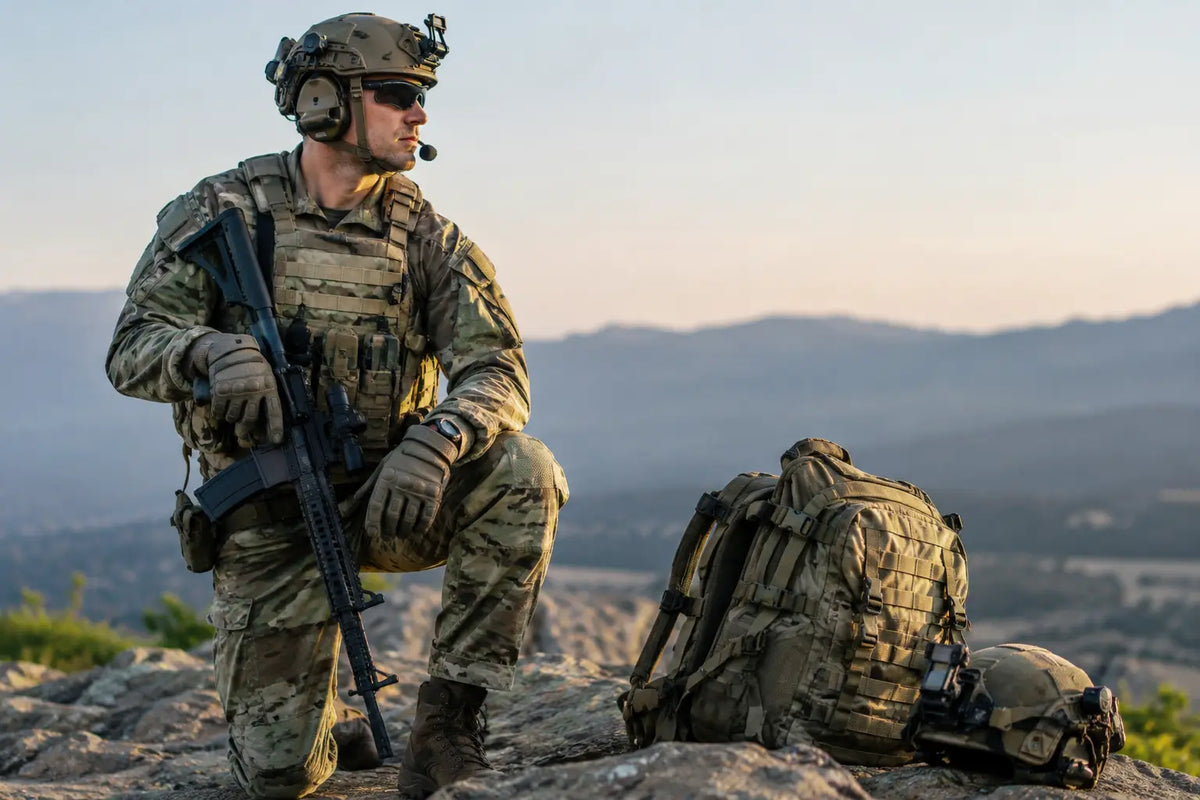
A wet training area, a long tab, a vehicle day or a night exercise quickly exposes the difference between kit that merely looks tactical and kit that earns its place. The military kit trends worth watching are not about cosmetic changes. They are about reducing fatigue, improving access to essentials and keeping personnel comfortable enough to work effectively in poor weather.
For serving personnel, cadets, police, security users and serious outdoor users, the direction is clear: lighter where it can be lighter, tougher where it must be tough, and easier to adapt to the task. The best choices still depend on role, issued dress regulations and personal preference, but several practical themes are now shaping how field kit is selected.
Military Kit Trends: Function Before Fashion
The strongest trend is a return to purpose-led buying. Camouflage pattern, hook-and-loop patches and laser-cut panels can be useful, but they do not compensate for poor fit, weak stitching or an awkward load. Buyers are looking more closely at the parts of a system that affect every hour outside: boot support, breathable layers, pack adjustment, glove dexterity and the placement of water, first aid and navigation equipment.
This has also changed how tactical kit is assessed. Rather than buying a full matching setup, experienced users are more likely to build a sensible system around a proven rucksack, dependable footwear and clothing suitable for the season. Additions then have to justify their weight and bulk.
Clothing is becoming more adaptable
The one-jacket approach has limited value when conditions change between first light and last light. Layering systems are increasingly preferred because they allow the wearer to regulate temperature without carrying unnecessary bulk. A moisture-managing base layer, a practical mid-layer and a weatherproof outer layer provide more useful options than a heavily insulated garment worn in every condition.
Softshell jackets remain popular for movement-heavy work, where breathability and freedom of movement matter more than complete waterproof protection. For static duties, exposed ground or cold camp routines, insulation becomes more important. Brands such as Keela and Snugpak are valued because their field clothing and insulation systems are designed around those real distinctions.
Durability remains central. Reinforced knees, seat panels, quality zips and sensible pocket placement matter more than fashionable cuts. Combat trousers need to work with kneepads where required, while jackets must still accommodate webbing, a daysack and body armour without riding up or restricting shoulder movement.
Better boot fit is driving buying decisions
Boots are no longer chosen solely by height or appearance. Width options, ankle support, sole grip, drainage, break-in time and compatibility with the user’s sock system all receive more attention. That is a welcome shift, because foot problems can finish a course, patrol or expedition well before a clothing issue does.
A lightweight boot can reduce fatigue over long distances, but it may not offer the support or protection required for rough ground, heavier loads or prolonged vehicle work. Conversely, a stiff leather boot may be the better choice for demanding terrain but feel excessive for routine use. The right answer depends on the task, load and ground underfoot. Well-regarded makers such as Altberg remain a sensible starting point where fit and long-term support are priorities.
Load Carriage is Moving Towards Simpler Setups
Modern load carriage is increasingly modular, but the useful version of modularity is restraint. Users want the ability to reposition pouches and tailor a rig for a specific role, not a belt or plate carrier covered in rarely used attachments. Every pouch should have a purpose, and essential items should be accessible with either hand where possible.
Laser-cut MOLLE panels are common because they can reduce weight and snag points compared with older webbing rows. They are not automatically better in every application, however. Traditional stitched webbing can be easier to inspect, repair and use with older pouches. The decision should rest on compatibility, expected wear and the load being carried rather than appearance alone.
Weight is being treated as a capability issue
A few hundred grams may seem insignificant at a kit table. Add a water supply, ammunition or training weight, communications equipment, food, wet weather layers and a sleeping system, and the total changes quickly. This is why lighter pouches, compact cook sets and carefully selected rucksacks are gaining ground.
The sensible aim is not to strip a setup to the minimum. It is to avoid duplicate items and oversized solutions. A 100-litre bergen has a place for extended deployments and expeditions, but it encourages overpacking on a short exercise. A well-fitted daysack can be the better option for daily training, provided it holds water, insulation, rations, waterproofs and required safety equipment without forcing awkward packing.
Balance matters as much as total weight. Heavy equipment carried high and close to the back is generally easier to manage than the same load hanging from the rear of a belt. Waist belts, sternum straps and properly adjusted shoulder harnesses are therefore not minor details. They are part of the load-carrying system.
Power, Navigation and Hydration are Joining Up
Electronic equipment has become a routine part of many field and patrol setups. GPS devices, head torches, mobile phones, radios, watches and rechargeable batteries all need a power plan. The trend is towards compact, protected power storage and clear cable management rather than carrying loose batteries in every pocket.
Navigation remains a discipline, not an app. A dedicated GPS unit can be a valuable aid, particularly for route planning and grid references, while a reliable watch can support timings and navigation tasks. Yet batteries fail, screens break and signals are not guaranteed. A map, compass and the competence to use them still belong in a credible setup.
Hydration systems are also being selected more carefully. Bladders make regular drinking easier while moving, but bottles can be quicker to refill, simpler to clean and more reliable in very cold conditions. Many users carry both: a reservoir for immediate access and a bottle for mixing drinks, refilling others or keeping a backup water supply. Camelbak-style systems remain useful when the tube routing does not interfere with shoulder straps, weapon handling or body armour.
Repairability and Service Life Matter More
The best military kit trends are not always new products. There is renewed respect for equipment that can be maintained, repaired and used hard for years. Replaceable insoles, repairable zips, durable buckles and strong fabric construction offer better value than cheap kit that fails halfway through a season.
This approach is particularly relevant for field sleeping systems, waterproof bags, webbing and rucksacks. A sleeping bag should be selected for realistic temperature, pack size and whether it will be used with a bivi bag or shelter. Choosing an extreme cold-weather system for mild conditions may sound safe, but it can mean carrying unnecessary weight and sleeping too warm. Equally, a compact summer bag is not a substitute for proper insulation on a cold overnight exercise.
Colour and finish also deserve practical thought. Black remains common in police and security roles, while olive, coyote and camouflage options suit different military and outdoor uses. Match the requirement, not the trend. Where unit policy applies, confirm what is permitted before committing to personal-purchase equipment.
How to Choose Kit Without Chasing Every Trend
Start with the conditions in which the kit will actually be used. Consider duration, expected weather, terrain, distance travelled, task demands and whether the equipment must work with issued clothing or armour. This removes much of the guesswork.
Then prioritise the items that have the greatest effect on comfort and performance: boots, socks, waterproof layers, rucksack fit and sleeping insulation. Accessories can refine a setup later. A quality glove is useful only if it allows sufficient feel for the work at hand; a large utility pouch is useful only if it does not obstruct movement or access to other equipment.
Try on load carriage with realistic weight whenever possible. Adjust it, walk in it and check whether you can reach water, navigation tools and first aid without removing the whole system. Do the same with boots using the socks you will actually wear. Fit cannot be judged properly from specifications alone.
John Bull Clothing customers often need kit for very different purposes, from a cadet field weekend to a professional patrol role or a demanding hill day. The common requirement is dependable equipment that suits the job. Build around that principle, maintain what you buy, and let proven field usefulness decide what stays in your setup.