
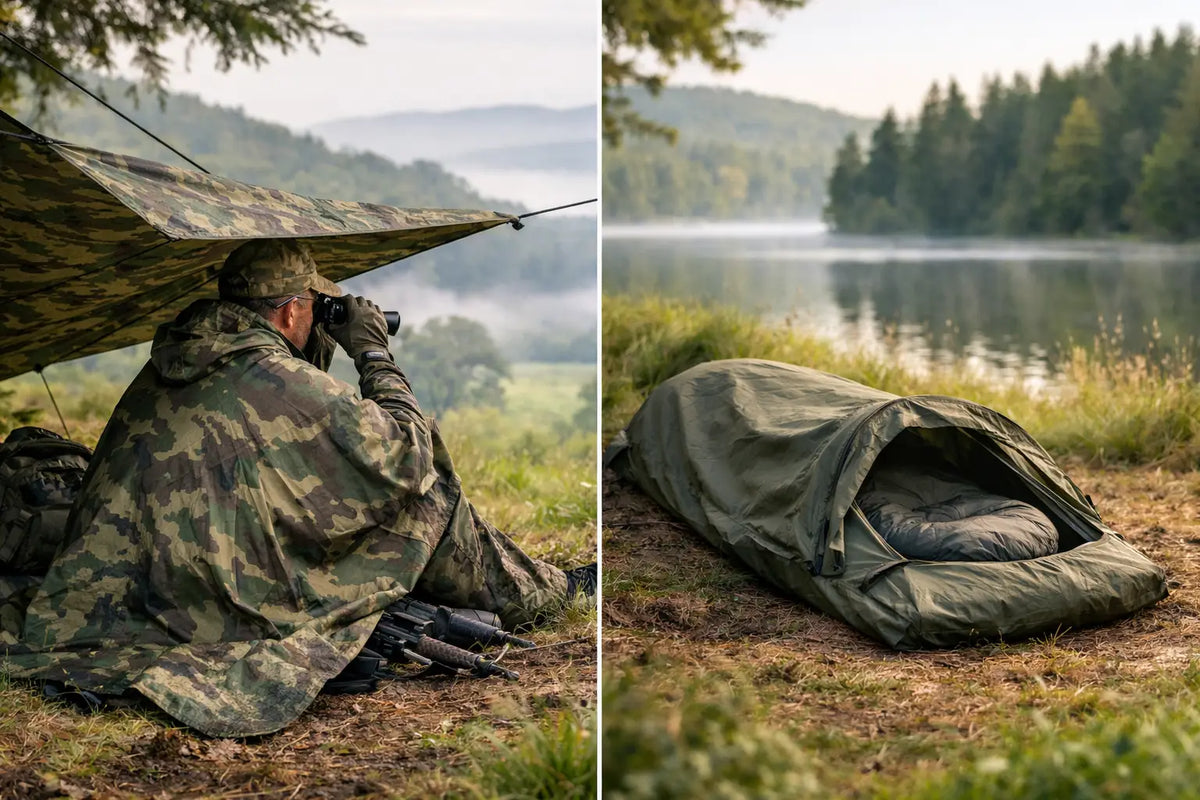
A wet harbour area exposes the real difference between a poncho and a bivvy bag very quickly. One keeps rain off you while moving and can become a shelter when stopped. The other protects your sleeping system once you are on the ground. In the military poncho vs bivvy bag decision, neither is automatically the better piece of kit. The right choice depends on whether your priority is movement, concealment, sleep protection, pack weight or a reliable emergency shelter.
Military Poncho vs Bivvy Bag: the Core Difference
A military poncho is a waterproof outer layer with enough material to cover the wearer, their webbing and often part of a rucksack. Most field-style ponchos have eyelets or press studs around the edge, allowing them to be rigged as a basic tarp, lean-to, basha or ground cover. Its main job is keeping weather off you and providing flexible shelter.
A bivvy bag is a waterproof, breathable cover that goes around a sleeping bag. It is designed to block rain, wind and ground damp while adding a degree of protection to a sleep system. A bivvy bag is not usually a shelter in its own right, although it can allow you to sleep without a tent in suitable conditions.
That distinction matters. A poncho protects the person and can cover kit while you are active. A bivvy bag protects the sleeping bag when you are static. Treating one as a straight replacement for the other often leaves a gap in your field set-up.
When a Military Poncho Earns Its Place
For patrolling, fishing, stalking, cadet expeditions or general outdoor work in changeable British weather, a poncho offers immediate protection without stopping to change layers. It goes over a jacket, smock or rucksack, so you can continue moving while keeping the bulk of your equipment dry.
Its strongest advantage is versatility. With paracord, suitable anchor points and a little practice, a poncho can become an overhead shelter for a brew stop or an overnight position. A low lean-to can shed wind and rain effectively, while a higher pitch gives more working room. The same item can also protect a rucksack during a halt or act as an improvised groundsheet when required.
The compromise is exposure. A poncho does not seal you in like a jacket, so strong side winds can drive rain underneath it. It can also snag in thick woodland, interfere with access to belt kit and create noise if made from a stiff fabric. In prolonged rain, ventilation is better than in a fully waterproof jacket, but your lower legs and boots may still get wet.
For a short-notice shelter, choose a poncho with properly reinforced eyelets, secure fastening points and a fabric that will tolerate tension. Lightweight material is useful, but a poncho intended for repeated basha use needs to cope with wind, wet ground and hard use rather than simply occasional showers.
Where a Bivvy Bag Is the Better Tool
A bivvy bag comes into its own at the end of the day. Used over a sleeping bag, it stops moisture from soaking the outer fabric and reduces the effect of wind stripping warmth from the system. It is particularly useful when sleeping under a tarp, in an open shelter or on ground where dew and surface water are likely.
A good bivvy bag also adds a valuable margin when conditions turn. If rain blows under a basha, the sleeping bag is not immediately exposed. If the groundsheet shifts, the waterproof base gives another layer of defence against damp. That is why it remains a sensible part of many military-style sleep systems.
Do not mistake a bivvy bag for insulation. It may improve warmth by cutting wind and holding a little still air, but it cannot replace a sleeping bag with an appropriate temperature rating or an insulated sleeping mat. In fact, a cold, wet night is often lost through the ground rather than through the top of the bag. A proper mat should be considered essential alongside any bivvy set-up.
Breathability is the key trade-off. A fully waterproof bag with poor vapour transfer can collect condensation inside, especially if the hood is pulled tight and the user is breathing into it. Better breathable fabrics cost more, but they make a noticeable difference on repeated overnight use. Ventilate where the weather allows, keep your face outside the opening and avoid climbing in wearing sodden layers if there is an alternative.
Shelter, Sleep and Weather Protection Compared
A poncho gives better overhead cover and daytime usefulness. It is the more adaptable option if you need one item to deal with rain on the move and a temporary shelter at rest. It is also useful for carrying a small, practical emergency shelter without committing to the weight and bulk of a tent.
A bivvy bag gives better protection for your sleeping bag and body overnight. It is quicker to use than pitching a full shelter and takes up little space in a bergan. In still, dry conditions, it can support a very low-profile sleep arrangement. In persistent rain or driving wind, however, it works best beneath some form of overhead cover.
Neither item replaces sensible site selection. Avoid hollows where cold air and water collect, look for ground that drains, and be alert to dead branches, rising streams and exposed ridgelines. A carefully chosen position will do more for comfort than simply buying a heavier waterproof cover.
Weight and Pack Space
A poncho is often the more economical choice if you need rainwear and a tarp in one package. It can reduce duplication in a lightweight load, particularly for summer overnights or emergency equipment. The practical cost is that you may have no dedicated waterproof cover around your sleeping bag once the poncho is overhead.
A bivvy bag is compact and specific. It adds an extra item to the pack but makes the sleeping system more dependable. For longer trips, field exercises and cold, damp seasons, that dedicated protection is usually worth carrying.
Concealment and Light Discipline
For those operating in a tactical or fieldcraft setting, the style and colour of the shelter matter. A poncho pitched low in suitable muted shades can be less visually obvious than a bright hiking tent, but its outline, straight edges and movement in wind still need managing. Keep cordage tidy, minimise gaps and avoid setting up on obvious tracks or skyline positions.
A bivvy bag is naturally low profile, but sleeping directly under the open sky can leave you exposed to weather and observation. A low poncho basha above a bivvy bag is often the more controlled arrangement, provided there is enough ventilation and the shelter is not pitched so low that it contacts the bag.
The Best Field Answer Is Often Both
For dependable overnight use, a military poncho and bivvy bag work best as a system. The poncho becomes the overhead layer, keeping rain off the position and creating a small working area. The bivvy bag protects the sleeping bag from ground damp, wind-driven rain and condensation falling from the underside of the tarp.
This combination is especially effective for users who value compact, versatile kit: cadets developing fieldcraft skills, airsoft players attending longer events, anglers on basic overnights and outdoor users who prefer a simple shelter set-up. Add an insulated mat, suitable sleeping bag, cordage and a few well-chosen pegs, and the system covers most three-season requirements.
There are limits. In severe winter weather, exposed hills or prolonged heavy rain, a purpose-designed tent or more substantial tarp may be the safer and more comfortable choice. A poncho shelter has limited space, and a bivvy bag cannot compensate for a sleeping bag that is inadequate for the forecast.
How to Choose the Right Item
Choose a military poncho first if you need waterproof cover while moving, want an emergency tarp and are building a lightweight day or overnight load. It is the more flexible item when rain protection and shelter have to come from one piece of equipment.
Choose a bivvy bag first if your main concern is protecting an existing sleeping bag, sleeping under a tarp or improving a compact overnight system. Prioritise breathable construction, a well-designed hood closure and enough room for your sleeping bag without compressing its insulation.
For a dependable field set-up, carry both when pack space allows. John Bull Clothing customers often know that reliable kit is rarely about one miracle item. It is about using the right layers together, pitching them properly and choosing equipment that suits the conditions you are actually going into. Before relying on either item away from camp, practise setting up in daylight and test the system in rain close to home. That experience is worth more than any label on the kit bag.