A backpack that is too small leaves essential kit strapped to the outside, exposed and awkward to carry. One that is too large encourages overpacking, shifts weight unnecessarily and becomes a nuisance in vehicles, woodland or crowded transport. If you are asking what size military backpack to buy, start with the load you genuinely need to carry, not the biggest bergen available.
For most users, capacity is measured in litres. That figure is useful, but it does not tell the whole story. Pocket layout, side pouches, compression straps, back length and the type of kit being carried all affect whether a pack works properly in the field.
What Size Military Backpack Do You Need?
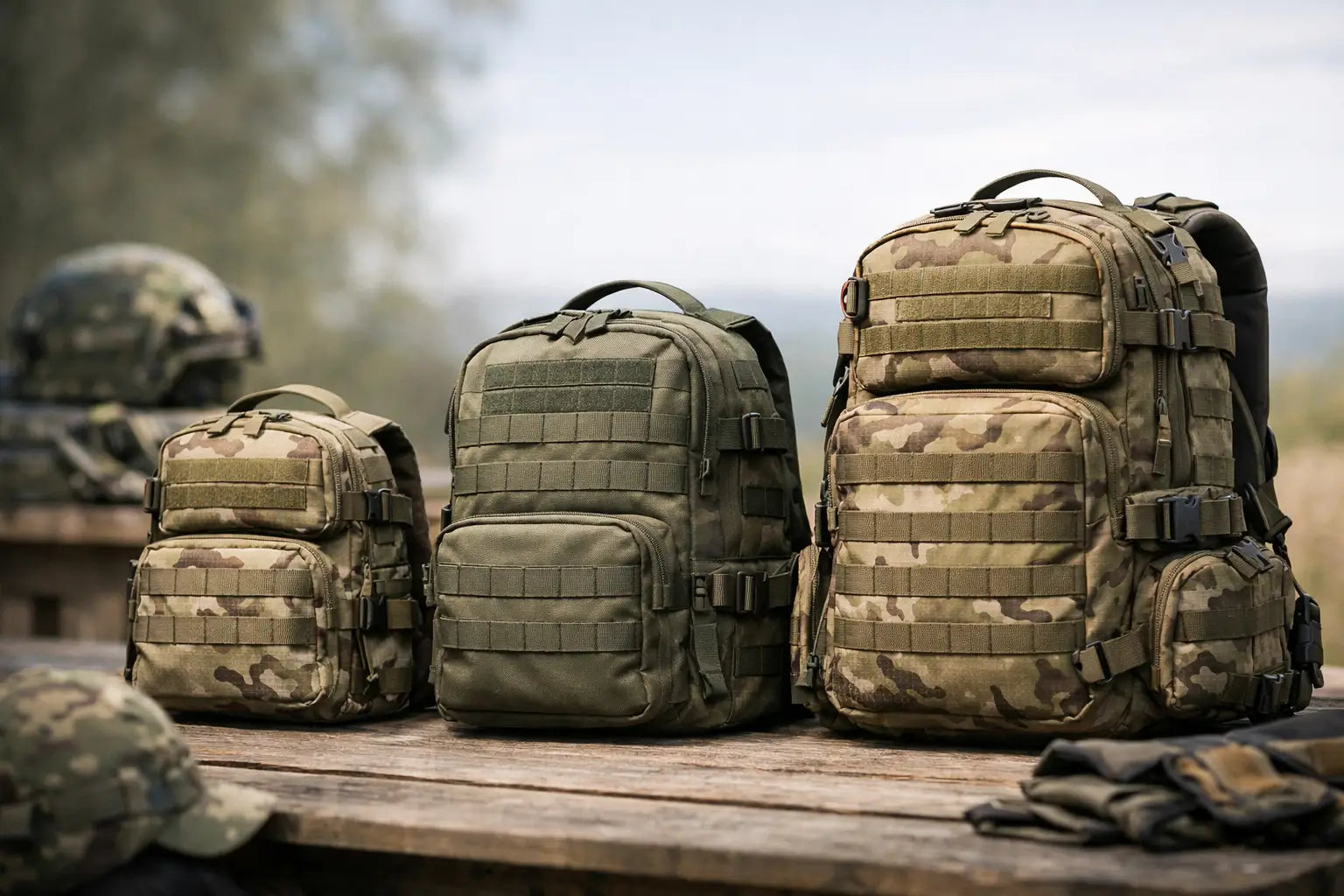
A practical starting point is to match capacity to duration. A 20 to 35 litre day pack suits a shift, range day, cadet training evening or short hike. A 35 to 50 litre pack is a strong all-round choice for a full day outdoors or a light overnight trip. For weekend field use, expeditions and loads that include sleeping kit, 50 to 70 litres is usually the working range.
Bergens of 80 litres and above are intended for substantial loads: extended exercises, cold-weather kit, multi-day trekking or situations where sleeping systems, rations and spare clothing must all be carried. They have their place, but they are not automatically the right answer for every military-style activity.
The key distinction is between volume and required equipment. Bulky insulation, a sleeping bag and a basha can fill a large pack quickly even if the overall weight remains manageable. Conversely, dense items such as ammunition, tools, water and electronics may create a very heavy load in a comparatively small pack.
20-35 litres: day packs and patrol packs
This capacity is well suited to personnel, cadets, airsoft players and outdoor users carrying immediate-use equipment. Think waterproof layer, warm layer, food, hydration, map and compass, first-aid supplies, gloves, torch, notebook and a small amount of specialist equipment.
A pack in this range is also practical for commuting, travel and vehicle-based work. It is easier to stow, less likely to snag in tight spaces and discourages the habit of carrying surplus kit. For a short patrol or day on the range, a well-organised 30 litre pack is often more useful than a half-empty large bergen.
Hydration compatibility matters here. If water is carried in a reservoir, confirm that the pack has an internal sleeve and a protected route for the drinking tube. If using bottles, look for side pockets that hold them securely without taking up the main compartment.
35-50 litres: the versatile middle ground
For many buyers, this is the most useful size range. It has enough room for a full day’s kit plus an overnight layer system, food, water and selected field equipment, while remaining manageable when moving on foot.
A 40 to 45 litre pack can work particularly well for weekend trips where accommodation is available, or for training where sleeping kit is carried separately. It is also a sensible choice for security professionals and instructors who need room for weather protection, spare clothing, documentation and duty equipment without carrying a full expedition load.
Organisation is more valuable than extra litres at this point. Separate access to waterproofs, medical items, navigation tools and food saves unpacking the entire bag in poor weather. Compression straps are equally useful, allowing the pack to remain stable when it is not filled to capacity.
50-70 litres: overnight and multi-day field loads
Once a sleeping bag, mat, stove, rations and spare layers are required, a 50 to 70 litre military backpack becomes the sensible option. This is the traditional range for a weekend exercise, a self-supported hill trip or several days under canvas.
Cold conditions push the requirement towards the upper end. A warm sleeping bag, insulated jacket, dry clothing and additional fuel take up considerable room. Wet-weather conditions can have the same effect, as damp kit needs to be separated from dry layers and packed with care.
Do not assume every item must go inside the main compartment. A sleeping mat or lightweight shelter may be securely carried externally where the pack is designed for it. However, keep the centre of gravity close to your back and avoid hanging loose equipment that catches on branches, doors or vehicle fittings.
80 litres and above: bergens for substantial kit
Large bergens are designed to carry a complete field load, not simply to provide spare space. They are appropriate when the task calls for a sleeping system, cooking equipment, multiple days of food, water, weather layers and mission-specific kit.
They are common for longer exercises, expeditions and cold-weather use, but the trade-off is clear: a larger pack can become far too heavy. The shoulder harness, hip belt and frame may be capable of supporting the load, yet your knees, back and pace still have limits. Pack only what the task, duration and conditions demand.
For British Forces-style kit, a bergen with compatible side pouches can be useful. They add flexibility, but should be treated as a planned extension of the load rather than permanent extra capacity. If the side pouches are always full, reassess whether the main pack is the right size or whether too much non-essential equipment is being carried.
Fit Matters as Much as Backpack Capacity
Two packs with the same litre rating can carry very differently. A short back length on a tall wearer leaves the hip belt sitting too high and transfers load onto the shoulders. A pack that is too long can pull away from the body and cause movement when walking.
The hip belt should sit over the top of the hips, taking the majority of the weight. Shoulder straps should secure the pack without bearing the full load, while load-lifter straps help bring the upper section close to the back. A sternum strap improves stability but should not restrict breathing.
Where possible, load the pack before deciding. Add realistic weight rather than trying it on empty. Walk, bend, climb a few steps and check whether the pack remains close to the body. Any pressure point that is obvious after five minutes will be more pronounced after five miles.
Pack for the Role, Not the Label
Military backpacks are often described as assault packs, patrol packs, tactical packs, day sacks or bergens. These labels provide a useful guide, but they are not fixed capacity standards. One manufacturer’s patrol pack may be 30 litres, while another is closer to 45 litres.
For cadets, a compact day pack is generally more appropriate than a large bergen unless an overnight exercise specifically requires sleeping equipment. For airsoft, compartment access, hydration provision and a stable fit may matter more than high capacity. For hillwalking and bushcraft, room for shelter, insulation and food is usually the deciding factor.
Operational users should also consider the environment. A pack used mostly from a vehicle can be larger and more compartmentalised. A pack worn over distance should be as lean as possible, with heavy items such as water, tools and rations positioned high and close to the back.
A Simple Way to Check Your Required Size
Lay out the equipment for the longest realistic trip you expect to make. Include seasonal clothing, water, food, medical kit and the sleeping system if required. Then separate it into three groups: items needed immediately, items needed during the day and items only needed at camp.
The immediate-use items should be accessible without emptying the pack. Heavy equipment belongs close to the back, while lighter, bulky gear can sit lower or towards the outside. If the layout only works by forcing zips shut or attaching half the load externally, move up a capacity range. If there is a large unused void, choose a smaller pack or compress the load properly.
A correctly sized military backpack should carry the required kit securely, leave room for changing conditions and remain comfortable over distance. Choose the capacity for your real task, fit it under load and let the pack support your movement rather than dictate it.