
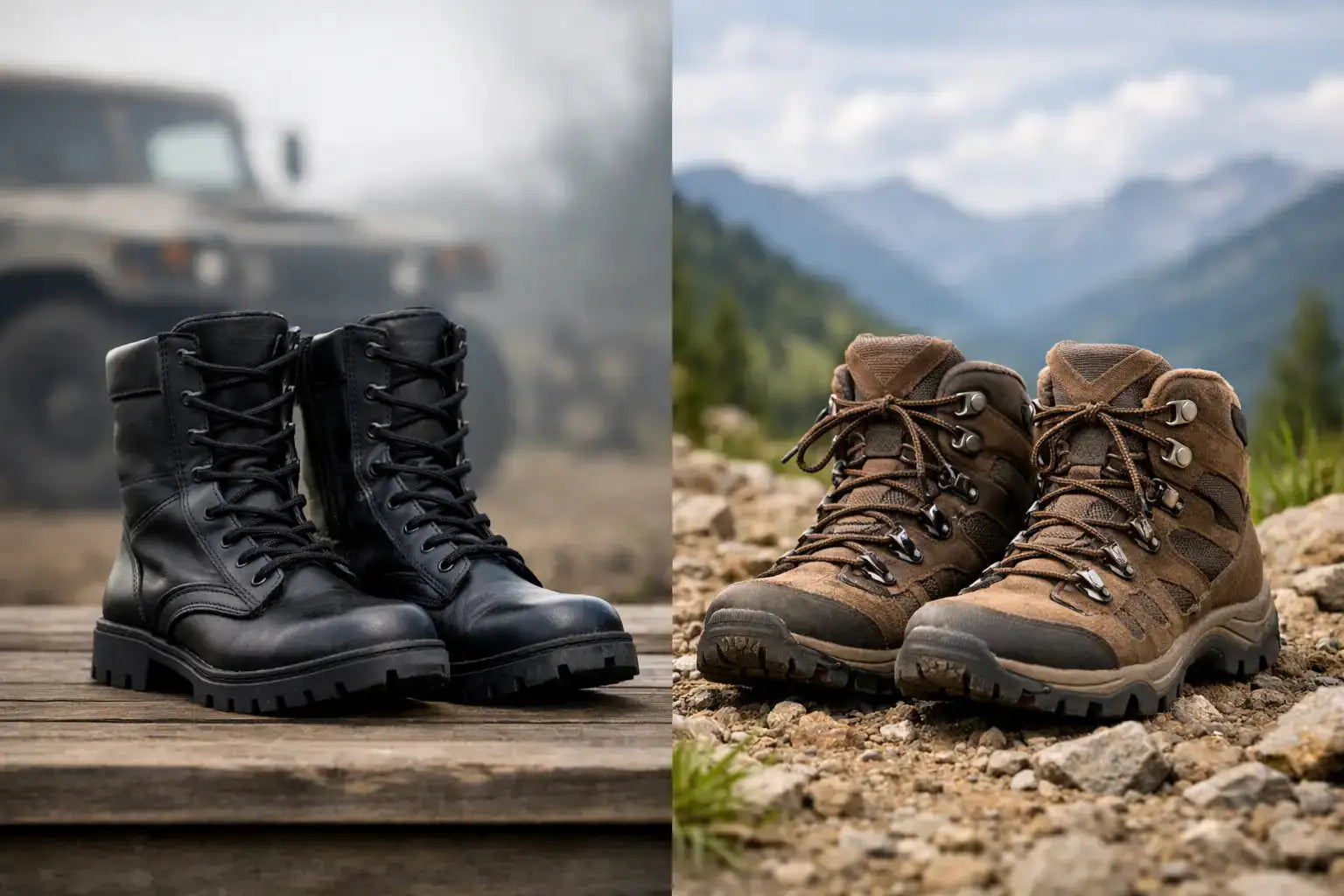
One bad choice in footwear is enough to ruin a tab, a long shift or a wet weekend on the hill. When comparing combat boots vs hiking boots, the real question is not which is better in general - it is which is better for the ground, the load, the weather and the job in front of you.
This is where many buyers get caught out. A boot that feels excellent on a dry shop floor can become hard work after ten miles with weight on your back, and a lightweight hiker that flies along a trail may not hold up well to repeated kneeling, rough ground, abrasion and day-to-day field use. If you want dependable kit, the details matter.
Combat boots vs hiking boots: the core difference
Combat boots are built around military-style use. That usually means durability first, ankle support that works with load carriage, dependable grip across mixed terrain, and uppers designed to cope with mud, water, abrasion and repeated wear. They are expected to perform with heavier trousers, webbing, bergen straps and a full day on your feet.
Hiking boots are designed for walking efficiency and outdoor comfort. They often place more emphasis on reducing weight, improving underfoot cushioning and supporting a natural stride over distance. Many are excellent on tracks, trails, woodland routes and upland ground, but they are not always made with the same priorities as operational or tactical footwear.
That distinction sounds simple, but in practice there is overlap. Some modern combat boots are surprisingly light and flexible. Some hiking boots are supportive enough for very demanding ground. The better question is how each type performs in the areas that matter most.
Support, stability and load carriage
If you carry weight regularly, combat boots usually have the edge. A good combat boot is built to remain stable under load, especially when you are moving over broken ground, stepping in and out of ditches, or changing pace quickly. The boot often feels more structured through the ankle and heel, which helps when fatigue starts to creep in.
That said, more support is not always more comfortable. Some people find stiff combat boots slower to break in and less forgiving on easy terrain. If most of your walking is on maintained paths with a light pack, a quality hiking boot may feel easier straight away and less tiring over a full day.
This is one of the main trade-offs. Combat boots tend to favour control and protection. Hiking boots often favour walking comfort and efficiency. If your use sits between the two, then fit and sole design become more important than the label on the box.
Weight and agility
Boot weight affects more than comfort. Heavier footwear can increase fatigue over distance, particularly if you are moving fast or covering mixed terrain for hours at a time. Traditional combat boots can be heavier because they use tougher materials, reinforced construction and more substantial soles.
Hiking boots, especially modern lightweight models, are often easier to wear for long trail days. They can feel quicker underfoot and less clumsy on ascents. For casual outdoor use, dog walking, lower-level hill routes and general countryside wear, that lighter feel is often a genuine benefit.
But light is not always better. A very lightweight hiking boot may save energy, yet wear faster if used for frequent tactical training, range work, rough woodland or jobs that involve kneeling, scrambling and repeated contact with hard surfaces. If your footwear takes abuse rather than simply covering miles, combat boots often justify the extra weight.
Grip and sole design
Outsoles tell you a lot about intended use. Combat boots generally use tread patterns designed for mud, mixed field conditions and hard-wearing contact with varied surfaces. They need to perform on tracks, wet grass, broken ground, concrete, gravel and vehicle areas without falling apart or losing bite too quickly.
Hiking boots can be outstanding on trails and hills, but the tread is often optimised for walking rather than broader field use. Some excel on rock and firm ground. Others are better in wet woodland or soft earth. The problem comes when buyers assume all hiking soles do everything equally well.
If your environment changes constantly, a combat-style sole often offers better all-round utility. If your use is mostly hill paths, forestry tracks and recreational walking, a hiking boot sole may give you the grip and comfort you need with less bulk.
Durability in real use
For military, police, security and tactical users, durability is often the deciding factor. Combat boots are expected to handle repeated wear in a way many standard hikers are not. That includes scuffing, toe drag, contact with webbing hardware, mud, wet grass, coarse surfaces and long periods of use across consecutive days.
This is where quality matters more than category alone. A cheap combat boot can still fail early, and a premium hiking boot from a respected maker can outlast a poor tactical model. Materials, stitching, rand protection, sole bonding and leather quality all play a part.
In broad terms, though, combat boots are usually the safer choice if your priority is hard service life rather than occasional outdoor wear. For buyers who already know what rough use does to footwear, that extra resilience is rarely wasted.
Comfort and break-in
No boot works if it does not fit your foot properly. That sounds obvious, but many people still choose by appearance or reputation before considering foot shape, sock choice and intended use. A well-fitted boot with the wrong label is often better than an ill-fitted boot with the right credentials.
Hiking boots usually win on out-of-the-box comfort. They are often softer underfoot, more cushioned through the midsole and less demanding during the first few wears. That makes them attractive for casual users and anyone who does not want a long break-in period.
Combat boots can take more time. Leather models in particular may need proper wear before they soften and mould to the foot. Once broken in, they can be exceptionally dependable, but you need to be honest about whether you are willing to put that time in. For operational users, that is normal. For occasional walkers, it may be unnecessary.
Weather resistance and breathability
Boot choice in the UK always comes back to weather. Wet ground, changeable temperatures and prolonged damp conditions place different demands on footwear than dry-climate use.
Combat boots are often built to cope with poor conditions and heavy use in the wet. Full-grain leather uppers, high ankle coverage and harder-wearing construction can be a real advantage in mud and prolonged damp. They also tend to pair well with gaiters, combat trousers and field kit.
Hiking boots frequently offer good waterproofing too, especially with membrane-lined models, but breathability varies. Some keep water out well and then run hot in warmer weather. Others breathe better but give less all-round weather protection. Neither category gets a free pass here. A waterproof boot that leaves your feet soaked with sweat is still a problem.
When combat boots are the better option
If your priority is military-style field use, cadet training, tactical work, security duties, rough ground or carrying weight for long periods, combat boots are usually the more suitable choice. They are made for tougher treatment, steadier support and broader day-to-day utility beyond straightforward trail walking.
They also make sense if authenticity matters. For military enthusiasts, serving personnel, veterans and those building out practical field kit, combat boots fit the rest of the loadout properly. They are designed to work with the clothing and conditions that outdoor fashion-led boots often only imitate.
When hiking boots are the better option
If your use is mainly recreational walking, hill days, lighter packs, maintained trails or general outdoor wear, hiking boots are often the smarter buy. They can give you better comfort, lower weight and a smoother stride without the extra stiffness and bulk that some combat designs bring.
For buyers who want one pair for weekend use rather than repeated hard service, a good hiking boot may simply be the more sensible tool. There is no benefit in over-speccing if your actual use does not demand it.
The best choice depends on your ground and your task
The phrase combat boots vs hiking boots suggests a straight winner, but that is not how good kit selection works. Footwear should be matched to role, terrain and wear pattern. A patrol-style boot built for hard use is not automatically the best option for every walker, and a lightweight hiker is not automatically ready for field conditions just because it feels comfortable on day one.
At John Bull Clothing, the buyers who choose well usually start with honest questions. How much weight will you carry? How rough is the ground? How often will the boots be worn? Do you need military practicality, or do you need walking comfort first? Answer those properly and the right type of boot tends to become clear.
A dependable pair of boots should disappear into the job - no hotspots, no second-guessing, no drama halfway through the day. Choose for the task, not the label, and your feet will know the difference.