
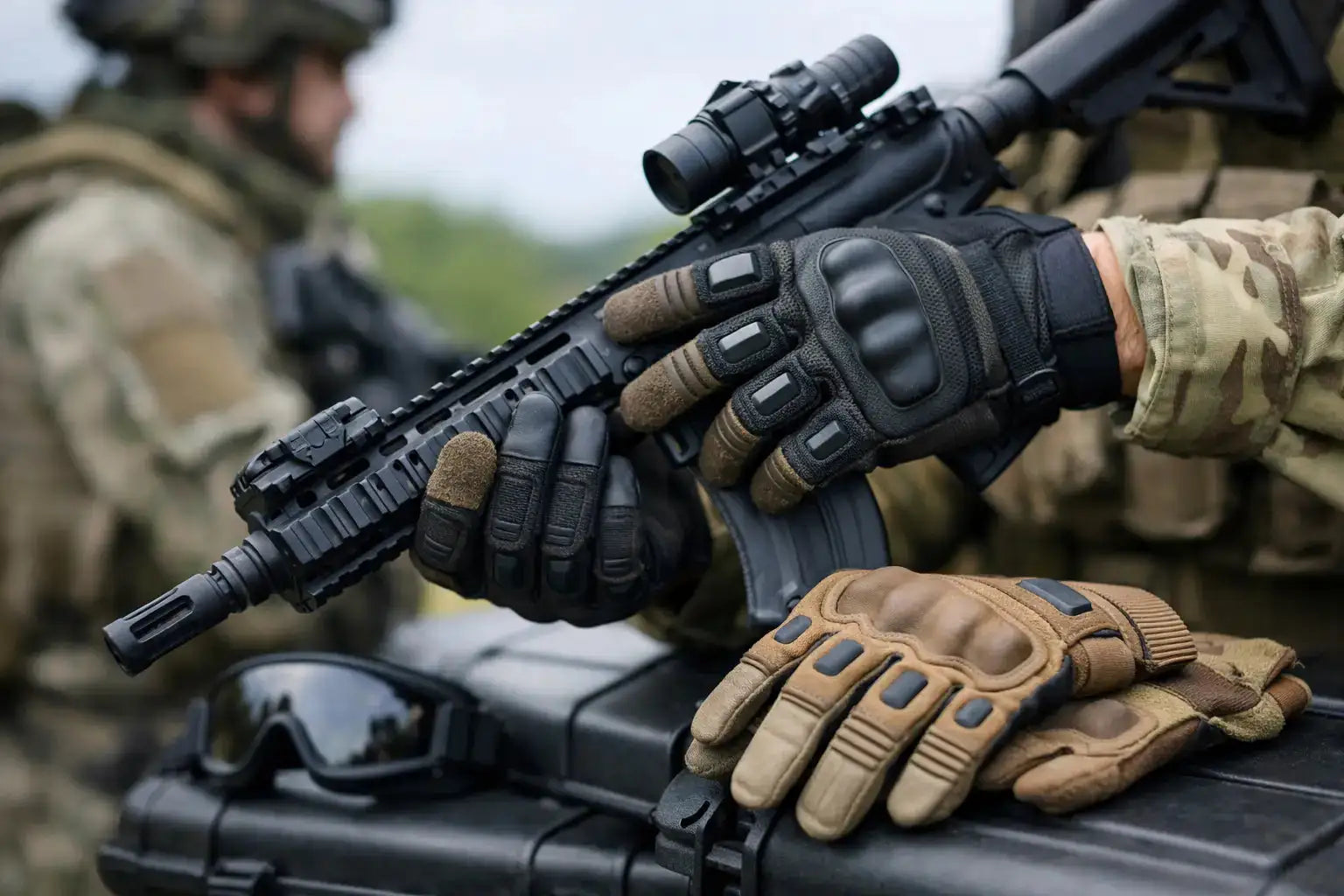
A poor pair of gloves gets in the way the moment you need your hands to work properly. You lose feel on kit, struggle with grip in the wet, and end up taking them off for the very jobs they are meant to support. That is why people ask what are tactical gloves for - not as a fashion question, but as a practical one.
Tactical gloves are built to protect the hands while keeping enough dexterity for real tasks. That can mean handling equipment, improving grip on weapons and tools, reducing abrasion, shielding knuckles and fingers from knocks, or adding warmth without turning your hands numb and clumsy. The exact job depends on the glove, because not every tactical glove is designed for the same role.
What are tactical gloves for in practical terms?
In straightforward terms, tactical gloves are for hand protection during demanding activity where grip, control and durability matter. They are commonly used by military personnel, police, security staff, airsoft players, range users, outdoor workers and anyone who spends time handling rough kit in cold, wet or abrasive conditions.
A standard work glove may protect the hands, but tactical gloves are usually cut and reinforced with more specific use in mind. That often includes better trigger feel, improved palm grip, closer fit, touchscreen compatibility, impact protection, and materials chosen to cope with rope, weapon handling, vehicle work, fieldcraft or patrol use.
The main point is balance. A tactical glove has to do more than simply cover your hand. It needs to protect without removing too much control.
The main jobs tactical gloves do
The first and most obvious role is protection from cuts, scrapes, blisters and surface abrasion. If you are moving over rough ground, working with webbing, dragging equipment, climbing in and out of vehicles or handling tools, bare hands take punishment quickly. A glove adds a layer between your skin and everything that wears it down.
The second job is grip. Wet metal, polymer surfaces, ropes, straps and controls all become harder to manage when conditions turn poor. A good tactical glove uses textured palms or synthetic materials that help maintain contact when your hands are cold, damp or under load.
The third job is impact and environmental protection. Some gloves include reinforced knuckles, finger guards or padded backs to reduce the effect of knocks and minor impacts. Others focus more on wind resistance, insulation or weatherproofing for cold-weather use. In each case, the glove is intended to let you keep working rather than stop and recover.
Dexterity is the fourth job, and it is often the deciding factor when choosing a pair. If you cannot operate zips, radios, magazines, touchscreens or buckles while wearing the glove, it is likely the wrong option for your needs. The best tactical gloves are not always the thickest or toughest. Often, they are the ones that let you forget they are there.
Different tactical gloves for different jobs
This is where buyers sometimes get caught out. The phrase tactical gloves covers a wide range, and one model can be excellent for range days but poor for cold-weather patrol, or ideal for vehicle work but less suited to fine-motor tasks.
Shooting and range gloves
These are usually lighter, closer fitting and built for feel. The aim is to protect the hand from friction and improve grip while preserving trigger control and dexterity. Palm reinforcement matters, but too much bulk around the fingers can become a problem. If your priority is weapon handling, magazine changes and fine movement, lighter gloves generally make more sense than heavily armoured ones.
Patrol and general-duty gloves
These tend to sit in the middle. They are made for mixed use, so you get decent protection, secure grip and enough dexterity for radios, torches, handcuffs, webbing and vehicle controls. For police, security and general field users, this is often the most useful category because it covers a broad range of everyday tasks.
Hard-knuckle or impact gloves
These are designed with extra protection across the knuckles and back of the hand. They can be useful for vehicle environments, breaching tasks, training areas and situations where knocks, strikes and abrasion are more likely. The trade-off is that extra protection usually means more bulk. That is acceptable for some roles, but not ideal if you need constant precision.
Cold-weather tactical gloves
These focus on insulation and weather resistance. They are useful in winter field conditions, on exposed ranges, or for static tasks where hands cool quickly. The challenge with insulated gloves is always dexterity. Warmth is valuable, but if you cannot manipulate kit effectively, performance drops. In very cold conditions, some users prefer a layered approach rather than one thick glove.
Specialist search or fast-rope styles
Some gloves are built for specific tasks such as rope handling, search work or high-abrasion training. These can have stronger palms, heat-resistant materials or reinforced wear points. They are useful if your task profile is narrow and consistent, but for general use they may be too specialised.
What to look for when choosing a pair
Fit comes first. A tactical glove should feel secure without cutting off movement or circulation. If it is too loose, you lose control and create friction. If it is too tight, your hands tire more quickly and dexterity can suffer just as badly. Good fit around the fingertips matters more than many buyers realise.
Material choice is next. Synthetic palms often offer reliable grip and durability, while breathable stretch panels can improve comfort during extended wear. Leather can work well in some applications, especially where durability matters, but it may need more care and can feel heavier depending on construction. There is no single best material. It depends on whether your priority is feel, weather resistance, longevity or all-round use.
Reinforcement should match the task. Extra palm padding can help with rope, tools and repeated contact surfaces. Knuckle guards may be useful in vehicle or public order environments. Touchscreen-compatible fingertips are practical for modern kit use, but they are not essential for everyone. It is better to choose around the actual job than chase features you may never use.
Closure also matters. A secure wrist closure helps keep the glove in place and reduces debris getting inside. Some users prefer a simple slip-on cuff for speed, while others want a hook-and-loop closure for a firmer fit. Neither is automatically better.
When tactical gloves are worth it - and when they are not
Tactical gloves are worth it when your hands are part of the job and exposed to repeated strain, impact, weather or abrasion. If you are on exercise, on patrol, at the range, working security, training outdoors or handling rough equipment regularly, they are a practical piece of kit rather than an extra.
They are less useful if chosen for appearance over function. A heavily padded glove that looks aggressive but makes simple tasks harder will spend more time clipped to your kit than on your hands. That is a common mistake in airsoft and enthusiast buying, but it applies just as much to professional users replacing worn kit in a hurry.
There is also the question of season. One pair rarely covers everything. A lightweight glove may be ideal through spring and summer, while winter conditions call for more insulation. Users who spend serious time outdoors often end up keeping more than one option for that reason.
Common buying mistakes
The biggest mistake is assuming all tactical gloves do the same thing. They do not. Some are built around dexterity, some around protection, and some around weather. Buying without thinking about the real task usually leads to compromise in the wrong area.
Another mistake is overlooking grip and fingertip feel. Buyers often focus on knuckle armour or appearance, then find they cannot manage zips, safeties, radios or small tools properly. That becomes frustrating very quickly.
It is also worth being realistic about durability. No glove lasts forever, especially under hard use. Friction, moisture, repeated washing and constant contact with rough surfaces all take their toll. A dependable tactical glove should wear well, but if you use it hard, replacement is part of the picture.
What are tactical gloves for if you are not military?
They are still useful if your activities involve the same demands. Airsoft players want grip, hand protection and control. Outdoor users need warmth, abrasion resistance and dexterity. Security staff and patrol users need a glove that works across mixed tasks. Even general-purpose users can benefit if they want a closer, more capable alternative to a standard work glove.
That is why specialist retailers such as John Bull Clothing stock tactical gloves alongside field gear, boots and load-carrying kit. The glove is not a standalone fashion item. It is part of a working system, and it needs to earn its place.
A good pair should make difficult conditions easier, not make simple jobs harder. If you choose with that in mind, tactical gloves stop being an accessory and become part of your everyday working kit.