
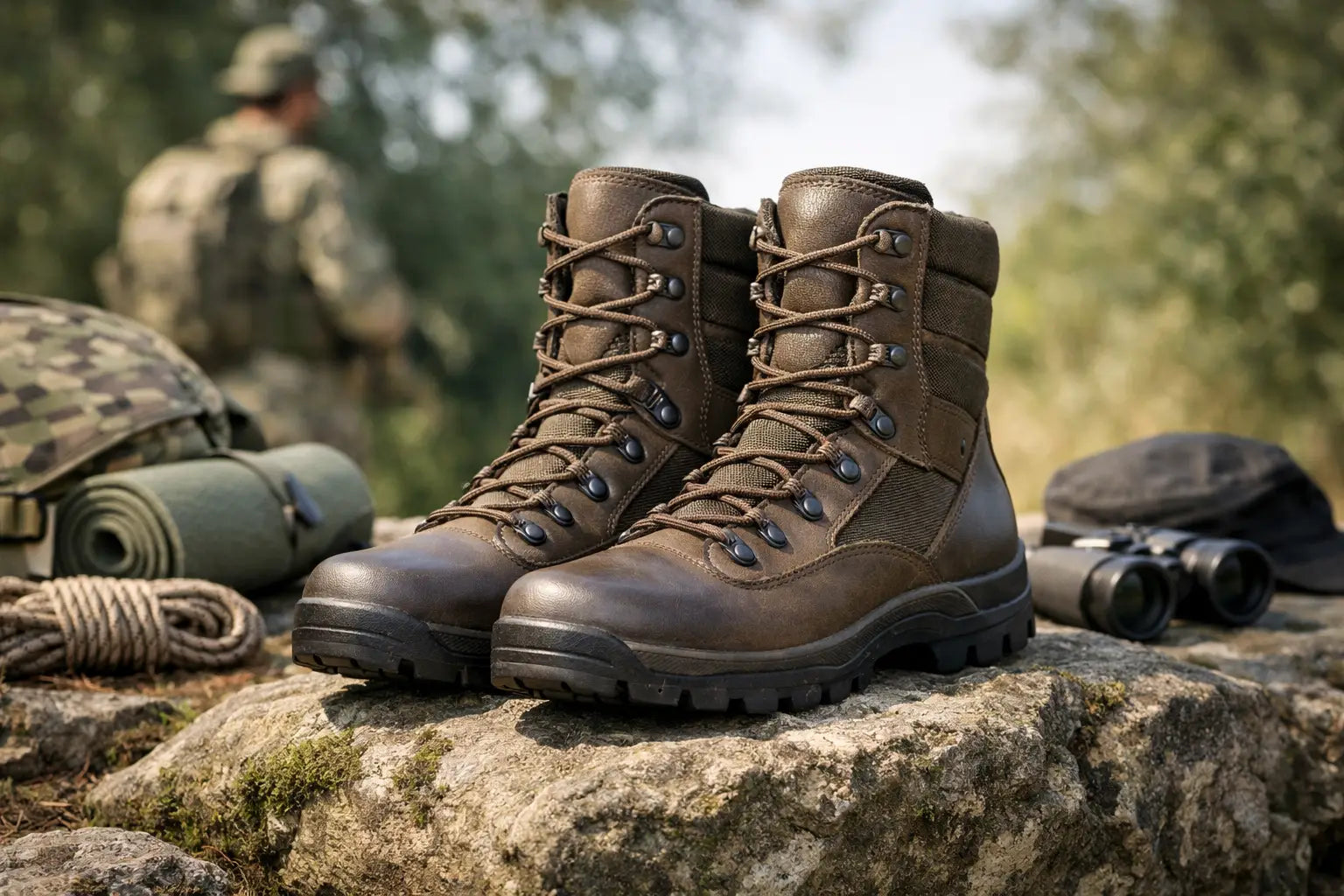
If you have worn poor boots on a long tab, you already know the difference proper footwear makes. Altberg army boots have earned their reputation the hard way - through repeated use in training areas, on duty, and in rough ground where comfort claims mean very little unless the boot delivers.
For buyers looking at Altberg for the first time, the appeal is straightforward. These are boots built with military use in mind, not outdoor fashion dressed up as tactical kit. They are chosen because they support the foot properly, stand up to hard wear, and offer a level of fit that many off-the-shelf boots simply do not manage.
Why Altberg army boots are so widely trusted
Altberg sits in a category that serious users tend to respect. The brand is well known among military personnel, police, security professionals and experienced outdoor users because the boots are designed around function first. That means stable support under load, dependable grip, quality leather, and build standards that hold up when conditions turn wet, uneven or punishing.
One of the main reasons Altberg stands out is fit. Plenty of boots look the part, but once you add weight, cover distance or spend hours on your feet, poor shaping becomes obvious. Pressure points, heel lift and hot spots show up quickly. Altberg has long been recognised for offering fit options that suit different foot shapes, and that matters more than many buyers realise when selecting operational footwear.
The other point is consistency. Users who return to the brand often do so because they know roughly what they are getting - a serious boot, made for serious use, without unnecessary gimmicks. In a market full of tactical styling and inflated claims, that counts for a lot.
What matters most when choosing Altberg army boots
The right boot depends on how and where it will be used. There is no single best option for every wearer, and that is where some buyers go wrong. They focus on brand first and application second.
If your use is general field wear, patrol tasks, cadet training or outdoor utility, the balance usually comes down to support, weight and weather resistance. A stiffer boot often gives better stability over rough terrain and under load, but it may feel less forgiving straight out of the box. A lighter boot can reduce fatigue over long periods, though sometimes at the expense of structure or long-term durability.
Leather choice matters as well. Full grain leather remains popular because it is hard-wearing and supportive, especially once broken in properly. More water-resistant finishes can make life easier in wet conditions, but every treatment involves a compromise. Some finishes are easier to clean. Some breathe better. Some need more careful maintenance if you want the boot to keep performing.
Sole design is another practical point. Deep, aggressive tread may suit mixed terrain and soft ground, while a sole built more for urban patrol or hard standing may wear differently and feel better on firm surfaces. If your work or training moves between parade squares, roads, woodland tracks and muddy training areas, the best choice is often the one that performs consistently across all of them rather than excelling in only one setting.
Fit is not a minor detail
With Altberg, fit is not an afterthought. It is a major reason the brand carries weight. A boot can be well made, but if it does not match your foot shape, none of the other advantages will matter for long.
A secure heel, enough room in the toe box, and proper hold through the midfoot are all essential. Too tight and you will know about it quickly. Too loose and your foot shifts, especially on descents or under load, which can lead to rubbing and instability. Thick socks can change the feel, and so can insoles, so it is worth thinking about your actual use rather than trying them with whatever socks happen to be nearby.
Buyers replacing a familiar pair should still avoid assuming that every model will fit exactly the same. Even within a trusted brand, different constructions can feel different on the foot.
Breaking in Altberg army boots properly
Good leather boots often improve with wear, but that does not mean the break-in period should be ignored. Altberg army boots are designed for demanding use, and some models will feel firm at first. That is not a fault. It is part of having a boot that can support the foot and hold its shape over time.
The sensible approach is gradual use. Start with shorter periods, ideally in the socks you plan to wear regularly, and pay attention to any rubbing or pressure before heading out for long days. Lacing makes a bigger difference than many users expect. A small adjustment in tension around the instep or ankle can improve heel hold and reduce movement.
Conditioning the leather correctly also helps, but overdoing it can be a mistake. Too much product, or the wrong product, can soften the leather more than intended or affect breathability. Boots need care, but they also need structure. A disciplined maintenance routine is usually better than repeated heavy treatment.
Common mistakes buyers make
The first is buying for appearance instead of task. A boot that looks suitably military is not necessarily the right tool for loaded movement, daily patrol wear or wet field conditions.
The second is getting the size broadly right but the fit wrong. Length alone is not enough. Width, volume and heel security all matter.
The third is expecting any leather boot to feel like a trainer on day one. Serious field boots are built differently for a reason.
Caring for Altberg boots in the real world
Proper boot care is not complicated, but it does need to be consistent. Mud, water, grit and repeated drying all take a toll on leather if neglected. After use, clean the boots properly rather than letting dirt dry into the stitching and creases. Allow them to dry naturally, away from direct heat, and apply suitable treatment when needed to maintain the leather and weather resistance.
This is especially important if the boots are used hard over winter or across repeated wet and dry cycles. Neglect tends to show up first in the upper, the stitching and overall comfort. Well-maintained boots not only last better, they usually feel better too.
There is also a practical cost point here. Altberg sits in the quality bracket, and buyers generally expect service life to reflect that. Basic maintenance is how you protect that investment. A good pair of boots can give strong value over time, but only if they are looked after like working kit rather than treated as disposable footwear.
Who should consider Altberg army boots?
Military personnel and reservists are the obvious audience, but not the only one. Police and security professionals often look for the same fundamentals: support, reliability, smart appearance where required, and comfort over long hours. Cadet forces, instructors, airsoft users and experienced outdoor customers also tend to value boots that are made to perform rather than simply look tactical.
For newer buyers, Altberg often appeals once they move beyond entry-level boots and want something more dependable. For experienced users, the attraction is usually simpler. They already know what poor boots feel like, and they would rather avoid repeating the lesson.
That is why specialist retailers such as John Bull Clothing continue to see strong demand for established brands with military credibility. Buyers in this category are rarely looking for novelty. They want kit they can trust.
Are Altberg army boots worth the money?
For the right user, yes - but only if the model suits the job and the fit suits the foot. That is the honest answer.
They are not the cheapest option, and they are not meant to be. You pay for build quality, proven design and a better chance of getting all-day performance without the weaknesses common to lower-grade boots. If your use is occasional and light, you may not need that level of boot. If your footwear is going to see regular training, duty use or demanding outdoor wear, the difference becomes easier to justify.
Price should be judged against service life, support and comfort under real conditions, not just what the pair costs on the day you buy them. A boot that performs properly, wears well and keeps your feet in good order is usually the better value piece of kit.
When you are choosing Altberg army boots, think less about marketing language and more about your terrain, your workload and your foot shape. Get those three right, and you are far more likely to end up with boots that earn their place from the first proper outing.