
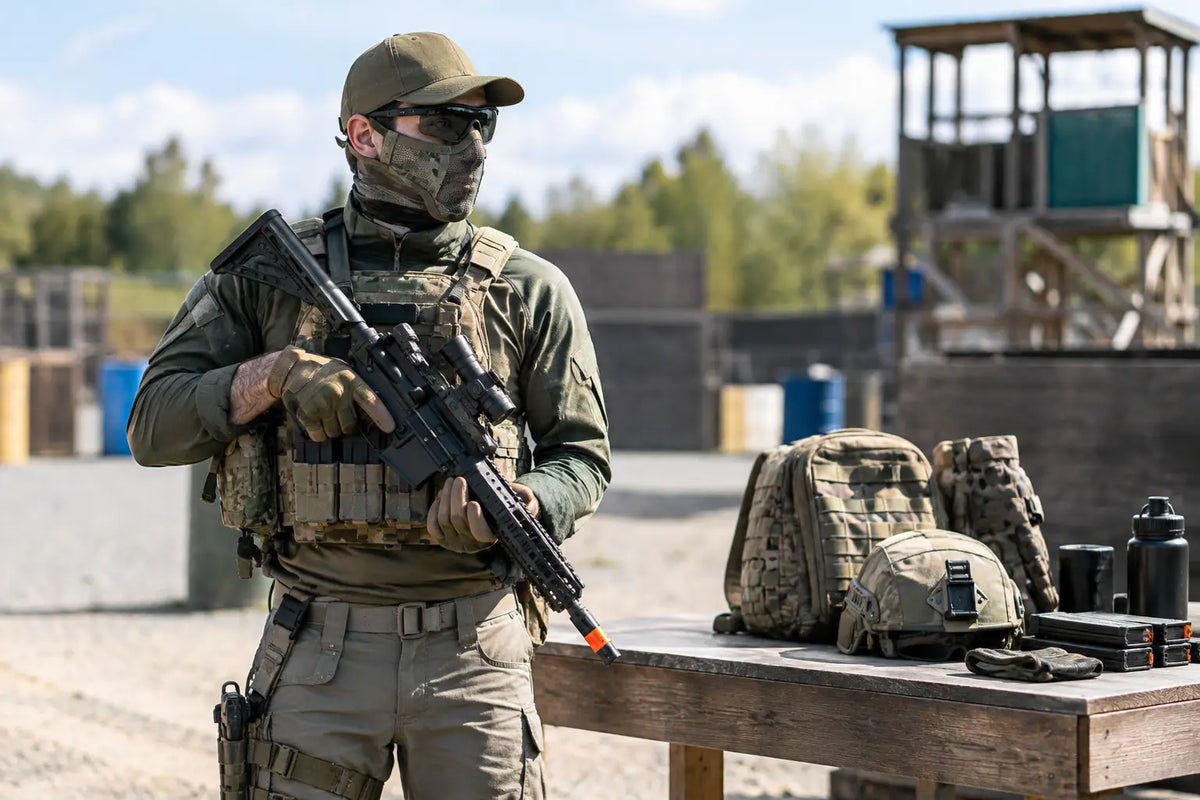
A good set of airsoft loadouts should make you less noticeable, less tired and more useful to your team. It should not leave you digging through loose pouches, nursing sore feet halfway through the day, or carrying equipment that never comes out of the bag. Start with the site, the weather and your role, then build only as much kit as the game requires.
Start with the Game, Not the Look
The most convincing loadout is not always the most practical one. A full plate carrier, helmet and belt setup may suit a longer milsim event, but it can be excessive for a fast indoor skirmish. Equally, turning up to wet woodland in trainers and a lightweight hoody may look tidy at registration but will soon become uncomfortable.
Before choosing clothing or load-carrying equipment, consider the ground you will cover, the expected temperature, game duration and site rules. British woodland sites often mean mud, brambles, uneven tracks and rain, even in warmer months. CQB sites place more emphasis on manoeuvrability, clear identification and close-range protection. Milsim events may demand sustained carry capacity, navigation equipment, water and a greater degree of self-sufficiency.
Your primary replica also affects what you need to carry. A rifleman running mid-cap magazines needs a straightforward, accessible magazine arrangement. A support gunner may need more ammunition and stronger support for the extra weight. A designated marksman may prioritise a stable shooting position, spare gas or batteries, and a light, uncluttered chest area.
Build Airsoft Loadouts in Layers
Layering is the sensible foundation for UK airsoft clothing. It keeps you comfortable through cold starts, wet weather and the inevitable increase in temperature once games are underway. Avoid relying on a single heavy garment unless conditions genuinely demand it.
Base Layer and Combat Clothing
A moisture-wicking base layer is useful throughout the year. In cold conditions, it helps manage sweat beneath a combat shirt or jacket. In warmer weather, a lightweight technical top can be enough under a chest rig. Cotton has its place for casual wear, but once soaked it dries slowly and can make a cold day miserable.
Combat trousers should be selected for movement rather than pattern alone. Look for a practical pocket layout, room through the knees and seat, and fabric that can handle repeated contact with rough ground. Knee pads are worth considering for CQB, urban sites and any game where you expect to spend time kneeling behind cover. Built-in knee-pad pockets offer a neater solution than external pads that can shift during a sprint.
Camouflage should suit the environment, but do not overstate its importance. In British woodland, muted greens, brown and temperate patterns generally work well. In dark indoor environments, plain earth tones or darker tactical clothing can be more useful. The best camouflage is still careful movement and sensible use of cover.
Waterproofs and Insulation
A waterproof shell belongs in the car or pack on most UK game days. Choose one that packs down reasonably small and has enough room to fit over your load-carrying equipment if needed. A heavy waterproof worn all day can trap heat, so use it when conditions require it rather than by default.
For colder months, a lightweight insulating layer gives more flexibility than a bulky jacket. You can add it during breaks or static periods, then remove it before a demanding game. Gloves, a warm hat for safe-zone use and spare dry socks often make more difference than adding another large outer layer.
Footwear Is a Performance Item
Boots are one area where buying purely on appearance usually proves costly. The right pair must provide grip, ankle support and enough comfort for a full day on your feet. For woodland and uneven ground, a supportive military or patrol boot is a sound choice. For indoor sites with level concrete floors, a lighter boot may be more comfortable, provided it still gives protection against knocks and dropped equipment.
Break footwear in before a game day. Wear it on shorter walks with suitable socks, and check for rubbing around the heel, ankle and toe box. A spare pair of socks in your kit bag is basic fieldcraft, particularly after rain. Wet feet affect comfort, concentration and pace long before they become a serious problem.
Do not overlook boot care. Mud left to dry can shorten the life of leather and fabric footwear, while damaged laces or loose soles can end a game early. Clean and dry boots properly after use, away from direct high heat.
Choose Carry Kit That You Can Actually Use
A chest rig, belt kit or plate carrier should carry the items you need regularly without restricting your movement. For many players, a compact chest rig with two or three magazine pouches, a utility pouch and a small water option is enough. It is lighter, cooler and easier to work around than a heavily loaded carrier.
Plate carriers are useful when you need more capacity or want a more structured setup. They can also distribute weight effectively when adjusted properly. The trade-off is heat retention and bulk, particularly during summer woodland games. If you use one, keep the front clear enough to go prone and shoulder your replica without fighting the pouches.
A battle belt can work well alongside a light chest rig, carrying a dump pouch, compact utility pouch, radio and sidearm equipment where permitted. However, avoid building a belt so heavy that it drags at the waist or obstructs movement. Sit, kneel, lie prone and shoulder your replica while wearing the setup at home. These basic checks quickly reveal poor pouch positions.
For a standard skirmish day, your immediate-access kit normally needs only magazines, ammunition or speedloader, water, a dead rag, basic tools, battery or gas supplies as appropriate, and a means of carrying empty magazines. Keep valuables and spare clothing in a separate holdall or rucksack in the safe zone.
Protection and Practical Essentials Come First
Eye protection is not an area for compromise. Use properly rated, site-approved eye protection and ensure it fits securely without gaps. Some sites require full-face protection, especially for younger players or CQB games, so check before travelling. Anti-fog measures are just as relevant as the lens rating - fogged goggles are distracting and can tempt players to lift protection, which should never happen in a game area.
Lower-face protection protects teeth and reduces the risk of painful close-range hits. A mesh insert combined with a fabric face covering is a common choice, but make sure it does not interfere with your cheek weld or eyewear seal. Test the complete arrangement with your replica before game day.
Carry a small personal first-aid kit and know the site’s emergency procedures. This does not replace the organiser’s provision, but plasters, blister treatment and personal medication are sensible additions. Hydration matters in every season. Cold weather can hide thirst, while body armour and waterproofs can make a mild day surprisingly demanding.
Match Your Setup to Your Role
A practical rifleman loadout is usually the easiest place to start: combat clothing, reliable boots, eye and face protection, a light rig, water and a few magazines. It is versatile across most game types and gives you room to learn what you actually use.
For CQB, reduce bulk. A compact rig or belt, gloves, good face protection and a setup that lets you turn through doorways and use cover tightly will serve you better than extra pouches. Keep loose straps controlled, as snagging on doors, barriers and stairwells is more than an inconvenience.
For woodland games, prioritise weather resistance, stable footwear and water. A small day pack can be worthwhile for longer sessions, especially if it carries spare layers, a waterproof and personal supplies. Keep frequently used items on your person rather than buried at the bottom of the pack.
Milsim loadouts require more planning. Study the event brief first, including faction requirements, ammunition restrictions, food arrangements, navigation expectations and overnight conditions. Carrying too little creates avoidable problems, but carrying too much slows you down over distance. Test the full setup on a loaded walk before the event rather than discovering its weak points after dark.
Check Fit Before You Arrive
Set your complete kit out the evening before and run a simple check. Confirm that batteries are charged, magazines feed correctly, gas seals are sound, eye protection is clean, boots are dry and waterproof layers are packed. Check the site’s chrono limits and safety requirements as these vary between venues and replica types.
John Bull Clothing’s range of combat clothing, boots, webbing and field equipment can help form a dependable starting point, but the final setup should be personal to your game. A loadout earns its place through comfort, access and reliability, not the number of pouches attached to it. Build it gradually, use it hard and remove anything that does not improve your day in the field.