
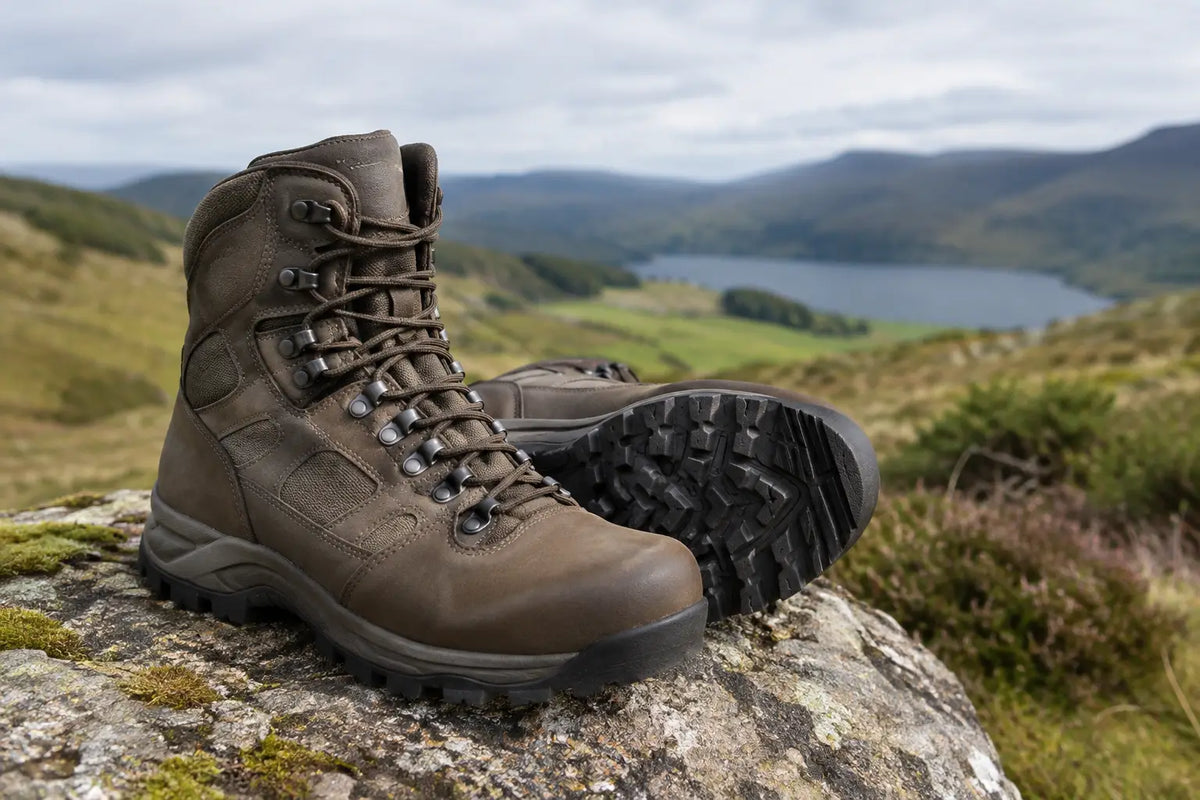
A boot can look ready for the field and still become a liability after six hours under weight. This Altberg Defender review focuses on the points that matter when walking, standing on task, carrying kit or covering wet ground: fit, support, grip, comfort and the work needed to keep the boot serviceable.
The Defender is not a lightweight trainer-style boot intended to feel broken-in straight from the box. It is a traditional, purpose-built military boot with a more structured feel than many modern patrol alternatives. That construction is its main strength, but it also dictates who will get the best from it.
Altberg Defender review: the short answer
For users who want a supportive leather boot for regular field wear, the Altberg Defender remains a serious option. It offers the security, ankle hold and underfoot protection expected from a proper combat boot, particularly on uneven ground and when carrying a loaded daysack or webbing.
The compromise is familiar to anyone who has worn quality leather boots. It needs sensible fitting, a patient break-in period and routine care. If your priority is the lowest possible weight for dry, fast-paced summer use, a lighter fabric boot may suit you better. If you need dependable footwear for mixed British ground, colder conditions and long days on your feet, the Defender’s more substantial build makes sense.
Fit comes before everything else
The Defender should feel secure at the heel and through the midfoot without crushing the forefoot. A small amount of firm resistance from new leather is normal. Numb toes, heel lift or pressure across the instep are not issues that should be accepted in the hope that the boot will somehow reshape itself.
Fit the boots with the socks you will actually wear. A thin issue-style sock can produce a very different result from a thicker wool blend or a two-sock system. Try them later in the day if possible, when feet are naturally a little larger, and leave enough room at the front to prevent toe contact when walking downhill.
Altberg boots are often favoured by people who have struggled with generic boot shapes, partly because the brand has long treated fitting as a performance issue rather than an afterthought. That does not mean every Defender will suit every foot. Wide forefeet, high insteps and narrow heels all change the equation. Where possible, a proper boot fitting is worth more than any online size conversion.
Breaking them in properly
Do not take a new pair straight onto a tab, exercise or full day in the hills. Start with shorter walks on dry ground, then build time and distance progressively. Lace the boot consistently, paying attention to heel lock and ankle tension, and stop early if one point begins to rub.
A little stiffness is expected in a boot designed to give support. Hot spots are a warning. Address them with lacing adjustment, appropriate socks and, where necessary, a different insole before they become blisters. The goal is to let the leather flex around your foot through normal use, not to force it with soaking, excessive heat or other damaging shortcuts.
Support and stability under load
This is where the Defender earns its place. The boot feels planted rather than flimsy, with a supportive upper that helps control movement around the ankle. That matters on rutted tracks, woodland, loose stones, muddy training areas and the uneven ground that tends to appear as soon as the route leaves a hard path.
Under a pack, a flexible lightweight boot can leave the foot working harder to find stability. The Defender’s firmer platform gives more confidence when the pace slows, fatigue builds and the surface changes. It is particularly well suited to fieldcraft, range days, dog walking over rough ground, cadet training and general outdoor work where protection matters more than speed.
That same structure has a cost. The Defender is not the boot to choose solely for a short commute, occasional pavement wear or hot-weather travel where every gram counts. It can certainly be worn in those settings, but its capability is more than most users need there.
Grip and weather performance
Wet grass, mud and slick leaf-covered paths expose weak footwear quickly. A serious field boot needs a sole that gives predictable traction and a construction that does not collapse when conditions deteriorate. The Defender is designed for precisely that kind of mixed, changeable terrain.
No outsole is magic on wet rock, polished concrete or deep clay. Good movement still matters: shorten the stride, place the foot carefully and avoid assuming a deep tread makes every surface safe. In normal British woodland, tracks and fields, however, the Defender’s secure feel is a genuine advantage over softer casual footwear.
Its leather upper also makes practical sense in wet and abrasive conditions. Kept clean and treated with the correct boot care products, leather provides useful resistance against rain, wet vegetation and everyday scuffs. Water resistance is not permanent, though. Once mud dries into the seams and the leather is allowed to dry out repeatedly, performance drops. Maintenance is part of ownership, not an optional extra.
Care after a wet day
Brush off mud while it is still damp, remove the insoles and let the boots dry naturally at room temperature. Avoid radiators, fires and intense direct heat, which can harden or crack leather and weaken adhesives. When dry, use the treatment recommended for the boot’s leather and membrane system, then check laces, eyelets and outsole edges before the next outing.
This small routine extends the useful life of a boot that is built to work. It also prevents the common problem of discovering leaking, neglected footwear at the start of an exercise or wet-weather shift.
Comfort over a full day
Comfort is not simply softness. For operational and outdoor use, it means a boot that remains manageable after hours of standing, walking and carrying weight. The Defender’s cushioning and support are aimed at long-term practicality rather than a slipper-like first impression.
Once fitted and worn in, the combination of a stable heel, protected ankle and supportive sole helps reduce the battered feeling that can develop after long periods on uneven ground. Users who spend most of their day indoors or on hard flooring may prefer an additional insole selected for their own foot shape, but it should not be used to disguise a poor initial fit.
Temperature is another trade-off. A more protective leather boot can feel warmer than a lightweight mesh alternative, especially in high summer. In return, it tends to offer greater reassurance during cold, wet months and through rough vegetation. For year-round UK use, that balance will suit many military, security and outdoor users.
Who should choose the Defender?
The Defender suits personnel and civilians who want one dependable pair for demanding walking and field conditions. It is a strong choice for regular outdoor training, patrol-style use, dog handlers, expedition preparation and anyone who values support over minimal weight.
It may be less suitable for runners, fast-and-light hill days, very warm climates or users who need a soft, low-profile boot from day one. There is no single best combat boot. The right choice depends on terrain, load, foot shape, climate and how much time you will spend in it.
For those requirements, the Defender’s appeal is straightforward: it is a proper working boot, not a fashion interpretation of one. Buy it in the correct fit, give it time to bed in and keep it maintained. For field users who put reliability ahead of novelty, that is usually the better long-term decision.