
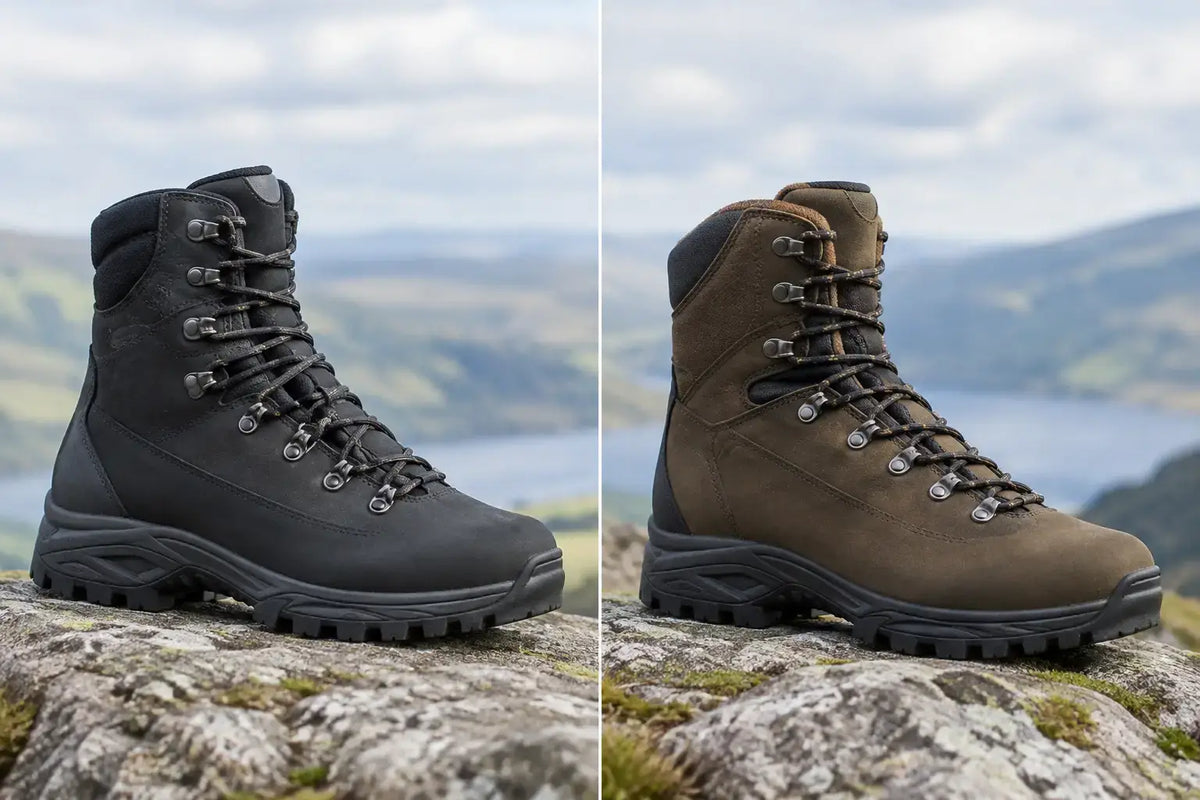
A boot can feel excellent on the shop floor and become a problem halfway through a loaded tab. That is why the Altberg Sneeker Microlite vs Tabbing SF Mk3 decision comes down to more than size, colour or the name on the tongue. Both are serious British-made military boots from a trusted specialist brand, but they are built around slightly different priorities.
The Sneeker Microlite is aimed at those who want reduced weight, rapid movement and all-day comfort without moving into a lightweight civilian walking boot. The Tabbing SF Mk3 places greater emphasis on support and protection for demanding ground, heavier loads and sustained mileage. Neither is automatically the better choice. The right boot is the one that suits your role, the terrain and the way your feet hold up after several hours under kit.
Altberg Sneeker Microlite vs Tabbing SF Mk3: the main difference
Put simply, the Sneeker Microlite is the more agile option, while the Tabbing SF Mk3 is the more substantial field boot. The difference is most apparent when you compare the amount of structure around the ankle and underfoot.
The Sneeker Microlite has a lighter, more flexible feel. It is well suited to users who spend long periods on hardstanding, move regularly between vehicles, buildings and open ground, or need a boot that does not feel overbuilt for everyday duty. Its reduced bulk can make a real difference during long days, especially for personnel who are not carrying a heavy bergan or who need to move quickly and quietly.
The Tabbing SF Mk3 is designed with more demanding mileage in mind. Its firmer, more supportive construction makes sense when terrain is uneven, wet or broken, and when a loaded pack adds pressure through the feet, ankles and lower legs. For a course, a long tabbing programme or repeated days in the field, that extra support can be worth accepting a little more weight and stiffness.
Weight and mobility
Weight matters, but it should be judged in context. A lighter boot can reduce fatigue over the course of a day and feel more natural when climbing, kneeling, working around vehicles or covering short distances at pace. This is where the Sneeker Microlite earns its following. It offers a more athletic feel than a traditional high-support combat boot while retaining the durability expected of military footwear.
For police, security work, airsoft, cadet instructors and general field users, the lighter feel may be the deciding factor. It is also a sensible choice for those whose work involves plenty of standing and walking but limited load carriage. A boot that is too stiff for the task can become tiring in its own way.
The Tabbing SF Mk3 is not chosen because it is the lightest option. It is chosen because it is intended to stay composed when the ground and load become less forgiving. More structure can help prevent the foot from moving excessively inside the boot, particularly on steep tracks, loose stone and rutted ground. If your routine includes a heavy daysack, weapon system, webbing and extended distance, mobility alone should not be the priority.
Support, stability and load carriage
The greatest practical distinction is under load. With a light day pack, either boot may serve well once correctly fitted and broken in. Add a bergan, prolonged descents or ground that constantly changes underfoot, and the Tabbing SF Mk3 starts to show its purpose.
A more supportive boot helps control ankle movement and spreads pressure across the foot. That does not make it injury-proof, and no boot replaces sound conditioning, properly adjusted load carriage and good foot care. It does, however, provide a more secure platform when tired legs begin to lose discipline late in the day.
The Sneeker Microlite is more forgiving in flex and can feel quicker straight away, but that flexibility is a trade-off. Those with a history of weak ankles, regular heavy tabs or work on rough training areas may prefer the confidence of the Tabbing SF Mk3. Conversely, users who find heavily built boots restrictive may get better results from the Sneeker because they move more naturally in it.
Comfort depends on fit, not just model
Altberg boots are well regarded for their fitting options, but the model still needs to suit the shape of your foot. Do not assume that your usual trainer size will transfer directly. Your feet swell during a long day, and the socks you wear can alter the fit significantly.
Try boots on later in the day if possible, using the socks you expect to wear on exercise or duty. Your heel should remain secure when walking uphill, while the toes need enough room to avoid striking the front on descents. A boot that feels tight across the forefoot at first fitting is unlikely to improve once it is wet, warm and carrying load.
Lacing is equally important. Secure the heel and ankle without cutting circulation across the instep. If you are buying for tabbing, test the fit with the type of insole and sock system you actually use rather than a thin dress sock. Small fitting errors become blisters quickly when distance is involved.
Breaking in each boot
Neither model should be taken straight from the box onto a major tab or field exercise. Begin with shorter walks, then introduce longer distances and a modest load. This gives the leather, footbed and your own feet time to settle together.
The Sneeker Microlite may feel more comfortable earlier because of its lighter, more flexible build. The Tabbing SF Mk3 may take longer to feel fully worked in, particularly around the ankle. That is not a fault. A supportive boot needs enough structure to do its job, but it should never cause persistent pain, numbness or severe rubbing. Address fit issues early rather than hoping they will disappear after another ten miles.
Terrain and role: which boot makes more sense?
For general military-style use, patrol work, urban movement, airsoft and regular outdoor walking, the Sneeker Microlite is often the practical choice. It is less cumbersome, quicker on the foot and better suited to users who value comfort through mixed daily activity. It can also suit warm conditions where every unnecessary gram becomes noticeable.
For loaded marching, arduous training, field exercises and consistently uneven ground, the Tabbing SF Mk3 is the stronger candidate. Its greater structure gives it the edge where stability and sustained support matter more than outright lightness. If the main question is whether it will cope with repeated mileage under a serious load, the Tabbing model is the logical starting point.
Weather also plays a part. In wet ground, proper cleaning, drying and treatment matter as much as the boot selected. Do not dry leather boots against a radiator or direct heat source, as this can harden the leather and shorten its service life. Remove loose mud, allow the boots to dry naturally, then apply an appropriate treatment to maintain the leather and preserve performance.
Value is measured over miles
A quality pair of boots is an investment in comfort, mobility and foot health. The cheaper choice is rarely cheaper if it causes blisters, fails early or leaves you without enough support during a course or deployment. Both the Sneeker Microlite and Tabbing SF Mk3 justify consideration because they are purpose-led boots rather than generic outdoor footwear styled to look tactical.
Choose the Sneeker Microlite if your priority is a lighter, faster-feeling boot for everyday duty and mixed ground. Choose the Tabbing SF Mk3 if your priority is dependable support while carrying weight over distance. For anyone between the two, be honest about the hardest job the boots will do, not the easiest. Buying for that harder day is usually the sounder field decision.