
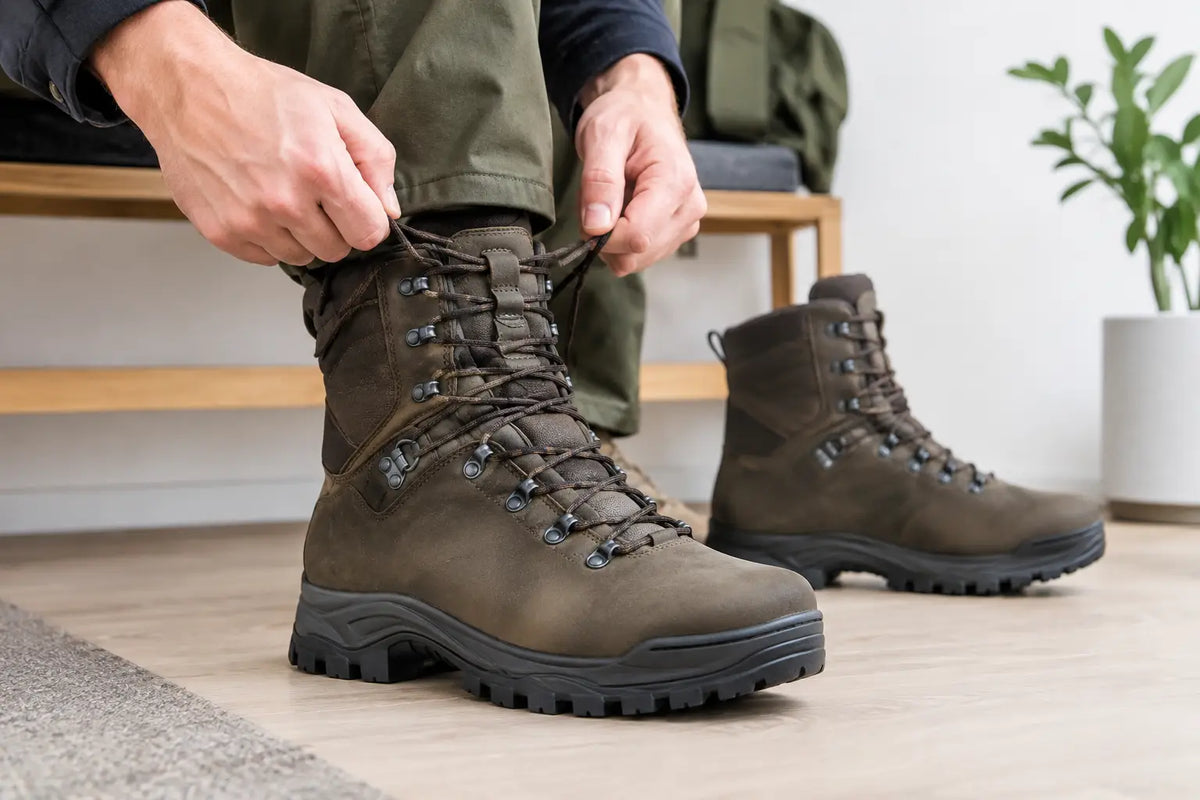
A boot that feels acceptable on the shop floor can become a problem six miles into a patrol, on a wet training area, or halfway through a hill day with weight on your back. So, are Altberg boots true to size? In most cases, yes: Altberg boots generally fit true to your measured UK size. The detail that matters is width, foot volume and the particular last used for the model.
Altberg is well regarded because its boots are made for serious use, not simply for a quick walk from the car park. That means the fit should be secure at the heel, supportive through the midfoot and roomy enough at the toes for descent, swelling and the socks you will actually wear. Choosing a size purely from what is printed in another brand's boot is not always enough.
Are Altberg Boots True to Size for Most Wearers?
For most customers, the best starting point is their normal, accurately measured UK shoe size. If you normally wear a UK 9 in well-fitted walking or service boots, a UK 9 Altberg is usually the sensible first size to try. Do not automatically go up a size simply because the boots are leather, military-style or designed for long days outdoors.
The reason Altberg sizing can feel different is not usually length. It is the shape of the boot around the foot. Some wearers have a narrow heel and low-volume foot; others need extra room across the forefoot, around the instep or over a high arch. A boot can be the correct length yet feel too close across the sides, or it can feel spacious at first but allow heel lift once it has softened.
Altberg produces boots for distinct roles, including patrol, police, military, mountain and general outdoor use. The cut, ankle height, lining and sole unit all affect the way a model feels. Treat each model as a separate fit decision rather than assuming every Altberg boot will feel identical.
Start With Your Measured Foot, Not Your Old Boots
Feet change over time, particularly after service, injury, long periods on your feet or regular load carriage. Measure both feet late in the day, when they are likely to be at their largest. Stand with your weight distributed naturally and wear the type of sock you expect to use with the boots.
Use the larger foot as your reference. If one foot is a little longer, buying for the shorter foot can lead to pressure at the toe on the longer side. This is especially noticeable on descents, when the foot moves forward inside the boot.
Length is only one part of the check. Pay attention to the width across the ball of the foot and the height over the instep. If you regularly find standard footwear tight at the little-toe joint, or you need to loosen laces substantially to accommodate a high instep, look closely at the width and fitting guidance for the individual boot. Moving up half a size may add length, but it does not always solve a width issue and can create unwanted movement at the heel.
The toe-room test
With the boot fully laced, stand upright and slide your foot forward until your toes just touch the front. You should be able to place roughly one finger behind your heel. This is a useful initial check, but it is not the final answer. Lace the boot properly, walk on a firm surface and test a few controlled downhill steps if possible.
Your toes should not strike the front of the boot when descending. A small amount of space is necessary, particularly for hill walking, tabbing or working long shifts where feet will swell. Too much space, however, encourages the foot to slide and can produce blisters, blackened toenails and poor stability.
Heel hold matters more than initial softness
A good Altberg fit holds the heel down without crushing the Achilles area. A little movement during the first few minutes can be normal, especially in a new leather boot, but repeated heel lift is a warning sign. It rarely improves simply because the leather breaks in.
Try the boots on a clean indoor surface while they can still be returned if unsuitable. Walk up and down stairs if available. If your heel rises noticeably every step, first check your lacing. A secure heel-lock lacing method can make a genuine difference. If the lift remains, the boot shape may not suit your foot rather than the size being wrong.
Socks Can Change the Fit by Half a Size
A boot fitted with thin everyday socks may feel completely different with issue-style, merino or cushioned walking socks. For a patrol or field boot, try on with the socks you will wear during the job. This gives a far more reliable result than using dress socks or bare feet.
Thicker socks take up volume, add cushioning and help manage moisture, but they should not be used to force an undersized boot to fit. If your toes already feel close to the end, a thicker sock will make the issue worse. Equally, if a boot is slightly generous in volume but correct in length, the right technical sock and careful lacing may deliver a secure fit without changing size.
Consider the intended conditions. A lightweight sock may suit warm-weather security work or dry summer walking, while a denser merino sock may be appropriate for cold wet training, winter hill ground or long static periods. Fit the boot for its real task, not its most comfortable indoor setup.
When Should You Consider a Half Size Up?
Going up half a size is worth considering when your measured foot falls close to the upper end of a size, when you need extra toe clearance for sustained descents, or when you consistently wear thicker socks. It can also make sense if your feet swell noticeably over a long shift or on loaded marches.
There is a trade-off. Extra length can protect toes on downhill ground, but too much length allows the foot to travel forwards. This creates friction and reduces precision on uneven terrain. For police, security and everyday patrol use on flatter surfaces, an overly long boot can feel clumsy and less controlled. For steep hill work, a fraction more toe room may be beneficial, provided the heel remains firmly held.
Do not size up solely because the leather feels stiff across the forefoot on day one. Quality leather needs time to flex and settle around the foot. Stiffness is not the same as a poor fit. Numbness, pinching, tingling or persistent pressure over the little toes are different matters and should not be ignored.
Breaking In Altberg Leather Boots Properly
A well-fitted Altberg boot should need breaking in, but it should not need suffering through. Start with short walks around the house, then build to local paths and longer outings. Increase distance and load gradually before relying on new boots for exercise, a course, deployment or a demanding weekend in the hills.
Keep the laces adjusted as the leather begins to soften. The lower eyelets should hold the forefoot comfortably, while the upper section secures the ankle and heel. Over-tightening the whole boot can cause pressure across the top of the foot, restrict circulation and make a correct size feel wrong.
Leather responds to use and care. Allow boots to dry naturally after wet conditions, remove insoles if required and avoid drying them directly against a radiator or heater. Conditioning products should be used as appropriate for the boot's leather and membrane construction. Over-treating a new boot can soften it prematurely or affect breathability, so use products sparingly and for the intended purpose.
Common Fit Problems and What They Usually Mean
Pressure at the end of the toes usually indicates insufficient length, particularly if it occurs during downhill walking. A tight feeling across the widest part of the foot may point to a width or volume mismatch rather than a need for more length. Pain on the top of the foot can sometimes be improved by changing the lacing pattern, while heel blisters often come from heel movement, unsuitable socks or a boot that has not yet settled.
Hot spots should be dealt with early. Do not assume a painful area will disappear after a full day's use. Stop, inspect the sock and insole, adjust the laces and reassess the fit. A blister on the first outing is inconvenient; a blister before an exercise, selection event or operational shift can put the entire plan at risk.
If you use orthotics or prescription insoles, take them into account from the beginning. They may reduce internal volume and alter heel position. Fit the boots with the insole you will genuinely use, not with the factory insole if it will be removed later.
Choosing the Right Fit for the Job
The right size is tied to the task. A patrol boot for daily urban use benefits from close heel retention, enough room for a work sock and confident ankle support. A mountain or tabbing boot needs the same heel control, with added consideration for toe room on descents and foot swelling under load. For airsoft or casual outdoor use, comfort still matters, but there may be less need to accommodate prolonged load carriage or consecutive long days.
At John Bull Clothing, the practical approach is simple: use your measured UK size as the starting point, read the model-specific fitting information and judge the boot with your intended socks. A dependable boot is not the one that feels like a slipper for five minutes. It is the one that stays stable, protects your toes and remains comfortable when the ground, weather and workload become less forgiving.
Give the fit test the same attention you would give grip, waterproofing or ankle support. Once an Altberg boot is correctly sized and properly broken in, it should become dependable working kit rather than another problem to manage on the move.