
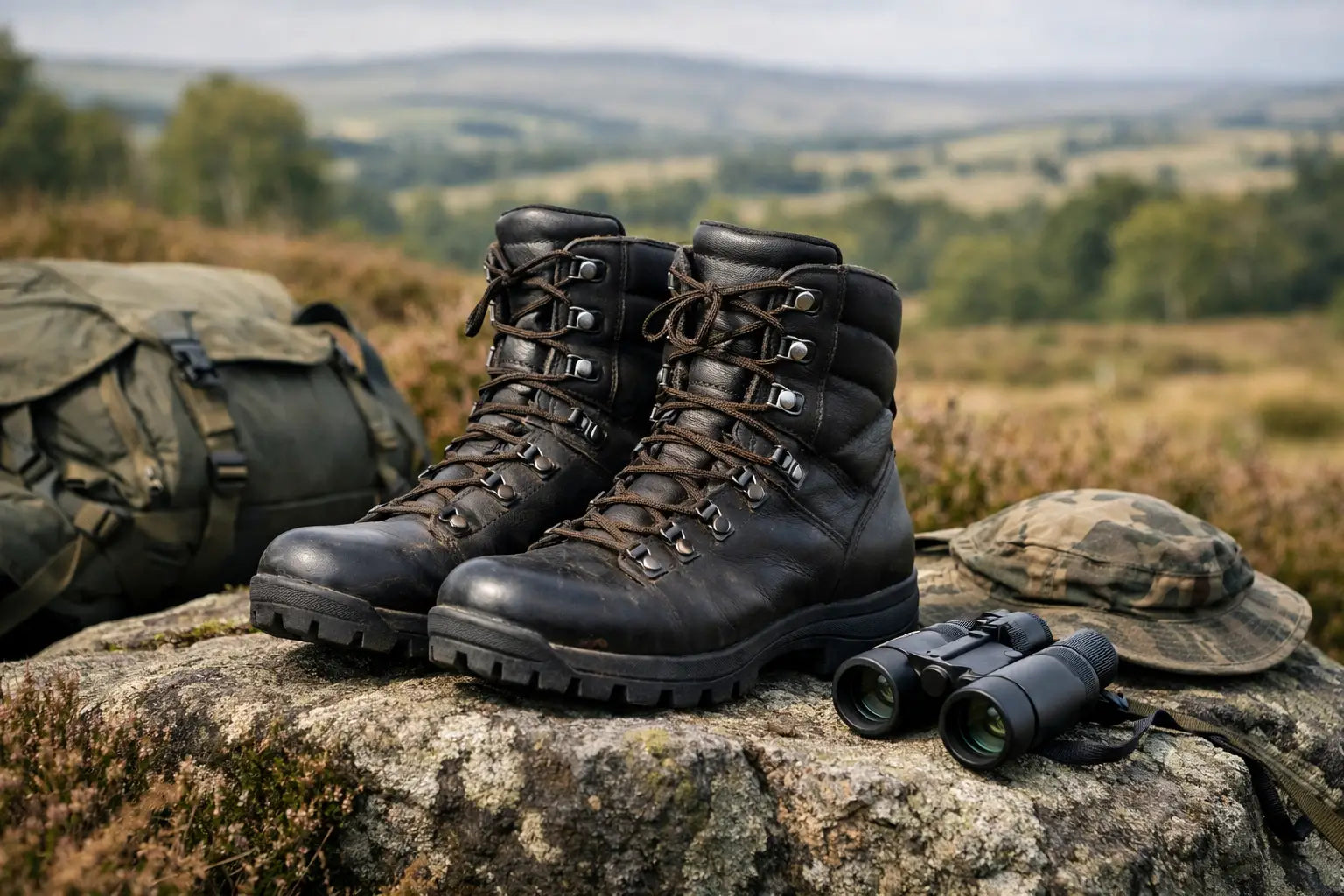
A boot that rubs after six miles, loses support under a loaded bergan or lets water in during a wet shift is not a bargain, whatever it cost at the till. So, are Altbergs worth the money? For people who use their boots hard and often, the answer is usually yes - provided the model fits the job and, more importantly, fits the wearer correctly.
Altberg boots sit at the premium end of the military, police and outdoor market. That higher initial price buys more than a recognised name. It is largely about supportive construction, serious leather, careful fitting options and the prospect of a longer working life than many lighter, lower-cost boots can offer. They are not the right purchase for every occasional dog walk or airsoft skirmish, but they make sound sense where foot comfort and reliability are operational concerns.
What You Are Paying for With Altberg Boots
The clearest difference is underfoot. Quality boots must manage repeated impact, uneven ground, wet grass, loose stone and the added strain of kit. Altberg models are generally built with firm heel support, structured uppers and soles designed for grip and stability rather than showroom softness. That can feel noticeably stiffer than a budget hiking boot at first, yet it is often the support that matters after a full day on patrol, exercise or the hill.
Leather quality also has a practical value. A substantial leather upper, looked after with suitable cleaning and treatment products, can take a great deal of abrasion and weather. It will not make a boot invincible: deep cuts, neglected stitching and constant saturation will defeat any footwear. But good leather is easier to maintain and tends to hold its shape better over time than thin synthetic materials.
Altberg's reputation has also been built on fit. Boots are not one-size-fits-all simply because the length is correct. Foot volume, heel width, instep height and toe shape all affect whether a boot becomes dependable kit or an expensive source of blisters. The range includes different fitting approaches across different styles, giving more scope to find a boot that locks the heel in place without crushing the forefoot.
That is especially relevant for service personnel, police officers and security professionals who may spend long hours standing before they cover any real distance. A boot that feels acceptable for ten minutes in a shop can prove completely wrong by the end of a shift.
Are Altbergs Worth the Money for Military Use?
For regular military use, Altbergs are worth serious consideration because boots are part of the load-bearing system. They affect pace, fatigue, ankle confidence and foot condition. When carrying weight over rough ground, a stable platform and a well-secured heel can reduce the movement inside the boot that causes hot spots and rubbing.
The best model depends on the task. A high-leg, supportive boot suits field training, tabbing and rough terrain better than a lightweight warm-weather boot. Conversely, a very stiff and heavily built boot may be more than is needed for vehicle-based work, routine camp duties or dry summer use. Choosing the toughest boot available is not automatically the best choice if it is too warm, too heavy or overly restrictive for the work being done.
Waterproof versions are useful in persistent rain, wet grass and muddy ground, but buyers should be realistic about what waterproofing can do. Water entering over the collar will still wet the boot from the inside. Membranes also need sensible care, and dried mud should be removed so the upper can breathe properly. For very hot conditions, some users may favour a quicker-drying non-waterproof construction instead.
Those who have had repeated trouble with issued or lower-priced boots often find the extra outlay easier to justify. One avoided training injury, fewer pairs bought over several years, or simply finishing a long day without damaged feet can make the difference more meaningful than the price tag alone.
The Case for Paying Less
There are situations where an Altberg boot is not the most sensible spend. If boots are needed for occasional woodland walks, light camp use or a few airsoft events each year, a competent mid-priced boot may be entirely adequate. It may also be lighter and require less break-in time.
Budget matters as well. A premium boot that is bought in the wrong size, worn with unsuitable socks or left unmaintained is poor value. It is better to buy a correctly fitted, task-appropriate boot within budget than to chase a particular brand name.
There is also a trade-off between durability and weight. Traditional leather boots can feel heavier than modern fabric-led designs, especially when wet. Some wearers prioritise speed and low weight for short, fast-moving work. Others want maximum protection and support. Neither approach is universally right.
The useful question is not whether a cheaper boot can work. Many can. The question is whether it will still offer the same comfort, support and condition after the mileage, weather and load you expect to put through it.
Fit Matters More Than the Badge
A well-made boot can only perform properly when fitted correctly. Try boots on later in the day, when feet are naturally a little larger, and wear the socks you expect to use in the field. There should be room to move the toes without the heel lifting as you walk uphill. Your heel should not be forced hard into the back of the boot, and pressure across the instep is a warning sign rather than something to ignore.
Do not expect every new leather boot to feel slipper-soft. A short bedding-in period is normal, but pain, numbness and major heel movement are not signs that a boot merely needs more time. They usually indicate an incorrect size, shape or lacing setup.
Lacing deserves attention too. A secure lower section helps prevent the foot sliding forward on descents, while the upper section can be adjusted for ankle support and comfort. Small changes in lacing tension can make a substantial difference on a long route march.
Looking After a Premium Pair
The value of an Altberg boot is closely tied to maintenance. After wet or muddy use, brush off dirt, remove the insoles if they are damp and dry the boots slowly at room temperature. Do not force-dry leather against a radiator, fire or heater, as excessive heat can harden the leather, affect adhesives and encourage cracking.
Use treatment products appropriate to the boot's leather and any membrane it contains. Overloading the upper with the wrong wax or oil can reduce breathability, while no treatment at all leaves leather more vulnerable to drying and water absorption. Keep an eye on laces, hooks, stitching and sole wear before they become a field failure.
Premium construction can also make repair or resoling a realistic consideration on suitable boots, rather than treating the entire pair as disposable when the sole is worn. Check the specific model and repair options before assuming this applies, but it is an important part of the long-term-value argument.
Who Will Get the Best Value?
Altbergs make the strongest case for anyone whose footwear is working equipment: soldiers on regular exercise, police and security staff covering long shifts, hill users carrying weight, instructors, field sports users and outdoor workers. They are also a sensible choice for enthusiasts who would rather buy one dependable pair and maintain it properly than replace cheaper boots repeatedly.
For cadets, families and occasional users, the decision is more measured. Young feet may still be growing, and a high-end boot can be hard to justify if it will be outgrown quickly. A less expensive, properly fitted option may be the practical answer until boot use becomes more frequent. John Bull Clothing customers who already know the demands of their training or role are usually best placed to judge where the extra support will pay back.
A premium boot should earn its place by matching the ground, weather and work ahead. Buy for the miles you actually cover, take time over fit, and maintain the pair once they are yours. That is how an Altberg becomes dependable field kit rather than simply an expensive purchase.