
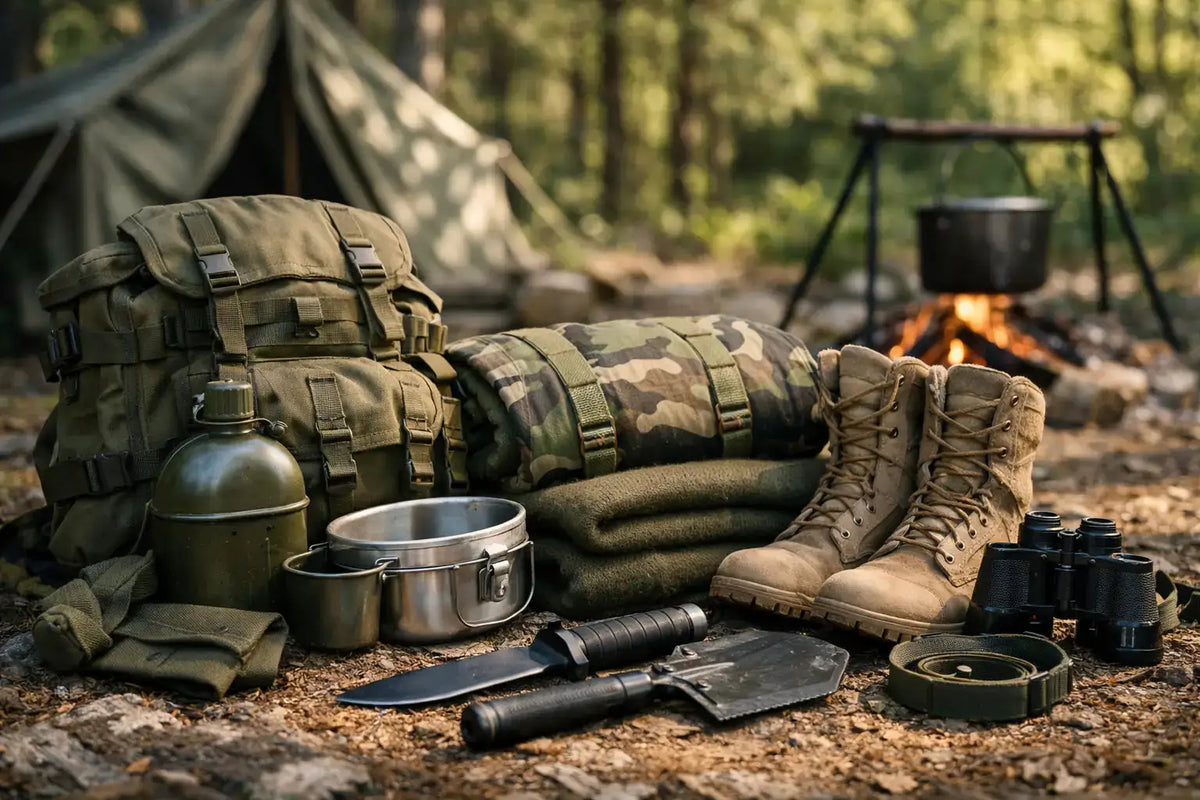
A cheap tent that fails at 2am teaches the lesson quickly. For many campers, army surplus for camping starts there - not as a style choice, but as a search for tougher kit that can handle bad weather, rough ground and repeated use without complaint.
That appeal is real, but surplus is not automatically better. Some military kit is outstanding in the field and lasts for years. Some is heavy, dated or built for a job that does not match a typical weekend camp. The smart approach is to know where military surplus genuinely gives you an advantage, and where modern camping equipment is the better buy.
Why army surplus for camping still makes sense
Military equipment is designed around function first. That matters when you are carrying kit in poor weather, setting up in fading light or relying on a sleeping system to keep you warm through a cold night. Surplus often offers hard-wearing fabrics, practical layouts and repairable construction that many budget camping ranges simply do not match.
There is also value in the way military kit is built. Webbing, packs, waterproof layers and cold-weather accessories are usually designed with abuse in mind. Stitching tends to be substantial, materials are chosen for service life rather than showroom appeal, and features are there for a reason. If you want dependable field gear rather than lightweight luxury, surplus can be a sensible place to look.
The trade-off is weight and bulk. Military users often prioritise durability, load carriage and compatibility with other equipment over compact packed size. That works well for vehicle-based camps, bushcraft setups and short walks from the car. It matters less if you are trying to cut every gram from a long-distance backpacking load.
The best surplus kit for camping
Some categories translate exceptionally well from military use to civilian camping. Others only work if your priorities line up.
Sleeping systems and bivvy kit
Military sleeping bags and bivvy covers are often among the strongest surplus buys. A proper cold-weather bag, especially one designed for damp British conditions, can offer serious insulation and robust outer fabrics at a price that compares well with lower-end civilian alternatives. Bivvy bags are equally useful if you want weather protection under a tarp or as backup in foul conditions.
Here, condition matters. Compression, damaged zips and worn insulation will reduce performance. If a surplus sleeping system has seen hard service, the apparent bargain can disappear quickly. Check loft, zip function and any signs of delamination or mildew before relying on it.
Rucksacks and load carriage
Military bergens and patrol packs are built to carry awkward loads over rough ground. For campers who value toughness, that is a clear advantage. External attachment points, reinforced bases and straightforward compartment layouts also suit gear-heavy camps where you want tools, stoves and wet kit separated properly.
The drawback is fit. Some older surplus packs are less adjustable than modern hiking rucksacks and may not carry as comfortably over distance. A bergen that works well for a short approach march into camp may feel poor after a full day on the hill. If you cover serious mileage, fit and suspension should come first.
Boots and camp clothing
Surplus boots can be excellent if sourced carefully, but they are not an automatic bargain. Leather combat boots and patrol boots are designed for hard use, poor terrain and long wear, which makes them attractive for woodland camps and wet ground. Even so, used boots mould to the previous wearer, and badly stored leather can crack or stiffen.
Clothing is more straightforward. Field jackets, smocks, thermal layers and waterproof outerwear often perform well for camping, especially in mixed weather. Military cuts favour movement and utility, with useful pockets and durable fabrics. For static camp tasks, firewood runs and early starts in cold weather, that practicality is hard to ignore.
Cookware, mugs and small field items
Mess tins, metal mugs, water bottles, canteen cups and compact cook sets are classic surplus staples for good reason. They are simple, durable and easy to use around camp. If your style of camping is basic, stove-based and practical, these smaller items often represent some of the safest surplus purchases.
Just be realistic about age and design. Older kit may be functional but less efficient than modern cookware. Heavy steel or aluminium can last for years, but it may not be the best choice if pack weight is your main concern.
What to avoid or buy with caution
Not every piece of military surplus improves a camping setup. Some items are bought for the look of the thing and end up left in the garage after one trip.
Old tents and shelters
Surplus tents can be very robust, but many are heavy, bulky and slower to pitch than modern civilian options. Canvas shelters in particular have a certain appeal, but they are better suited to vehicle camps and historical interest than general use. Waterproof coatings on older synthetic shelters may also be compromised by age, even if the tent appears sound.
If you want a tent for regular family camping or fast-moving overnight trips, a modern camping design is often the more practical answer.
Webbing you do not need
Traditional webbing systems are useful for specific field tasks, but many campers buy more load carriage than they will ever use. If your camp routine is a short walk from the car, a decent rucksack and dry bags are usually simpler. Webbing comes into its own when you need immediate access to water, cooking kit, tools or navigation gear on the move.
Heavily used clothing and footwear
There is a difference between broken-in and worn out. Faded fabric is rarely a problem. Split seams, thinning soles, damaged waterproof membranes and compressed insulation are. Surplus is only good value when service life remains in the item.
How to judge surplus quality
The best surplus buyers are selective. They do not assume military means indestructible, and they do not buy blindly on price.
Start with condition grading. New, unissued or grade 1 kit will usually justify a stronger price because the performance is more predictable. Used items can still be excellent, but only if wear is cosmetic rather than structural. Look closely at stitching, zip tracks, buckles, coatings, elastic and any high-stress points such as shoulder straps or boot flex areas.
Brand and origin matter too. Some military-spec equipment from respected makers offers a clear performance advantage over generic copies. Trusted field brands and proven issue-style designs tend to be the safer choice when reliability matters.
It is also worth asking a simple question before buying: what problem is this piece of kit solving? If the answer is only that it looks military, it may not earn its place in your camping load.
Matching surplus to your camping style
The right surplus setup depends on how you camp. A bushcraft user on woodland overnighters may get real value from a bivvy bag, poncho, mess kit, thermal layer and sturdy bergen. A car camper may prefer surplus blankets, cooking gear and hard-wearing outer clothing while using a modern family tent. A hill walker doing lightweight multi-day routes may only borrow one or two ideas from surplus, such as a durable waterproof layer or insulated gloves.
That is where specialist retailers make a difference. A broad range helps you compare true military surplus, military-inspired gear and modern branded field equipment side by side, rather than forcing everything through the same lens. John Bull Clothing, for example, sits squarely in that specialist space, where practical use matters more than novelty.
Is army surplus for camping cheaper?
Often, yes - but not always in the way people expect. Surplus can be cheaper because it is used, because the design is older, or because the finish is more functional than commercial outdoor branding. That does not mean every item is a bargain.
A cheap surplus rucksack that carries badly is poor value. A well-made surplus sleeping system that gives years of reliable use is strong value. The real measure is cost over service life, not the initial ticket price.
For many campers, the best route is mixed kit. Use surplus where durability and straightforward function matter most, then choose modern outdoor equipment where weight, packed size or comfort give you a clear benefit.
A good camp setup does not need to look tactical, and it does not need to be built entirely from issue-style gear. It just needs to work when the weather turns, the ground is poor and you still have to get through the night comfortably. Buy surplus with that standard in mind, and it will serve you well.