A beret can look like a simple item of headwear until it is worn badly, carries the wrong badge, or appears on the wrong occasion. The berets of the British Army are practical military kit, but they are also among the clearest visible markers of corps, regiment, qualification and belonging. For serving personnel, veterans, cadets and collectors alike, getting the detail right matters.
The correct beret is not chosen only by colour. Unit dress instructions, the cap badge, authorised backing and the required standard of finish all play a part. That is why a good-quality wool beret, shaped carefully and fitted properly, remains a staple for parade dress, cadet use and regimental presentation.
Berets of the British Army: more than a colour
British Army berets developed from functional field headwear into a recognisable part of military identity. They are compact, relatively easy to stow, warmer than they appear and practical beneath certain items of equipment. Their greater significance, however, is ceremonial and regimental. A correctly badged beret immediately communicates an affiliation that a generic hat cannot.
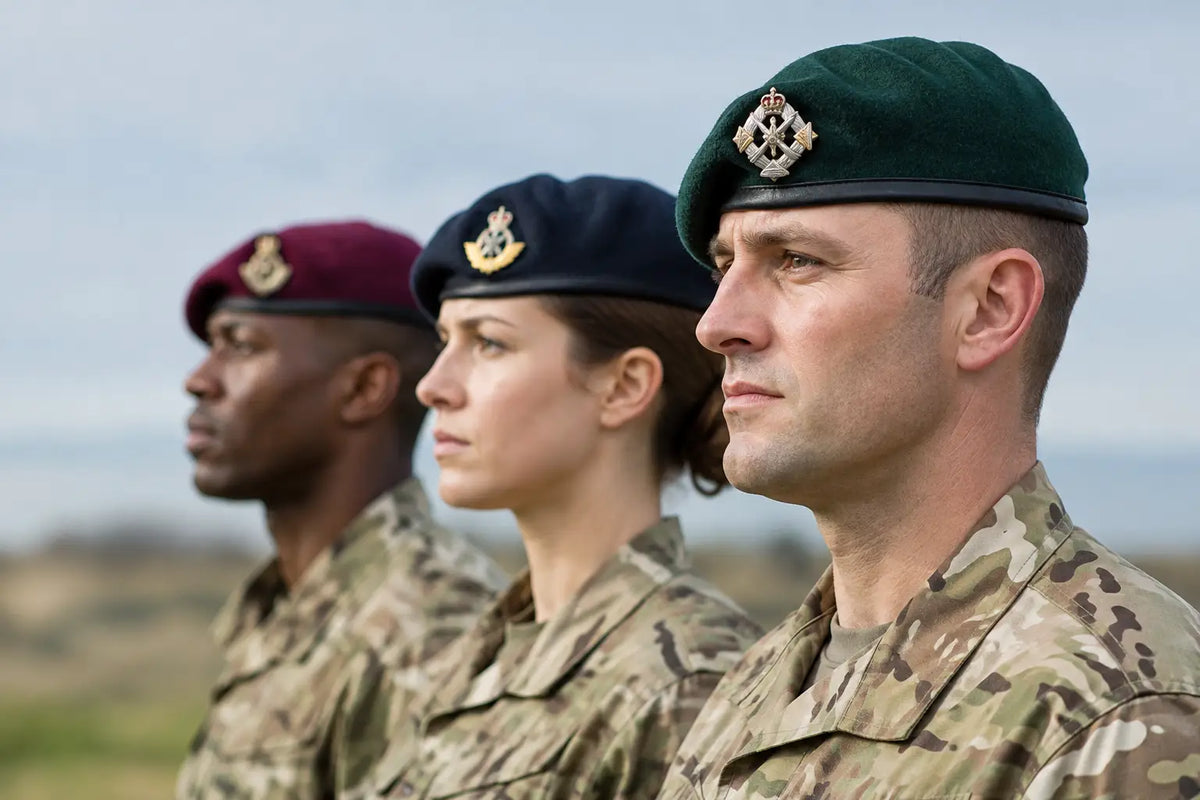
Colours are associated with particular arms and services, but colour alone is never the full answer. Maroon is closely linked with airborne forces, while rifle green has long associations with rifle and commando traditions. Navy blue, khaki, light blue and other shades may identify different corps, appointments or organisations. Some colours carry strong public recognition; others are less obvious outside service circles.
Assignments and authorised dress can change, particularly following restructuring, transfers or local dress policy. The safe rule is straightforward: follow current unit instructions rather than relying on an old photograph, a television programme or a surplus listing. This is particularly relevant for recruits, cadets and anyone assembling kit for a formal event.
The badge gives the beret its specific identity. Cap badges vary in size, fastening and metal finish, and some are worn with a coloured backing where authorised. A beret that is the correct shade but fitted with an incorrect badge is still wrong for parade or service use. For veterans and families buying a commemorative item, matching the badge and beret to the individual’s actual regiment or corps is the detail that turns a display piece into a meaningful one.
Choosing the right British Army beret
Start with purpose. A serviceable wool beret for drill, inspection or parade needs a clean shape and a reliable fit. A surplus beret for re-enactment, airsoft or outdoor use may have different priorities, such as condition, price and whether it will be exposed to weather. A presentation beret needs to look right, but does not necessarily need the same level of field durability.
Material makes a difference. Traditional wool berets have the proper appearance and mould well when shaped. They are usually the right choice where a smart military finish is required. They also require more care than a casual fashion beret. Repeated soaking, heat and rough handling can affect the fabric and leave it misshapen.
Sizing should be treated seriously. A beret that is too tight will be uncomfortable and may sit high on the head; one that is too loose can slip out of position and spoil the line of the cap badge. Measure around the head where the beret band will sit, generally just above the eyebrows and ears. Check the manufacturer’s sizing guidance, as labelled sizes can differ slightly between makers and stock types.
For a formal or issued-style appearance, look for a beret with a sound leather or imitation-leather band, a secure drawcord arrangement and a properly finished headband. The lining should sit comfortably without bunching. On surplus stock, inspect for moth damage, thinning wool, sweat staining, cracked bands and loose stitching. These faults may be acceptable for a display project, but not for a demanding parade standard.
A cap badge should be fitted with care. Its position and method of attachment must follow the relevant dress regulations. Avoid forcing pins through the beret or using makeshift fixings that distort the cloth. If a backing is required, it should be cut cleanly and positioned neatly, with no excessive material visible around the badge.
Shaping a beret without ruining it
Most wool berets benefit from careful shaping, but the aim is disciplined and tidy, not theatrical. The badge area should sit upright and clean, while the crown is drawn across in the authorised direction to create a low, controlled profile. There is no benefit in creating an exaggerated sweep that makes the beret look like costume kit.
The safest approach is gradual. Lightly dampen the wool if the manufacturer’s guidance permits, put the beret on and work the material into shape with your hands. Keep the band level and ensure the badge position remains stable. Allow it to dry naturally while retaining its shape. Excessive soaking can shrink or stiffen the material, while radiators, hairdryers and other direct heat can damage the band and leave the wool uneven.
A useful pre-parade check covers four points:
- the beret sits level and comfortably, without riding up;
- the cap badge is clean, secure and correctly positioned;
- the crown has a controlled shape, with no deep creases or bulky folds;
- the band, drawcord and lining are tidy, with no loose ends showing.
Wear, care and the right occasion
A beret is not automatically the right headwear for every task. Operational headgear is dictated by role, safety requirements, weather and orders. Helmets, cold-weather hats, bush hats and other protective equipment take precedence when required. The beret is valued because it is compact and readily identifiable, not because it replaces protective headwear.
For parade, remembrance events and ceremonial occasions, condition is as important as authenticity. Brush off dust and lint with a soft clothes brush, keep the badge clean and store the beret flat or supported so the crown does not collapse. Do not leave it in a damp kit bag, on a car dashboard or compressed under heavy equipment. Wool holds moisture and can develop an odour or lose its finish if neglected.
If a beret becomes wet in rain, reshape it gently and let it dry at room temperature. Avoid a washing machine unless the maker specifically permits it. Most military-style berets respond better to spot cleaning and patient care than aggressive washing. For a prized veteran’s beret or a historic badge, consider keeping the original item for display and using a separate correctly styled beret for events.
Cadets and families often face a practical choice between buying new and buying surplus. New stock offers predictable sizing, clean condition and a blank canvas for correct badging. Genuine surplus may bring period character and value, but condition varies and older examples may not match current dress requirements. Neither is automatically better; it depends on whether the requirement is active wear, a cadet uniform, re-enactment or a commemorative gift.
For those building a regimentally accurate turnout, specialist military retailers such as John Bull Clothing are useful because berets sit alongside cap badges, rank slides, patches and other details that need to work together. The objective is not simply to own a beret. It is to have the correct item, prepared to the standard expected for the occasion.
A well-worn beret should look purposeful rather than precious: clean, properly shaped and correctly badged. Give it that attention, and a small piece of headwear carries the heritage it is meant to represent.