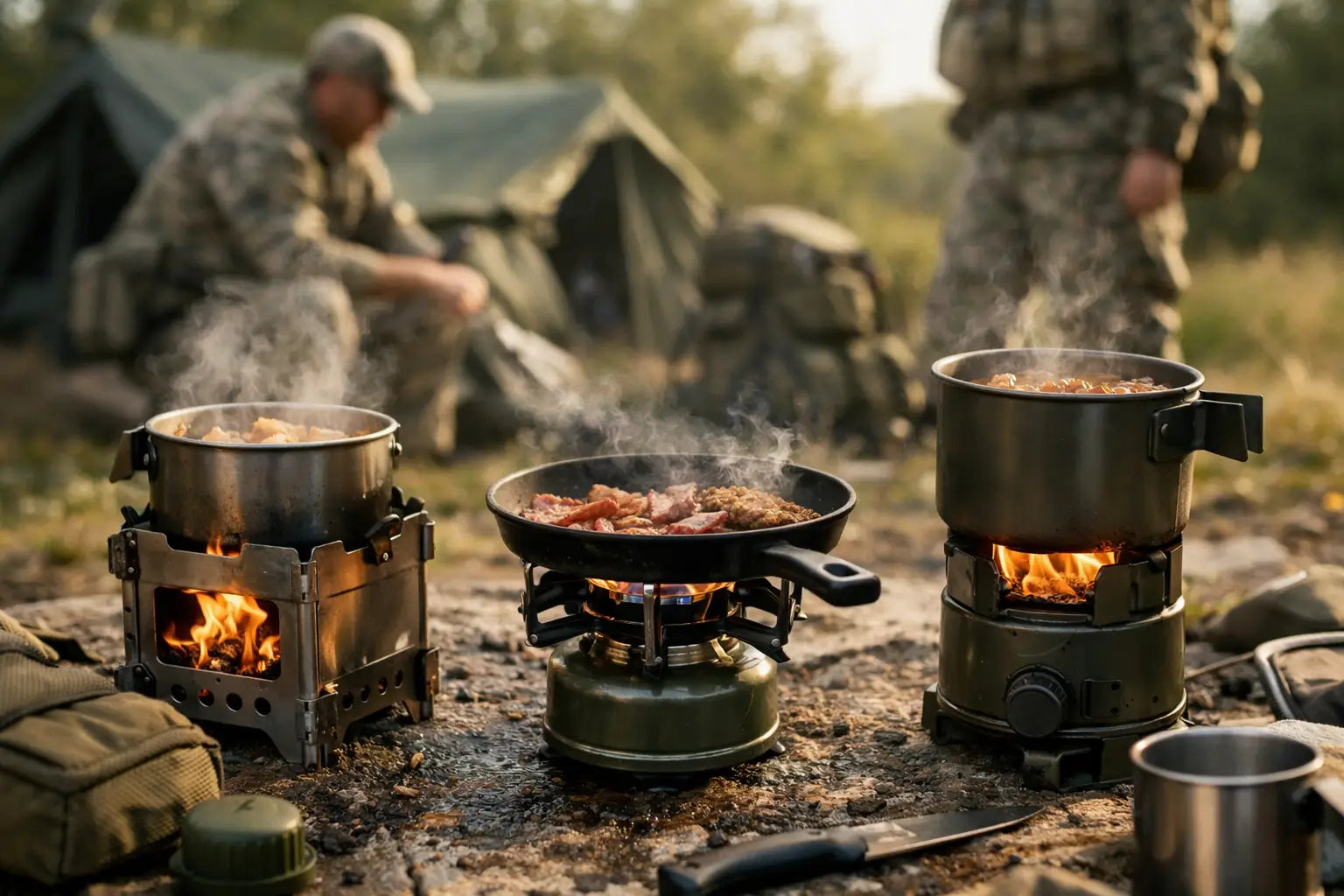
A hot brew after a wet stag, a ration warmed before first light, or enough water boiled for a small harbour area can change the standard of a field routine. The best military camp stoves are not necessarily the lightest or most powerful models on paper. They are the stoves that suit the task, work with the fuel you can carry, remain stable on poor ground and can be relied upon when the weather closes in.
For military users, cadets, security personnel and serious outdoor users, a stove should be selected as part of a wider cooking system. Your mug, mess tins, water requirement, rations, fuel plan and pack space all matter. A compact burner may be ideal for one person on a short exercise, while a group in a static location needs a very different arrangement.
What Makes a Good Military Camp Stove?
Field kit earns its place through function. A good military camp stove should be straightforward to light, dependable in wind and cold, compact enough for the load you are carrying, and capable of supporting the pan or mug you actually use. It should also be easy to maintain without specialist tools or a lengthy instruction manual.
Fuel availability is often the deciding factor. A stove is only useful while it has compatible fuel, so consider where you will be operating and how long you will be out. Gas canisters are clean and convenient, but they are not always easy to replace away from established outdoor suppliers. Liquid-fuel stoves offer broader fuel options but require more care. Solid-fuel systems are exceptionally simple, though slower and less suited to repeated cooking for several people.
Do not judge output in isolation. High heat shortens boil time, but it can also make simmering difficult and burn through fuel faster. For boil-in-the-bag meals and hot drinks, speed may be the priority. For frying, heating tins or preparing food for a pair, flame control and pan stability become more valuable.
Choose the Fuel System Before the Stove
The right fuel system shapes how you pack, cook and resupply. There is no single answer for every exercise or expedition.
Gas cartridge stoves
Gas cartridge stoves are a practical choice for short-duration camps, hill days and vehicle-supported trips. They light quickly, run cleanly and offer adjustable heat, making them well suited to brewing up, boiling water and cooking simple meals. Screw-thread cartridges are common in outdoor retail, while pierceable and bayonet-style canisters need matching stove fittings, so check compatibility before buying.
Their main weakness is cold-weather performance. Butane-rich fuel loses pressure as temperatures fall, and a canister can struggle when placed directly on frozen or wet ground. A four-season gas blend, a windscreen designed for the stove, and sensible positioning can help. Never wrap a canister in an improvised windbreak or place it close to the burner, as overheating presents a serious hazard.
Multi-fuel and liquid-fuel stoves
Multi-fuel stoves are built for longer trips, remote travel and situations where fuel flexibility matters. Depending on the model, they can run on white gas, paraffin, unleaded petrol or other approved fuels. This makes them valuable where gas cartridges are difficult to source or where low temperatures make standard gas less dependable.
The trade-off is complexity. These stoves need priming, regular cleaning and careful handling of liquid fuel. They can be louder than gas burners and are less convenient for a quick brew. They are best suited to users prepared to practise lighting and servicing before heading out, rather than learning the system in rain at the end of a long day.
Solid-fuel and tablet stoves
Solid-fuel stoves remain relevant because they are compact, quiet and mechanically simple. A folding metal stove with fuel tablets takes up very little room in a daysack or webbing pouch and provides a useful back-up heat source. There are no valves, pumps or cartridges to fail.
They are slower than gas or liquid-fuel systems and leave residue on cookware. In wind and rain, performance can be limited without shelter. For an emergency brew, a lightweight ration meal or a reserve cooking option, however, a solid-fuel setup remains hard to beat for simplicity.
Integrated cooking systems
An integrated system combines a burner with a dedicated pot and heat-exchanger design. These systems boil water rapidly and use fuel efficiently, which suits freeze-dried meals, hot drinks and lightweight personal camps. They are less versatile for larger frying pans or ordinary mess tins, and their enclosed design can take up more pack space than a basic burner and pot.
They work best for the user who mainly needs hot water rather than full meal preparation. If your field food plan relies on boil-in-the-bag rations, noodles, porridge or dehydrated meals, the convenience can justify the dedicated setup.
Best Military Camp Stoves by Field Role
For a solo user moving light, a compact gas burner with a small pot is usually the most balanced option. It is quick to deploy, lets you regulate heat and fits easily alongside a mug, spoon and fuel canister. Choose a burner with folding pot supports wide enough for your preferred mess tin, not just a narrow cup.
For cold-weather work, extended trips or overseas travel, a proven multi-fuel stove is often the stronger choice. It takes more training and attention, but it provides useful independence from a single canister format. Carry approved fuel bottles, spare seals where appropriate, and a service kit. Fuel should always be stored securely and separately from food.
For a day exercise, grab bag or vehicle emergency kit, a solid-fuel stove is a sensible back-up. Its low weight and lack of moving parts make it useful when you want a heat source without committing space to a larger cooking system. Pair it with a metal mug or mess tin that sits securely over the flame.
For a static camp shared by several people, prioritise a stove with a broad base, good pan support and enough output for repeated boils. A larger remote-canister gas stove can offer greater stability than a small top-mounted burner, particularly with wider pans. Group cooking also demands a realistic fuel calculation. Boiling one mug of water is not the same as preparing evening meals and hot drinks for four people in poor weather.
Stability, Wind Protection and Safe Use
Most stove problems in the field are not faults with the stove itself. They are caused by uneven ground, poor fuel management, unsuitable pans or exposure to wind. Set the stove on level, firm ground away from dry grass, tent fabric, webbing and spare fuel. Clear a working area before lighting it, and keep the stove where it cannot be knocked by boots, knees or loose kit.
A windscreen can greatly improve efficiency, but it must be used correctly. With a gas cartridge stove, use only a windscreen approved or positioned by the manufacturer so heat cannot build around the canister. Remote-canister and liquid-fuel designs may offer more flexibility, but every stove has its own safe operating arrangement.
Never cook inside a tent, basha, vehicle or other enclosed shelter. Carbon monoxide and fire are real risks, even when a door is open. In persistent rain, cook outside under suitable cover with clear ventilation and adequate separation from fabric. If conditions make this unsafe, wait for a safer location rather than forcing the issue.
Use a pan that matches the stove. Oversized cookware can make a compact burner unstable, while a narrow pot can concentrate heat and waste fuel. Keep handles turned away from the flame and out of the way of passing kit. Once you have finished cooking, allow the stove and pan to cool before packing them away.
Pack the Stove as a Complete System
A capable burner is no use if you have forgotten the lighter, pot support, gas adaptor or spare fuel. Keep the cooking system together in a dedicated pouch or mess-tin bag. A practical setup usually includes the stove, fuel, ignition source, metal mug or pot, spoon, cleaning cloth and a small water treatment method where required.
Before an exercise, inspect seals, burners, hose connections and pot supports. Test the stove with the fuel you intend to carry. For liquid-fuel models, practise priming and shutting down in controlled conditions. For gas models, check that the canister connection is clean and that there is no smell of escaping gas.
Soot, food residue and damp storage shorten the working life of cooking kit. Wipe down the stove after use, empty any remaining water from cookware and dry components before storing them. A few minutes of maintenance at home is preferable to discovering a blocked jet or corroded fitting in the field.
The right stove is the one that supports your likely task without adding needless weight or complication. Select it around your fuel plan, group size and conditions, then use it often enough that lighting it and cooking safely become routine. John Bull Clothing customers know dependable field kit is not about owning the most elaborate setup. It is about carrying equipment you understand and can trust when a hot meal is needed.