
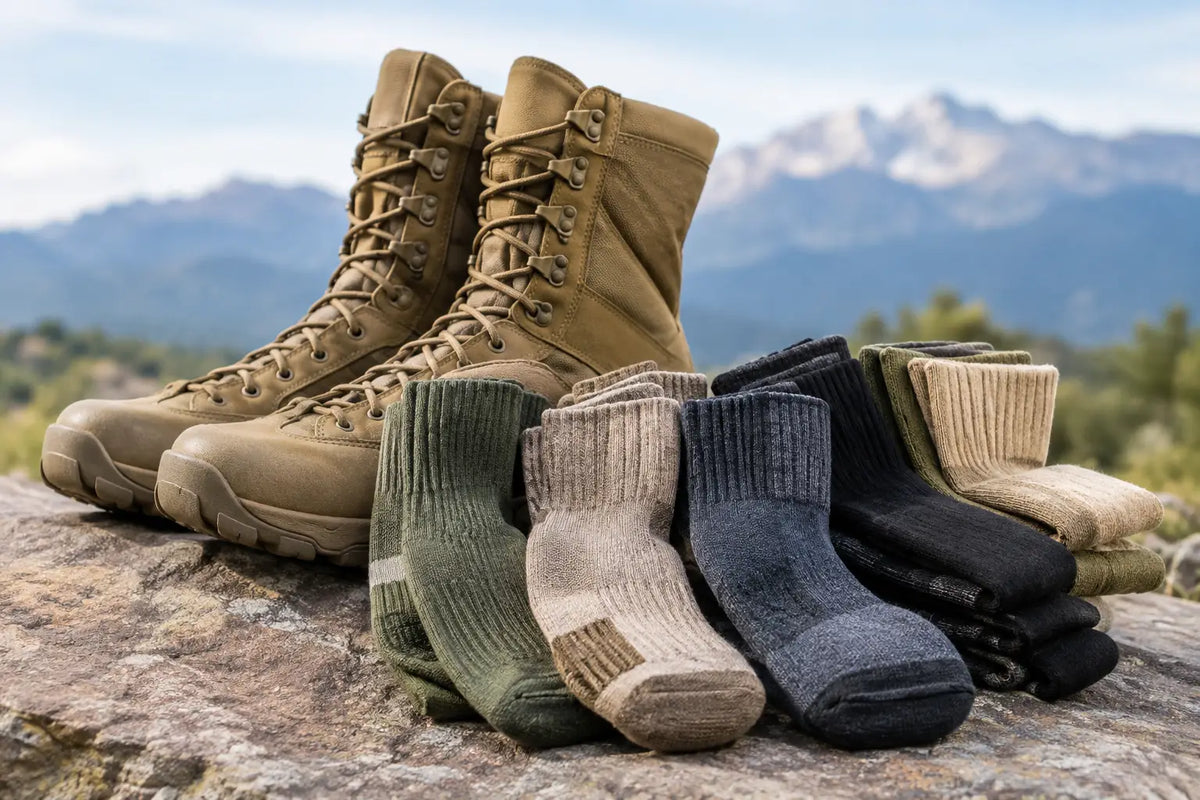
A wet heel, a hot spot beneath the ball of the foot, or a sock that has slipped down inside a combat boot can end a good tab long before fitness does. The best military sock systems do more than add padding. They manage friction, moisture and temperature while keeping the foot stable inside the boot.
For service personnel, cadets, police, security staff and serious outdoor users, socks are not an afterthought. They are part of the boot system. Get the pairing wrong and even a well-fitted patrol boot can become uncomfortable. Get it right and long days on hard ground, wet grass, ranges or hill tracks become far more manageable.
What Makes the Best Military Sock Systems Work?
A military sock system is the combination of sock type, boot fit, foot condition and the conditions underfoot. One pair of thick socks is not automatically better than two layers, and a premium merino sock cannot compensate for a boot that is too narrow, too loose or still poorly broken in.
The job is straightforward: reduce skin-on-fabric friction, move perspiration away from the foot, provide controlled cushioning and avoid excessive bulk. The balance changes with the task. A dry summer exercise, a wet autumn patrol and a cold static duty all call for different priorities.
The strongest systems usually rely on a well-made primary sock chosen for the season, with a liner added when mileage, moisture or blister risk makes it worthwhile. A system should feel secure rather than tightly compressed. If it causes pressure across the toes or leaves deep marks around the calf, it is not working properly.
Start with the boot, not the sock
Try socks with the boots you will actually wear. A pair that feels excellent in lightweight walking footwear may make a close-fitting combat boot feel cramped. Conversely, a thin patrol sock can leave too much movement inside a roomier boot, allowing the heel to lift and rub.
There should be enough room to spread your toes naturally, with no pinching at the forefoot. The heel must sit firmly in the heel cup. If changing from a thin sock to a thicker winter system, reassess the boot fit rather than forcing the extra volume into the same space. Restricted circulation and compressed insulation can leave feet colder, not warmer.
Choose the Right Sock Construction
Military and tactical socks tend to use wool, synthetic fibres or a blend of both. Each construction has a place, and the right answer depends on duty, weather and personal foot management.
Merino-rich socks are valued for warmth, odour resistance and their ability to remain comfortable when damp. They are particularly useful for colder conditions, multi-day exercises and users who spend extended time in boots. Wool does not mean a sock will be excessively thick or itchy. Modern merino blends can be close fitting, durable and suitable for regular wear.
Synthetic socks, commonly using polyester, nylon and elastane, dry quickly and hold their shape well. They are a sound choice for warm-weather training, high-output work and repeated wash cycles. Nylon reinforcement in high-wear zones also matters. The heel and toe take constant punishment inside a boot, especially when carrying weight or working on uneven ground.
A blend often gives the most practical result: merino for comfort and moisture control, synthetics for strength and stretch. Avoid treating fibre content as the only measure of quality. Look at how the sock is built, including a shaped heel, flat or low-profile toe seam, arch support and reinforcement where it earns its place.
Cushioning should match the task
Heavy cushioning can be useful when operating in cold conditions, carrying a heavy bergan or spending long hours on rough terrain. It protects the sole and helps fill a slightly higher-volume boot. Its drawback is heat and drying time. In warm weather, an overbuilt sock can trap moisture and soften the skin, raising the chance of rubbing.
Medium cushioning is often the most versatile choice for general field use. It gives useful heel and forefoot protection without radically changing boot fit. Thin socks suit hot weather, parade footwear, close-fitting patrol boots and users who prefer a direct feel underfoot. They demand good boot fit and disciplined foot care because there is less material to absorb friction.
Do not confuse thickness with protection. A dense, well-fitted medium sock may control movement better than a loose heavy sock that bunches under the foot.
When to Use a Two-Layer Sock System
A liner-and-outer-sock arrangement is one of the most effective ways to manage friction on long tabs, courses and extended days in wet boots. The thin liner sits next to the skin, while the outer sock takes the greater load from the boot. Instead of the skin moving against one thick layer, some movement occurs between the two socks.
This approach is particularly useful for people prone to heel blisters, those breaking in boots, and anyone expecting repeated long-distance work. A liner should be smooth, close fitting and free from folds. If it wrinkles at the toe or heel, it can create the very pressure point it is meant to prevent.
Two layers are not essential for every job. On a short shift, a warm dry day or in a boot with very limited volume, a quality single sock is normally the better solution. Extra layers increase warmth and bulk, and they can make drying harder after water crossings or persistent rain.
If using liners, test the complete system on shorter walks first. The boot must accommodate both socks without squeezing the foot. Change both layers if they become saturated or heavily soiled.
Managing Moisture on Exercise and in Wet Weather
Blisters are often a moisture problem before they become a friction problem. Sweaty or wet skin softens, making it easier for repeated movement to cause damage. Breathable boots help, but the sock is responsible for moving moisture away from the skin and retaining enough warmth when conditions turn.
Carry spare pairs in a waterproof bag, particularly on field exercises and hill days. A dry pair halfway through the day can make a meaningful difference to comfort, warmth and skin condition. Keep one pair reserved for sleeping when operating overnight. Putting damp field socks back on after rest is a poor start to the next day.
Use a sensible rotation: one pair worn, one pair drying and one pair kept dry. This is more useful than carrying several pairs loose in the rucksack, where rain or a leaking water bottle can ruin them all.
Dry feet properly whenever conditions allow, including between the toes. Check for reddened areas, tenderness and early hot spots. Address them before they become blisters. Clean, dry socks and properly fitted boots remain the first line of defence; tapes and blister dressings are support measures, not a substitute for sound kit selection.
Fit Details That Matter on Long Days
A good military sock stays in position. It should not rotate, gather at the instep or creep down the calf. A ribbed leg, elasticated arch section and shaped heel help keep it where it belongs, but sizing is still decisive. Do not buy a larger size simply to gain extra thickness. Excess fabric has to go somewhere, and it usually ends up folded at the toe or heel.
Pay attention to toe seams. A raised seam can be barely noticeable in the shop and aggravating after several miles. This is especially relevant in close-fitting boots or during downhill movement, when the foot repeatedly moves forwards.
Compression-style features can help a sock remain stable and may feel supportive during long periods on foot. They should not cause numbness, tingling or cold toes. Anyone with circulation concerns should take professional medical advice before relying on tight compression garments.
A Practical Sock System for Common Conditions
For general three-season use, a medium-cushion merino blend or technical wool blend is a dependable starting point. It suits most combat and patrol boots, handles variable British weather and gives enough protection for routine training.
For hot weather or high-output work, use a lighter technical sock with moisture-wicking fibres, a secure arch fit and modest cushioning. Carry a dry spare pair rather than wearing an overly thick sock in the hope of preventing blisters.
For cold, wet or static conditions, move to a warmer merino-rich sock with more cushioning, provided the boot has sufficient room. If there is prolonged movement or known blister risk, add a thin liner. For load carriage, long tabs or a new boot period, a liner with a medium outer sock is often the most reliable setup.
John Bull Clothing customers buying boots and field kit should treat socks as part of the same fitting decision. A dependable boot deserves a sock system matched to its volume, the season and the work expected of it.
The best approach is usually the one you have tested before the important day. Wear the system on shorter walks, identify any hot spots, and keep dry replacements ready. Feet that stay dry, stable and free from friction will keep you moving when the ground and weather do not cooperate.