
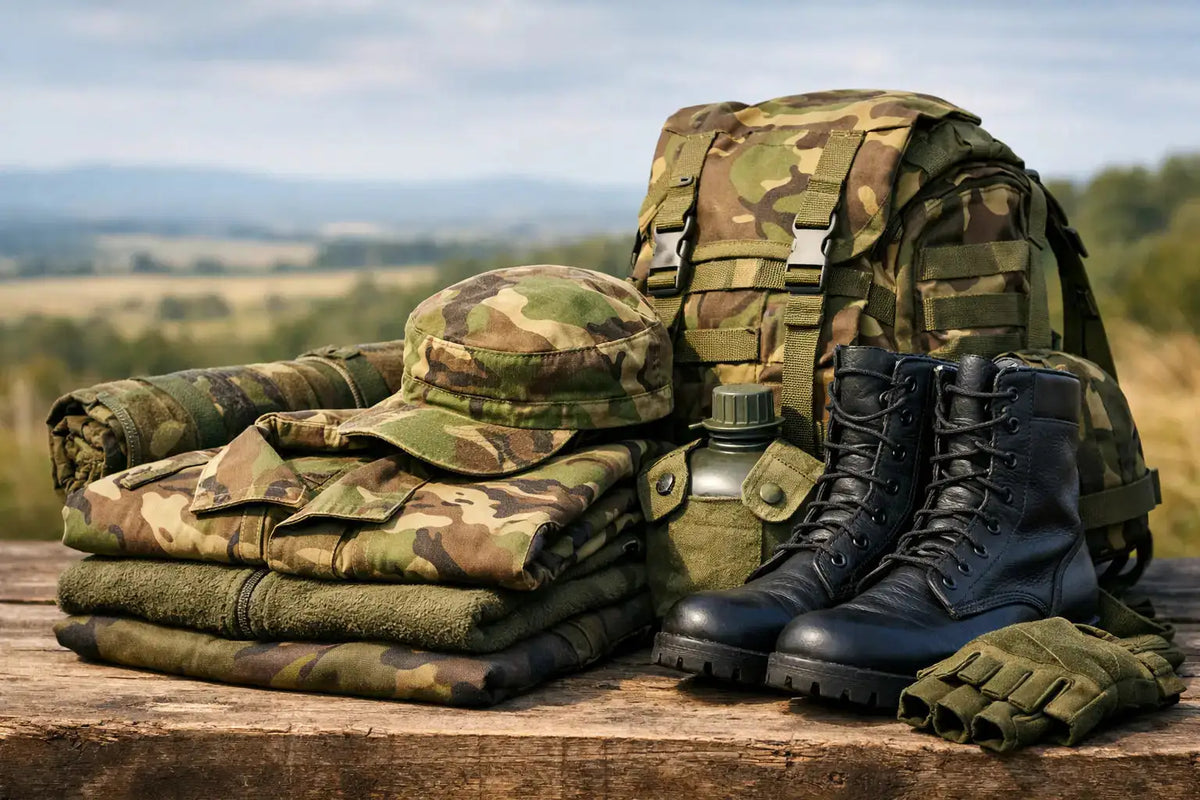
A field jacket that has already seen hard use tells you more than a polished shop display ever will. The fabric weight, pocket layout, repairable construction and honest signs of wear are exactly why British Army surplus clothing remains a sound choice for service-minded buyers, outdoor users and anyone who wants kit built around function rather than fashion.
Good surplus is not automatically cheap, nor is every camouflage garment suitable for every job. The worthwhile pieces are those that match the conditions you face, fit properly and remain serviceable after repeated wear. That calls for a closer look than simply choosing a familiar pattern or the lowest price.
What British Army surplus clothing offers
British military clothing was designed to work as part of a system. A smock is cut to layer over insulation and webbing. Combat trousers prioritise movement, storage and durability. Base layers manage moisture, while waterproof outer garments are intended to keep weather out without restricting essential work. The result is clothing with a clear purpose.
For hillwalking, dog handling, field sports, site work, cadet training and airsoft, that practical design still carries real value. You get useful pockets, hard-wearing fabrics and muted colours that do not show every mark after a day outdoors. Older issued garments can also offer construction details that are increasingly uncommon in general outdoor clothing, including generous pocket flaps, reinforced areas and room for layers.
There is a trade-off. Military issue clothing is designed for a particular role and era, not necessarily for modern everyday comfort. A traditional cotton smock can be tough and breathable in dry conditions, but it is heavier when wet and slow to dry. A newer technical jacket may pack smaller, manage moisture better and offer a more precise fit. Surplus is strongest when you choose it for its intended strengths rather than expecting one garment to do everything.
British Army surplus clothing: issued, new and reproduction
The word ‘surplus’ is used broadly, so product description matters. Genuine issued clothing has been made for military supply and may be unissued, grade one used or show more obvious wear. Unissued stock can be excellent value, though long-term storage may still leave creasing, dust or the occasional faded mark.
Grade one garments are normally serviceable with minor signs of use. Expect variations: a replaced button, pen marks inside a pocket, light fading at the knees or cuffs, and names or unit markings on labels are all possible. These details are often cosmetic, but check that zips, press-studs, drawcords and closures work as they should.
New, military-style and reproduction clothing are different again. They may follow a familiar cut or camouflage pattern but are made for the civilian market. Quality ranges from basic costume-grade items to well-made field clothing. A reproduction can be the better option when you need consistent sizing, an unworn finish or features that suit civilian use, such as a different pocket arrangement. It should not be presented as issued kit simply because it looks similar.
For buyers who require dependable performance, the question is not whether issued is better in every case. It is whether the garment’s condition, fabric and design suit the task. A clean, correctly sized new jacket is often more useful than a heavily worn collectible piece, while a solid issued smock may outperform a lightweight fashion copy after one wet weekend.
Start with the layer, not the camouflage pattern
Camouflage is part of the appeal, but it should not be the starting point. Build around the job and the weather.
A lightweight shirt or thermal layer belongs next to the skin, where it needs to move moisture and remain comfortable under a pack or body armour. Mid-layers provide warmth. Fleece, soft insulation and wool all have a place, depending on how active you will be and how damp the conditions are. Outer layers deal with wind, rain, abrasion and contact with vegetation.
For cold static work, a roomy insulated layer is more valuable than a close-fitting jacket that looks tidy but leaves no room underneath. For a fast-moving day on the hills, avoid piling on heavy cotton. Choose layers that can be added or removed without holding up the group. In wet British conditions, a proper waterproof shell and a dry spare layer in the pack are more dependable than relying on a water-resistant smock alone.
Combat trousers deserve the same scrutiny. Check the rise, knee articulation, seat reinforcement and pocket access when wearing a belt or webbing. If you spend time kneeling, crawling or working around rough ground, the difference between thin fashion fabric and a properly constructed trouser becomes obvious quickly.
Check condition where it matters
Surplus clothing is often judged by how it looks on a hanger. That is the wrong test. Inspect the points that fail under load and movement: crotch seams, knees, elbows, cuffs, pocket corners, zip tracks, button stitching and drawcord channels.
Small repairs are not necessarily a problem. A neatly repaired seam can add years of useful life, particularly on a garment intended for camp, gardening, airsoft or general outdoor work. Damage that affects weather protection, structural seams or fastening systems deserves more caution. A missing button is simple; a delaminating waterproof membrane or split main zip is not.
With waterproof garments, ask what level of protection you genuinely need. Some older shells remain effective, but coatings and taped seams deteriorate with age and storage. Treat older waterproof surplus as weatherwear only after checking it carefully. For prolonged rain, navigation days or work where staying dry is non-negotiable, a proven technical waterproof is usually the safer choice.
Get the fit right before heading out
Military sizing can be less familiar than high-street sizing. Labels may refer to height and chest, waist and inside leg measurements, or a broad size range. Measure a garment you already wear comfortably, then compare chest width, sleeve length, waist and inside leg rather than relying on the size printed in your usual jeans.
Allow space where it counts. A field jacket needs room across the shoulders and chest for a base layer and insulation. Trousers should permit a full squat and a high step without binding at the thigh or pulling at the seat. Excessive bulk is just as unhelpful, especially if you wear a rucksack, harness or webbing. Loose cuffs catch; overloaded pockets interfere with movement.
Bear in mind that surplus stock can vary between production runs. Two garments marked the same size may fit differently, particularly across older patterns. Check measurements and product condition notes before committing, and do not assume a current civilian medium matches an issued medium.
Care that keeps field clothing serviceable
Most surplus garments benefit from straightforward care. Empty pockets, close zips and fastenings, brush off dried mud, and wash only when needed using the instructions on the label. Harsh detergents and fabric conditioner can reduce the performance of technical fabrics, while excessive heat can damage waterproof coatings, printed camouflage and bonded components.
Dry clothing fully before storing it, especially after wet training, fishing or camping. Damp kit left in a vehicle, shed or kit bag soon develops odour and mildew. Reproofing treatment can revive the surface water repellency of suitable shells, but it cannot repair a failing membrane or worn-out seam tape.
For repairs, keep it practical. Replace buttons with similarly sized, durable buttons, reinforce small tears before they spread and deal with loose stitching early. A field garment does not need to look untouched. It needs to remain reliable when you reach for it.
Choose kit for the job in front of you
British Army surplus clothing is at its best when it is selected with the same discipline used for boots, sleeping systems and load carriage. A surplus shirt may be ideal for a dry training weekend; a warm mid-layer may become your regular dog-walking piece; a tough pair of combat trousers may earn a permanent place in the work kit.
John Bull Clothing’s specialist range makes it easier to compare genuine surplus with current field clothing from trusted brands, rather than treating them as rivals. Often, the most effective setup combines both: dependable surplus layers and trousers where their durability makes sense, supported by modern footwear and weather protection for the conditions.
Before the next exercise, range day or weekend in the hills, lay out what you actually wear and identify the weak point. Replace that first. The right surplus garment is not the one with the most history - it is the one still ready for another hard day outside.