
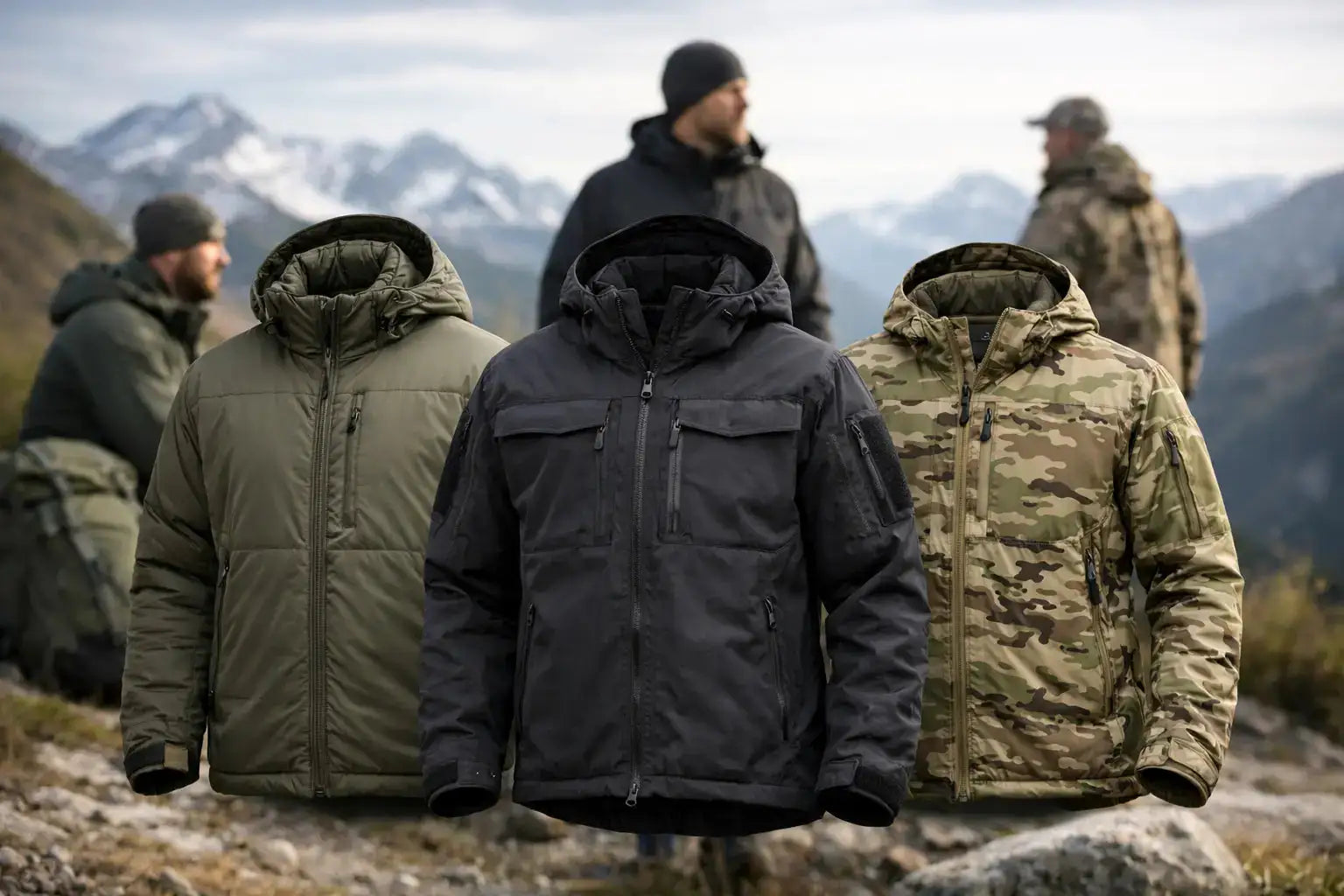
A Carinthia jacket earns its place the hard way - by keeping working kit reliable when the weather turns foul, the temperature drops and lighter layers stop doing the job. For military users, security professionals, cadets and serious outdoor buyers, that usually means one question matters more than branding alone: which model gives you the right balance of warmth, packability, weather protection and freedom to move?
Carinthia has built its reputation on insulated clothing designed with operational use in mind. That is why these jackets are often discussed alongside military layering systems rather than fashion outerwear. The appeal is straightforward. You get proven cold-weather performance, practical pocket layouts, subdued colourways and construction intended for repeated field use rather than occasional weekend wear.
What makes a Carinthia jacket different?
The first thing to understand is that a Carinthia jacket is not one single style. The range covers everything from lightweight insulated layers for stop-start activity through to heavier cold-weather jackets intended for static periods, harsh winter conditions or prolonged exposure. If you buy on name alone, it is easy to end up with something too warm, too bulky or not protective enough for the job.
What sets the brand apart is its focus on synthetic insulation and military-minded design. Synthetic fill is a practical choice for users who cannot afford insulation to lose all usefulness in damp conditions. Down has its place, but for field environments, vehicle use, training areas and mixed-weather wear, synthetic systems often make more operational sense. They continue to insulate when wet better than down, dry more readily and generally ask less of the user in terms of careful handling.
Then there is the cut. Most buyers looking at this category want enough room for a base layer and mid-layer, but not so much excess fabric that the jacket becomes awkward under webbing, body armour or a bergen hip belt. Carinthia jackets tend to be chosen because they sit in that practical middle ground - warm, capable and usable, without drifting into overcomplicated technical styling.
Choosing a Carinthia jacket for your actual use
The right choice depends less on what looks best online and more on how you will wear it. A jacket for stag, vehicle movement and cold range days is not necessarily the same jacket you want for tabbing, hill use or airsoft in changeable weather.
For static cold-weather use
If you spend long periods standing, observing, waiting or operating with limited movement, insulation takes priority. In those conditions, a lighter jacket that feels fine on the move can quickly become inadequate once activity drops. A heavier insulated Carinthia jacket makes sense here, particularly if you need dependable warmth over smock and fleece layers.
The trade-off is bulk. More insulation usually means a larger packed size and slightly less agility. That is not a fault. It simply means you should buy for the reality of the task rather than the hope that one jacket will do everything equally well.
For active movement and stop-start work
For patrolling, outdoor work, course use and general winter movement, many buyers are better served by a lighter or medium-weight insulated model. These give useful warmth during halts and low activity without overheating as quickly once you start moving again.
This is where layering discipline matters. A jacket that is slightly lighter can be far more versatile if you pair it properly with thermal base layers and a capable mid-layer. In British conditions, that flexibility is often more useful than maximum warmth on paper.
For general-purpose civilian and off-duty wear
Some buyers want a Carinthia jacket because they value military-grade reliability but intend to wear it for dog walking, commuting, weekend range use or cold-weather travel. In that case, comfort, pocket access and day-to-day practicality may matter as much as outright performance.
A very technical cold-weather jacket can be excellent in the field and still feel excessive for routine wear. If your use is mixed, look for a model that gives proper insulation without pushing too far into specialist expedition territory.
Fit, layering and why sizing matters
One of the biggest mistakes with insulated jackets is choosing a fit that is either too trim or too oversized. Too trim, and you lose the ability to layer effectively or move comfortably through the shoulders. Too large, and the jacket feels clumsy, traps dead space and becomes less efficient under load-carrying kit.
A good Carinthia jacket fit should allow a base layer and a sensible mid-layer underneath without restricting arm movement. Think in terms of your actual system. If you usually wear a wicking layer and fleece, size around that. If the jacket is intended mostly as an outer static layer thrown over existing kit, a little extra room can be useful.
Sleeve length, hem coverage and hood design are worth checking closely. For field use, a short hem can leave gaps when bending or kneeling, while poor sleeve length becomes obvious the moment you shoulder a rifle, reach overhead or work around vehicles. A well-cut hood is equally important if you expect to use the jacket in wind and wet rather than only in dry cold.
Weather resistance is not the same as waterproofing
This is another area where buyers sometimes expect too much from insulated jackets generally. A Carinthia jacket can offer strong weather resistance, but that does not automatically make it a substitute for a dedicated waterproof shell in sustained rain.
For cold, dry conditions, wind, light precipitation and winter field use, weather-resistant insulated outerwear is often exactly what you need. It is faster to deploy, quieter than many hard shells and more comfortable for prolonged wear. In prolonged British rain, though, a proper waterproof layer still has a place.
That is why the best approach is often to see your insulated jacket as part of a system rather than a one-item answer. In practical terms, that usually means using insulation for warmth and a shell for sustained wet. Buyers who understand that tend to get much better results from their kit.
Features that are worth paying attention to
Not every detail deserves equal weight. In this category, there are a few features that genuinely affect performance.
Pocket layout matters if you expect to use the jacket with a belt kit, plate carrier or rucksack. High-set hand pockets are often more useful than lower pockets that disappear behind straps. Two-way front zips can help with access and venting. Adjustable cuffs and hem cords improve heat retention in wind. A decent hood, especially one that works with headwear, is more than a nice extra once the temperature drops.
Fabric noise can also be a factor. For some users this will not matter at all. For others - particularly fieldcraft, airsoft or observation use - a quieter outer fabric is preferable to stiff, noisy material. Again, it depends on task. There is no point paying for features you will never notice, but there is also no sense overlooking the details that affect comfort for hours at a time.
Is a Carinthia jacket worth it?
For buyers who need dependable insulated kit rather than casual fashion outerwear, the answer is often yes. The value is not just in warmth. It is in design that suits operational and tactical use, materials selected for hard wear and performance that holds up when conditions are poor.
That said, it only represents good value if you buy the right model for your environment. If you purchase a heavy winter jacket for mild UK use, it may spend most of its life hanging up. If you buy too light for static cold-weather work, you may end up replacing it with something warmer. Price has to be judged against suitability, not brand name alone.
For many military and surplus customers, specialist retailers such as John Bull Clothing make more sense than general outdoor shops because the buying context is different. The conversation is not about lifestyle styling. It is about layering, field use, cold-weather reliability and whether a jacket will work with the rest of your kit.
Final checks before you buy a Carinthia jacket
Before committing, be clear on three things: your usual temperature range, whether you are mostly static or active, and what you expect to wear under the jacket. Those answers narrow the field quickly. After that, look at fit, pocket access and whether you need weather resistance alone or a jacket that will regularly sit beneath a waterproof shell.
A good jacket should solve a real problem in your kit, not create a new one. If the piece you choose keeps you warm when activity drops, packs well enough for the role and fits properly over your normal layers, it will earn its keep soon enough. That is the standard worth buying for.