
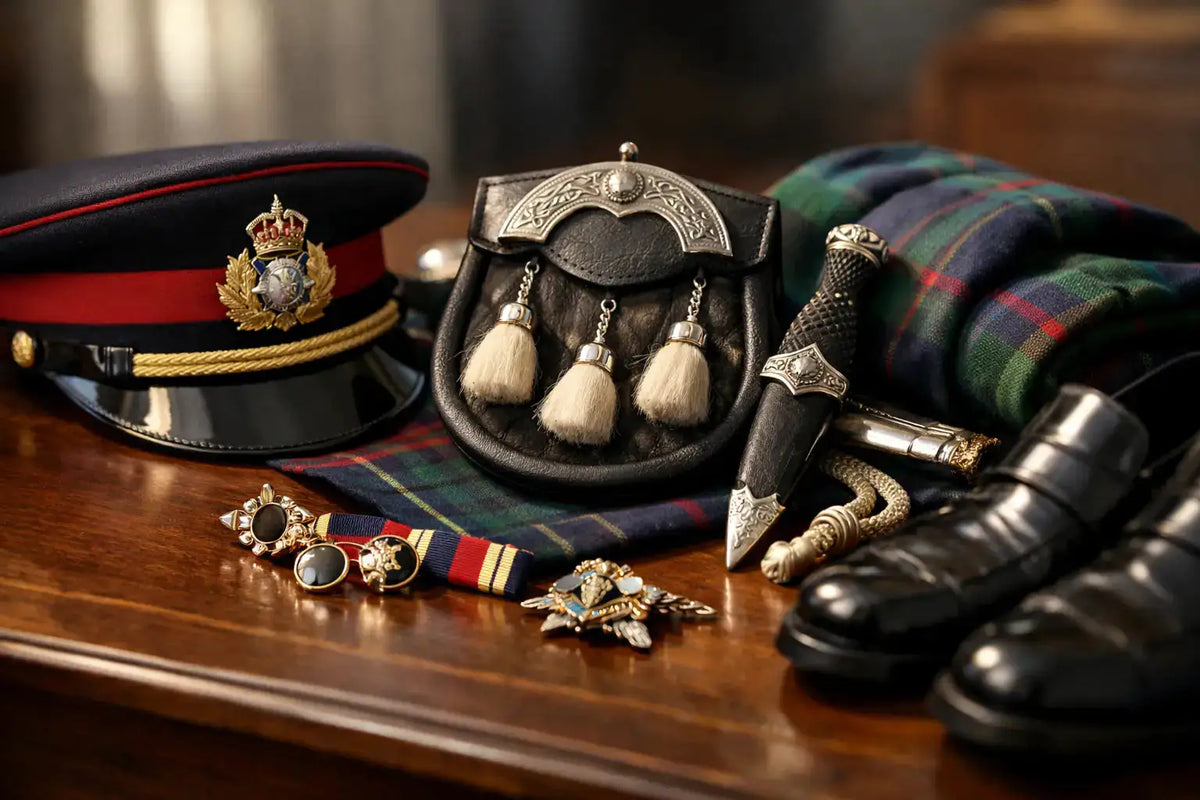
A regimental item is rarely just an extra. The right regimental accessories identify service, mark achievement, support correct dress or provide a lasting reminder of a posting, career or family connection. That is why the details matter: the regiment or corps, the approved style, the quality of the finish and, above all, the purpose of the item.
For serving personnel, veterans, cadets and families, the best choice starts with a straightforward question: is this for wear, display or presentation? A rank slide needed for routine duty has different requirements from a framed regimental gift for a retirement, promotion or leaving do. Buying to the correct purpose avoids an item that looks the part but is unsuitable when it matters.
Regimental Accessories for Wear and Identity
Worn regimental items need to be accurate, durable and appropriate to the order of dress. Rank slides, patches, badges and stable belt-related details all have a practical role in identifying rank, appointment or affiliation. They are not interchangeable simply because they share a similar colour, crown, scroll or cap badge design.
Serving personnel should always check current unit dress instructions before ordering. Regulations can differ between regiments, corps, establishments and occasions, while operational dress, barrack dress, ceremonial dress and cadet dress may each require a different item. A current pattern rank slide may be right for one uniform but unsuitable for another. When in doubt, confirm the required format with the chain of command, unit clothing store or cadet detachment.
Rank slides and patches
Rank slides are among the most useful everyday purchases because they take regular wear, laundering and handling. Look for clear embroidery, correct rank insignia and a size that fits the relevant epaulette cleanly. A slide that is too loose can move about and look untidy; one that is too tight can be difficult to fit and may strain the material.
Patches need the same care. Some are intended for hook-and-loop mounting on field kit or combat clothing, while others are sewn on or used for display. Check the backing and dimensions before buying, particularly if replacing a worn patch on an existing garment or piece of webbing. Colour also matters. Full-colour insignia, subdued tactical versions and embroidered commemorative patches each serve a different purpose.
Badges and small details
Regimental badges carry considerable weight despite their size. They may be worn on berets, collars, lanyards, clothing or used as part of a collection, depending on the badge and its approved use. A cleanly made badge with crisp detail is worth choosing over a cheap imitation with soft casting, poor plating or an inaccurate fastening.
For collectors and gift buyers, condition is equally relevant. Some people want a traditional polished finish for a display board or frame, while others prefer a field-style or subdued item that reflects practical service kit. Neither is automatically better. The right choice depends on whether the recipient will wear it, display it or keep it as part of a wider collection.
Choosing Regimental Accessories as Gifts
A well-selected presentation item has a job to do. It should recognise a person’s service without relying on guesswork or generic military imagery. Regiment frames, statuettes and commemorative pieces work particularly well for promotions, retirements, passing out parades, birthdays and farewells because they can become a permanent part of a home or office display.
Start with what the recipient is known for. Their regiment or corps is the obvious foundation, but the occasion should guide the finish. A formal leaving gift may suit a presentation statue or framed regiment design. For a cadet completing training, a smaller, personal piece can be more appropriate. For a veteran, an item tied to their unit history is often more meaningful than a general army-themed gift.
Avoid assuming details you do not know. Units may have changed name, merged, rebadged or adopted different insignia over time. If the gift is intended to mark long service, a deployment or a particular era, check the exact regiment and period before ordering. That small piece of research is usually the difference between a thoughtful gift and one that remains in its box.
Frames, statues and display pieces
Presentation pieces benefit from a simple approach. A regiment frame should have a clear, recognisable design and enough space for the item to stand out rather than disappear among unnecessary decoration. It may be used to display a photograph, cap badge, printed service memory or personal message, depending on its format.
Military statues and figurines are better chosen for their relevance than their size. A quality piece can suit a mantelpiece, desk or display cabinet, whereas an oversized novelty item may not. Consider where it will be kept, whether the recipient has an existing collection and if a more traditional finish would suit their home or mess environment.
The presentation also counts. If an item is being given at a formal event, allow time to inspect it before the date. Check the regiment detail, finish and any supplied components as soon as it arrives. This is particularly sensible when posting to BFPO addresses or arranging delivery around a leave period, parade or mess function.
Quality, Accuracy and Practical Value
Regimental purchases are often kept for years, so construction deserves attention. On embroidered items, look for even stitching, clean edges and lettering that remains legible at normal viewing distance. On metal badges and presentation pieces, a sharp design, secure fixing and consistent finish are more useful indicators than a polished product photograph alone.
Price is part of the decision, but it should not be the only one. A low-cost patch can be perfectly adequate for occasional airsoft use or a themed event. It may not be the best option for regular uniform wear, a formal presentation or a long-term display. Likewise, a premium item only represents good value when its material, detail and intended use justify the extra cost.
Authenticity should be approached sensibly. Many officially styled and regimental products are made for retail, collecting, cadet use or presentation rather than issue. That does not make them unsuitable, but it does mean buyers should distinguish between an item that is appropriate for personal display and one authorised for wear. Service dress standards always take priority over retail descriptions.
Match the Item to the Occasion
The most reliable way to narrow the choice is to decide what the item must achieve. For duty or cadet uniform, focus on regulation, fit and durability. For tactical clothing or kit, consider mounting method, visibility and whether subdued colours are required. For a gift, prioritise the correct regiment, a considered finish and a format that suits the occasion.
This is also where specialist range matters. A retailer that understands both field equipment and ceremonial presentation can help buyers keep practical kit separate from commemorative items while sourcing them from one place. John Bull Clothing serves that mixed requirement, from worn insignia and rank details to regiment-focused display gifts, with the product categories military customers expect.
Do not overlook the recipient’s own preferences. Some veterans value understated items that reference their regiment without turning a room into a museum. Others take real pride in a well-built display of badges, photographs and service memorabilia. The best gift respects that difference.
A regimental accessory earns its place when the detail is right and the use is clear. Whether it is fitted to a uniform, attached to field kit or placed in a frame for years to come, choose the piece that reflects the unit and occasion with proper care.