
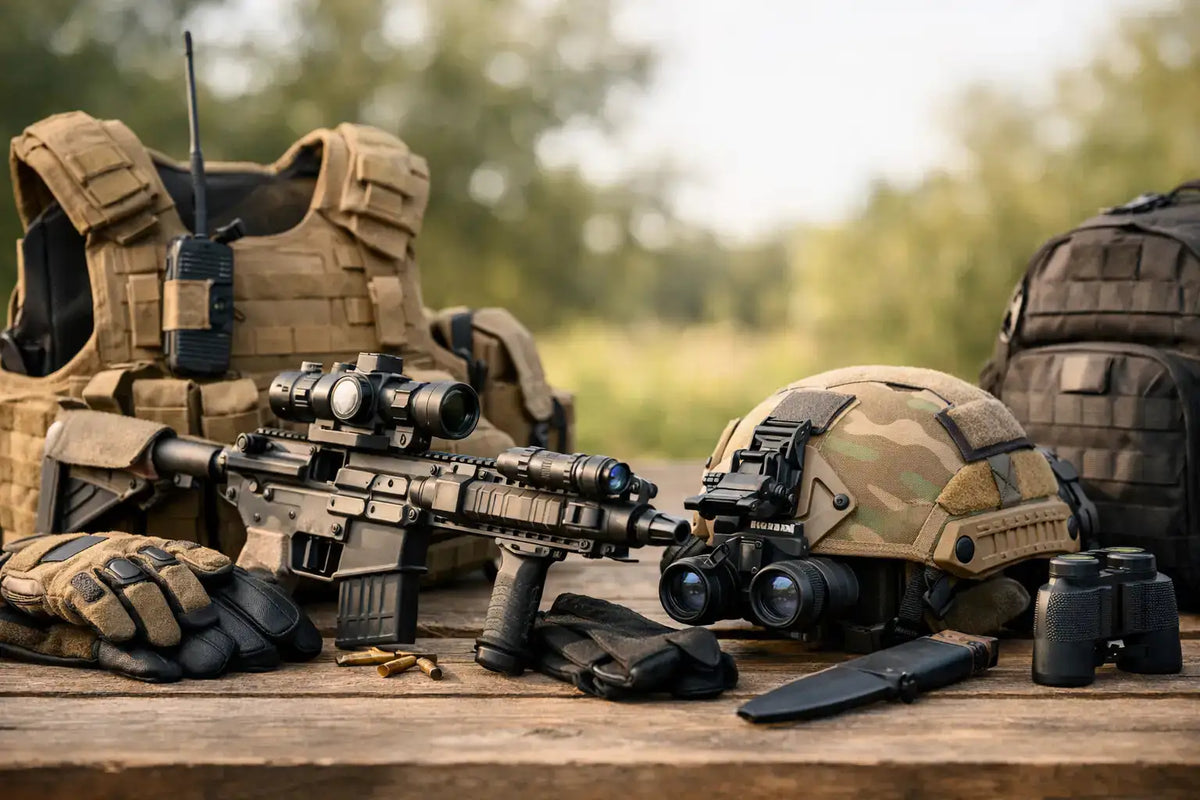
Bad kit usually shows its faults early. Boots rub by mile three, a pack shifts under load, gloves lose feel when you need proper grip, and a jacket that looked fine on a product page turns clammy once the pace picks up. Good tactical gear does the opposite. It stays out of the way, carries properly, and keeps working when the weather turns or the day runs longer than planned.
For most buyers, the challenge is not finding options. It is narrowing them down. Military personnel, cadets, police and security professionals, airsoft players and serious outdoor users often need similar categories of kit, but not the same setup. The right choice depends on task, duration, conditions and how much compromise you are willing to accept between weight, protection and comfort.
What tactical gear should actually do
At its best, tactical gear supports movement, load carriage and access to essentials without adding unnecessary bulk. That sounds straightforward, but many buying mistakes come from choosing for appearance first and use second. A patrol pack for a short day, for example, is not the same thing as a bergen for extended field time. Lightweight gloves that give dexterity on range days may not offer the protection needed for rough ground, rope work or prolonged cold.
The most reliable way to assess kit is to start with the job. Ask what you need to carry, how long you will be out, what the weather is likely to do, and whether speed, durability or low weight matters most. Once those points are clear, product choice becomes much easier.
Tactical gear for clothing and layering
Clothing is where many setups either come together or fall apart. A proper field system is not about one heavy outer layer doing all the work. It is about combining base, mid and shell layers that can be adjusted as conditions change.
A moisture-managing base layer helps keep sweat off the skin during movement. Over that, an insulating layer retains warmth when static or in lower temperatures. The outer layer then deals with wind, rain and abrasion. If you go too heavy too early, you overheat and end up damp from the inside. If you go too light, you lose warmth quickly once activity drops.
Combat trousers and field jackets should be judged on durability, pocket layout and freedom of movement before anything else. Reinforced stress areas, sensible storage and fabric that can take repeated wear matter more than cosmetic styling. For UK conditions, weather resistance is valuable, but full waterproofing is not always the answer during high-output activity. Sometimes a lighter, breathable shell carried in the pack is the more practical option.
Boots are never an afterthought
Boots do more than any other item in your setup. A poor fit affects pace, load carriage and concentration. A good pair supports the ankle without feeling restrictive, grips on mixed ground and remains comfortable over distance.
There is no single best boot for every user. Patrol and security work can favour lighter footwear with faster break-in and better all-day comfort on hard surfaces. Field use and rough terrain often call for more support, stronger construction and better weather protection. Leather, fabric and mixed constructions each have their place. The trade-off is usually between durability, weight, drying time and feel underfoot.
Sizing, sock choice and the shape of your foot are just as important as brand reputation. Even highly regarded boots can be wrong for your foot profile. If you already know what works for you, stick close to that last and fit. If not, prioritise support and comfort over fashion-led features.
Load carriage and tactical gear setup
Load carriage is one of the clearest examples of where buying the wrong size creates problems. Too much capacity encourages overpacking. Too little means awkward external attachment, poor balance and frustration every time you need access to kit.
Day packs work best for shorter tasks with a defined kit list - water, spare layer, gloves, rations, admin items and a few essentials. Once you move into overnight or longer duration use, sleeping systems, cooking kit and extra clothing quickly push you towards larger packs or bergens. Webbing and chest rigs come into their own when access and distribution matter more than total volume.
A pack should sit securely, transfer weight properly and let you move without constant readjustment. Padded straps and a waist belt help, but fit is still the deciding factor. A badly packed premium pack can feel worse than a modest one packed correctly. Heavier items should sit close to the back and centred. Frequently needed kit should be easy to reach without unpacking half your load.
Webbing, pouches and access
Pouch layout needs to match how you actually work. There is little value in adding extras that increase bulk but do not improve access. A cleaner setup is often better, especially if you spend long periods moving through confined spaces, vehicles or woodland.
Think in terms of priority. Water, first aid, navigation and mission-specific items need straightforward access. Less critical kit can sit deeper in the pack. If you are building a modular setup, keep consistency in mind. Reaching to the same place every time saves time and reduces faff under pressure.
Field essentials that earn their place
Some categories are easy to overlook because they are smaller purchases, but they often have an outsized effect on comfort and efficiency. Gloves, for instance, need to balance protection with feel. Thick gloves can be useful in cold or abrasive environments, but they are no use if you cannot manage fine tasks. For many users, one general pair and one cold-weather pair make more sense than searching for a single glove to do everything.
Hydration is similar. Bottles are simple and reliable. Hydration bladders make it easier to drink on the move. Which is better depends on your pace, your kit layout and how much you value ease of refill and cleaning. Neither is universally superior.
Navigation tools, torches, sleeping systems and cooking equipment all deserve the same practical approach. Buy for the environment and expected use, not the broadest specification on the label. A sleeping bag that is ideal for cold camps can be excessive for milder months. A compact stove is useful until you need to feed more than one person in poor weather. Every piece of kit is a compromise somewhere.
How to judge quality in tactical gear
Quality is not just about heavy materials or a known badge on the label. It shows up in stitching, zip reliability, stress-point reinforcement, fabric choice and how well a product holds shape and function after repeated use.
Trusted brands earn their reputation because they solve the same problems consistently. That matters in categories such as boots, waterproof layers, sleeping systems and hydration, where failure is more than an inconvenience. It is also why specialist retailers remain relevant. A broad outdoor shop may stock a few tactical-looking items, but that is not the same as a range selected around field use, service familiarity and proven military relevance.
John Bull Clothing sits squarely in that specialist space, which matters when you are trying to compare operational kit, surplus options and respected brand-name equipment without wasting time on general-market alternatives.
New, surplus or premium branded?
This depends on what you need from the item. Surplus can offer excellent value, especially for proven designs and straightforward field use. The trade-off may be weight, older materials or limited sizing. New commercial tactical products often give you lighter fabrics, updated fits and more refined features, but price rises accordingly.
Premium branded kit makes sense when performance differences are real and frequent use justifies the spend. That is often true with boots, outerwear and sleeping systems. On simpler items, a dependable mid-range option can be the better buy.
Buying tactical gear without overbuying
A common mistake is building a full setup before the actual requirement is clear. Start with the items that affect comfort, movement and safety first - boots, weather protection, load carriage and a dependable clothing system. Then add specialist accessories according to your role or activity.
It also helps to separate essential from desirable. Extra pouches, niche tools and duplicate accessories look useful until they add weight and clutter. If a piece of kit does not solve a clear problem, leave it out until experience says otherwise.
For cadets and new buyers, this matters even more. There is no need to purchase every add-on at once. Build a sensible core, use it properly, and adjust based on what proves useful in the field. Experienced users tend to refine their setup over time, not all in one order.
Tactical gear should match the user, not the trend
There is plenty of tactical gear on the market that looks the part but offers little once conditions become demanding. The best kit is rarely the flashiest. It is the gear that fits properly, carries well, wears hard and still makes sense after repeated use in poor weather, on rough ground or over long hours.
That is the standard worth buying to. Choose for function, be honest about the job, and accept that the right answer is sometimes lighter, sometimes tougher, and often simpler than expected. Good kit earns trust quietly, which is exactly what you want when the day depends on it.