
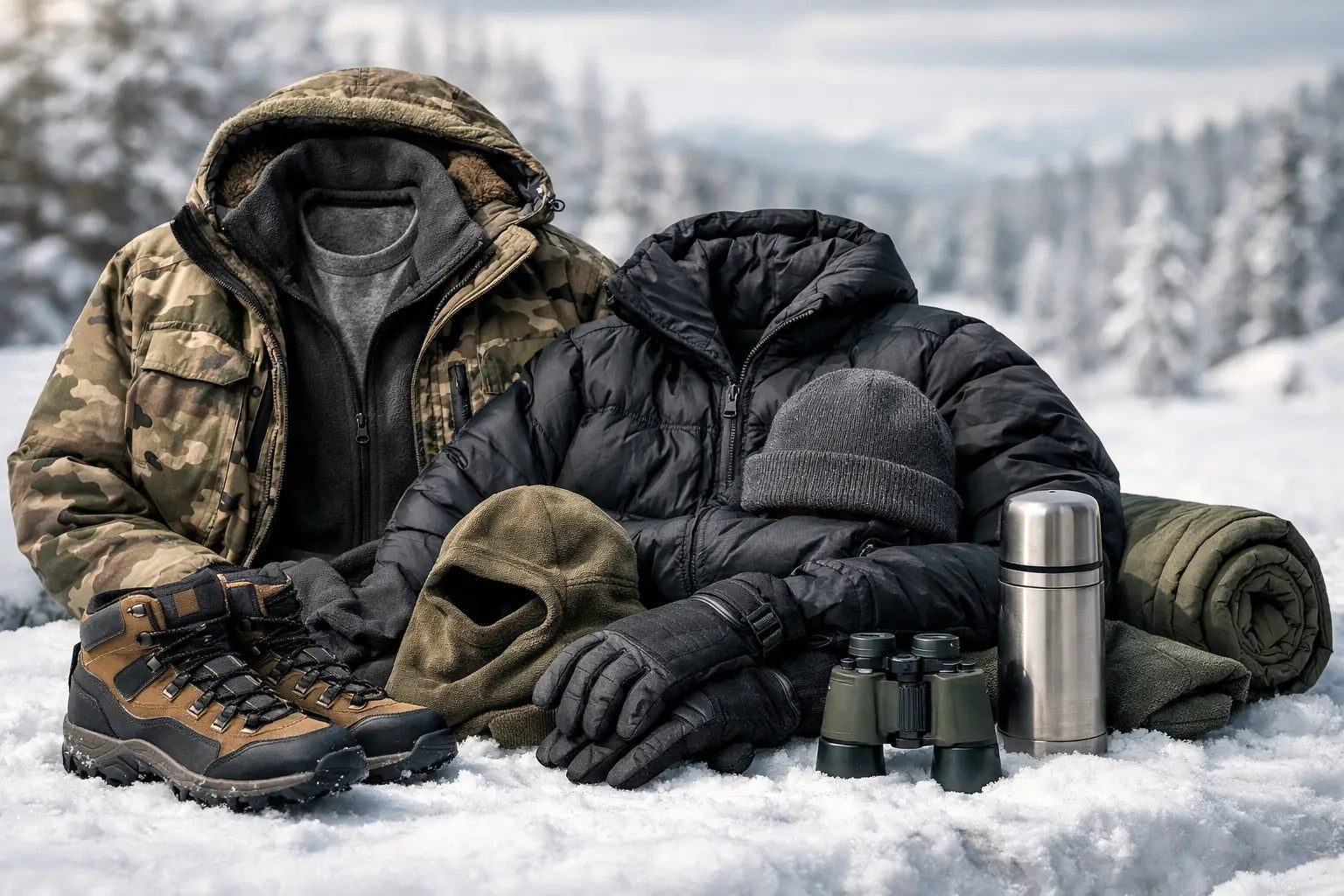
Cold injuries rarely begin because somebody forgot a large insulated jacket. More often, they start with sweat trapped beneath the wrong layers, a damp base layer after a hard tab, or a warm rest stop taken without adding insulation. A sound cold weather layering guide is therefore not about wearing as much clothing as possible. It is about controlling heat, moisture and wind while still being able to move, work and operate.
For military personnel, cadets, security staff and regular outdoor users, the right system changes with the task. A static sentry shift, a wet range day and a fast hill approach all demand different levels of insulation. The principle remains the same: wear layers that can be added, removed and managed before discomfort becomes a problem.
The cold weather layering guide: start with the task
Before choosing garments, assess what you will actually be doing. Your body produces considerable heat while carrying weight, digging in, marching or moving quickly over ground. Stop moving, get exposed to wind or sit on cold ground, and that heat disappears rapidly. Clothing that feels ideal when stood still can be excessive within ten minutes of movement.
Think through the expected temperature, wind, rainfall, duration and intensity of activity. Also consider access to shelter and spare clothing. A short exercise near vehicles allows more margin for error than a full day on the hill with limited resupply.
The objective is not to remain permanently warm. It is to stay comfortably cool while active, dry enough to retain warmth, and sufficiently insulated when static. If you are sweating heavily before the first ascent, adjust early. Venting or removing a layer at the start is far easier than drying out once your clothing is soaked.
Build the system from the skin out
Base layer: manage moisture first
The base layer sits next to the skin and sets the foundation for the rest of the system. Its job is to move perspiration away from the body and dry as quickly as conditions permit. Merino wool and technical synthetic fabrics are the usual choices. Both have a place.
Merino is comfortable over long periods, handles odour well and retains some insulating value when damp. It is a good choice for lower-intensity work, multi-day use and cold conditions where comfort matters. Synthetic base layers are generally hard-wearing, quick-drying and well suited to high-output activity. They can be the better answer for tabs, fieldcraft, trail work and training where sweat management is the priority.
Avoid cotton for cold, wet work. Once wet, it holds moisture, dries slowly and draws warmth from the body. A cotton T-shirt may be acceptable for casual wear, but it is a poor starting point for a serious field clothing system.
Fit matters. A base layer should sit close enough to move moisture effectively without restricting shoulder movement or bunching beneath armour, webbing or a combat shirt. Carrying a dry spare in a waterproof bag is often more valuable than carrying another heavy layer. Change into it when the pace drops or before bedding down.
Mid layer: create useful insulation
The mid layer traps warm air. Fleece is a reliable field option because it remains functional when damp, dries reasonably quickly and is easy to regulate through full or half-length zips. Lightweight fleece suits active movement; heavier fleece adds warmth during slower work and colder days.
A grid fleece or lightweight technical top is particularly useful where the pace varies. It provides enough insulation for a cold start, then vents well when working hard. A heavier fleece can be preferable for range days, dog walking, camp duties or vehicle-based tasks, although it may be too warm beneath a shell during a loaded march.
Do not treat the mid layer as a single fixed garment. In genuinely cold weather, two lighter insulating layers give better control than one very heavy item. You can run a thin fleece during movement, then add a warmer layer when stationary. This approach also packs more efficiently around changing conditions.
Insulation layer: protect the stop
An insulated jacket is the layer most people reach for when they first feel cold, but it is best used at the right moment. Synthetic insulated jackets are dependable in wet, changeable British conditions because they retain more warmth than down if they become damp. They are well suited to rest breaks, static tasks and use beneath a shell.
Down insulation offers excellent warmth for its weight and packs down well, but needs protecting from persistent rain and moisture. It is best reserved for dry cold, sheltered stops or situations where you can keep it properly stowed. If your task involves regular exposure to rain, wet vegetation or condensation, synthetic insulation is the more forgiving choice.
Keep the insulation layer accessible rather than buried at the bottom of a bergen. Put it on before you are cold, particularly after reaching a checkpoint, halting for food or finishing a hard movement phase. Waiting until shivering starts means you are already trying to recover lost heat.
Outer shell: block weather without trapping sweat
The shell layer is your barrier against wind, rain and snow. A good waterproof jacket must be large enough to cover your working layers without pulling tight across the shoulders or riding up beneath a rucksack hip belt. Check the hood works with a warm hat and still allows reasonable peripheral vision.
Waterproofing is only half the job. A shell with useful pit zips, a two-way front zip and adjustable cuffs gives you options when output increases. Open vents before you overheat. Once damp air is trapped inside, even a high-quality waterproof can feel clammy.
For cold, dry and windy conditions, a windproof layer can be more comfortable than a fully waterproof shell. It offers excellent protection while generally breathing better during movement. The trade-off is obvious: if rain is likely, carry waterproof protection rather than relying on a windproof alone.
Do not neglect hands, feet and head
Heat loss and discomfort often show first at the extremities. A complete system includes a warm hat, a neck gaiter or buff, gloves appropriate to the task and carefully chosen socks. These items take little room but can make a major difference when conditions turn.
Hands need a practical compromise. Thick insulated gloves are effective for static work and very cold conditions, but may be unsuitable for handling equipment, navigation or weapon systems. A liner glove paired with a tougher outer glove gives more flexibility. Keep a dry spare pair in a waterproof pouch, as wet gloves quickly become a liability.
For feet, start with boots that fit properly and allow enough room for suitable socks. Overly tight boots reduce circulation and can make feet colder, even with thick socks. A moisture-wicking liner sock with a warm outer sock can work well, but test the combination before a long day. More thickness is not automatically better if it causes rubbing or pressure points.
Use gaiters where wet grass, snow or deep mud are likely. They help keep lower trouser legs and boot openings dry, which protects comfort for the whole day. At halts, get off cold ground where possible. A sit mat weighs very little and prevents rapid heat loss through contact.
Regulate early, not after you are soaked
The most useful skill in cold weather is anticipation. Begin a hard climb or tab slightly cool. Open your jacket, loosen the neck, remove a hat or switch to a lighter glove before sweat builds up. Then reverse those changes as soon as the pace drops.
Use this simple field check before setting off:
- Is the base layer dry and suitable for the expected workload?
- Can you vent your shell without fully stopping?
- Is your warm insulation layer easy to reach at the first halt?
- Do you have dry socks, gloves and a spare base layer protected from water?
Match the layers to your load and environment
Load carriage changes how clothing performs. Shoulder straps compress insulation, hip belts can trap heat, and body armour reduces ventilation. A thick fleece that works well under a day sack may become restrictive under webbing and plates. Test the full system with the equipment you will actually carry, not just in front of a mirror.
Likewise, camouflage and field jackets need to be selected for use rather than appearance. A traditional combat smock provides useful pocket space and weather resistance, but it may not replace a proper waterproof shell in sustained rain. A lightweight softshell can be ideal for dry, windy training days, yet insufficient for a long static period. Build around the forecast and task, then carry the layer that covers the most likely change.
John Bull Clothing customers often need kit that performs across training, work and weekend field use. The reliable answer is a modular system built from dependable garments, not one oversized coat expected to handle every condition.
Care for the system between outings
Layering only works if garments remain clean, dry and serviceable. Wash technical base layers as directed to remove body oils that reduce wicking. Reproof waterproof shells when water no longer beads on the surface. Dry boots steadily away from direct high heat, and inspect seams, zips and cuff closures before the next outing.
Pack spare dry clothing in waterproof bags, not loose in the bergen. A wet-weather day is not the time to discover that your reserve layer has been sitting against a leaking hydration bladder. Small habits such as this preserve options when conditions deteriorate.
The best field layering system is the one you have worn, adjusted and tested before it matters. Start conservative, carry accessible insulation, and make changes while you are still comfortable. Cold weather rewards preparation, but it rewards active clothing management even more.