
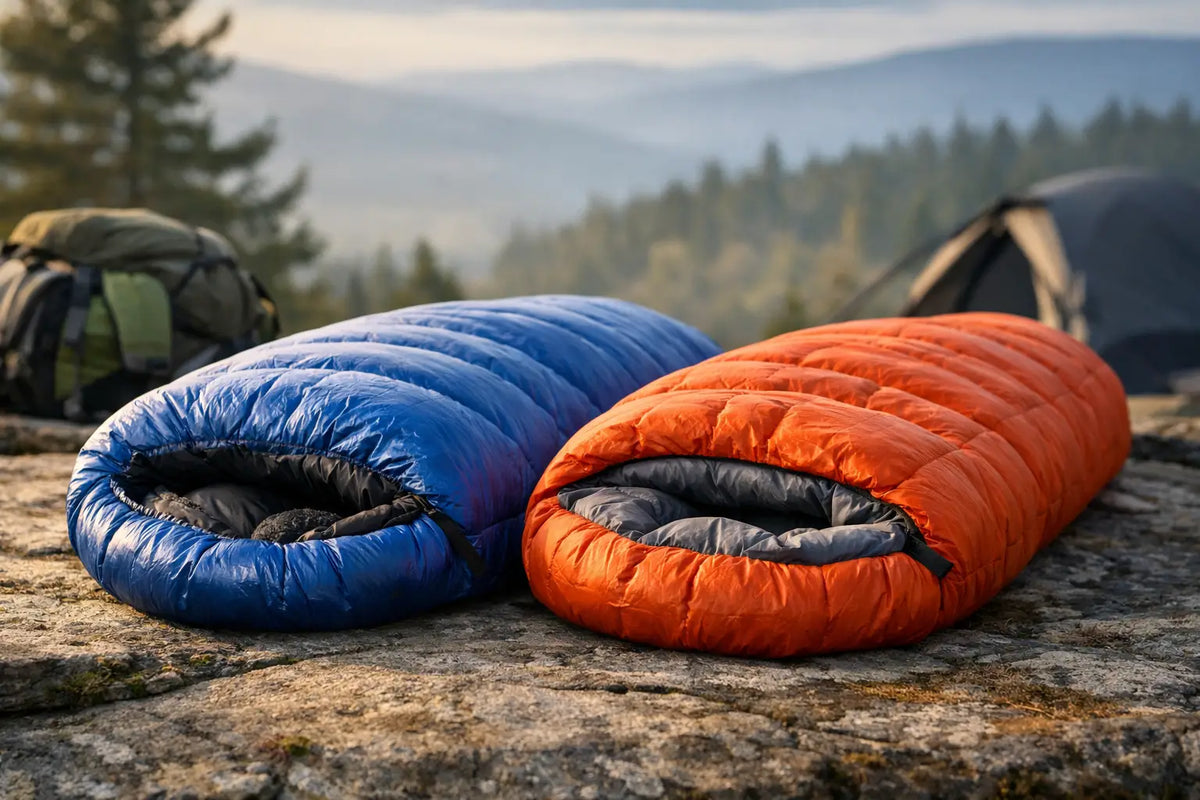
A sleeping bag is not just camp comfort. On exercise, a wet and ineffective bag can mean a poor night’s rest, reduced recovery and a miserable start to the next day. The down sleeping bag vs synthetic choice comes down to the conditions you expect, how much weight and bulk you can carry, and whether you can keep your kit dry.
For a dry, cold deployment where every litre of pack space matters, down remains hard to beat. For wet British weather, repeated use and uncertain drying opportunities, synthetic insulation is often the more forgiving field option. Neither is automatically the right answer.
Down sleeping bag vs synthetic: the core difference
Down insulation uses the fine plumage beneath a duck’s or goose’s outer feathers. Its structure traps a large volume of still air for very little weight. This gives a quality down bag an exceptional warmth-to-weight ratio and allows it to compress into a notably smaller stuffsack than an equivalent synthetic bag.
Synthetic insulation is made from engineered polyester fibres. These fibres are designed to create loft and retain pockets of warm air, but they need more material to achieve the same warmth as down. The result is usually a bag that is heavier and bulkier, although modern synthetic fills have improved considerably.
The practical difference becomes clear when the weather closes in. Untreated down loses much of its loft when saturated, reducing its insulating ability sharply. Synthetic fibres retain more structure and continue to provide some warmth when damp. That matters when condensation builds inside a bivi bag, when kit is exposed to persistent rain, or when a bag cannot be properly aired and dried for several days.
When a down sleeping bag earns its place
A down bag is the right tool when low weight, compact storage and cold-weather efficiency are the priorities. It suits winter hill walking, high-altitude trips, vehicle-supported cold-weather work and expedition travel where reliable waterproof packing and drying discipline are possible.
The main advantage is not simply that down is light. It reduces the overall burden in a bergen. A compact sleeping bag leaves more usable room for spare layers, food, water, ammunition, navigation equipment or other mission-critical kit. When covering distance on foot, this can be a meaningful gain.
Down also has a long service life when cared for correctly. High-quality fill can retain its performance through many years of use, provided it is stored uncompressed, kept clean and dried thoroughly. A down bag should be carried in a waterproof liner or dry bag, rather than relying solely on its supplied compression sack.
Not all down bags perform equally. Fill power indicates how efficiently the down lofts, while fill weight indicates how much insulation is present. Both affect warmth. A bag with a higher fill power is not automatically warmer if it contains less down. Check the stated temperature rating, construction, hood, draft collar and zip baffle as a complete system.
Water-resistant or hydrophobic down offers an extra margin against damp. It can resist moisture for longer than untreated down, but it is not a substitute for sound waterproofing. A wet down bag is still a problem, especially in cold conditions.
Where synthetic insulation is the safer field choice
Synthetic bags are built for imperfect conditions. They are well suited to wet-weather camps, cadet exercises, fishing trips, canoeing, festival use, general camping and routine field training where kit may be damp, muddy or packed away before it is fully dry.
This is why many users favour synthetic sleeping systems for British conditions. A synthetic bag will not make rain irrelevant, but it gives you more tolerance for condensation, a leaking bivi, wet clothing or a delayed opportunity to dry kit. It also dries faster than down, which is useful when moving regularly between harbour areas, vehicles and temporary camps.
Synthetic insulation is generally easier to manage for new users and for kit that sees hard, frequent use. It is often less expensive to buy, easier to wash and less concerning if it gets treated roughly. For a spare bag, a youth or cadet system, or a reliable option kept in a vehicle, that value can make good sense.
The compromise is pack size. A synthetic bag rated for genuine cold weather can take up substantial space, even when compressed. It may also weigh noticeably more than an equivalent down model. On a short camp this may not matter; on a multi-day tab with all equipment carried, it soon does.
Synthetic fills also tend to lose loft gradually through repeated compression and washing. A well-used bag can eventually feel thinner and colder than it did when new. Store it loosely when possible, rather than leaving it crushed in a compression sack between trips.
Temperature ratings need careful reading
Do not select a bag by a single headline temperature alone. Where a manufacturer provides an EN or ISO temperature rating, look at the comfort and lower-limit figures. The comfort rating is the more sensible starting point for anyone who sleeps cold or expects to be tired, underfed or exposed to damp conditions. The lower limit is not a promise of a comfortable night for every user.
Your sleep system matters as much as the bag. Ground insulation is vital because compressed insulation beneath your body does very little work. A suitable sleeping mat prevents heat being drawn into the ground and can make a modest bag far more effective. A bivi bag, liner, dry base layer, hat and correct shelter choice all affect real-world warmth.
Avoid trying to solve every cold-weather requirement by buying the warmest bag available. An over-warm bag is bulky, expensive and can lead to sweating, which creates moisture inside the system. Choose for the coldest realistic conditions you expect, then use layers and a liner for smaller adjustments.
A simple choice by task
Choose down if you need maximum warmth for minimum carry weight, can protect the bag from moisture and have a realistic method of drying it. Choose synthetic if damp is likely, the bag will receive regular hard use, or you need reliable insulation with less kit-management risk.
For winter UK field use, the answer often depends on your shelter and waterproof discipline. A down bag inside a sound bivi and dry bag can work extremely well. A synthetic bag may be the wiser purchase if you are regularly sleeping under tarps, dealing with heavy condensation or packing up in rain before first light.
Fit, shape and practical features
A sleeping bag should fit closely enough to warm efficiently without restricting movement. Excess empty space takes longer to heat, while a bag that is too tight compresses insulation and makes a poor night more likely. Mummy-shaped bags are normally the most thermally efficient; roomier rectangular designs offer comfort but can lose heat faster.
For cold conditions, look for a shaped hood that closes properly around the face, a draft collar at the shoulders and an insulated zip baffle. These features stop warm air escaping through the openings that matter most. A two-way zip can help ventilation, while a left- or right-hand zip should suit how you enter the bag and whether you plan to pair it with another bag.
Check the stated packed size rather than judging a bag from photographs. Also consider the full system: bag, compression sack, waterproof liner, mat and bivi. A smaller sleeping bag is useful only if the rest of the sleep kit is equally suitable for the task.
Care that protects performance
Down needs careful washing with an appropriate down cleaner, followed by thorough low-temperature drying until the loft has fully returned. Any residual damp can cause clumping, odour and reduced insulation. Synthetic bags are generally simpler to wash, but should still be cleaned according to the manufacturer’s instructions and dried completely before storage.
After every trip, air the bag as soon as practical. Brush off mud, open the zip and allow moisture to escape. At home, store it loose in a large storage sack or hung in a dry cupboard. Compression sacks are for transport, not long-term storage.
Before moving off, check your sleeping bag, mat and waterproof packing method together rather than treating them as separate purchases. The best insulation is the insulation that arrives dry, fits your pack and still performs on the fourth wet morning of the exercise.