
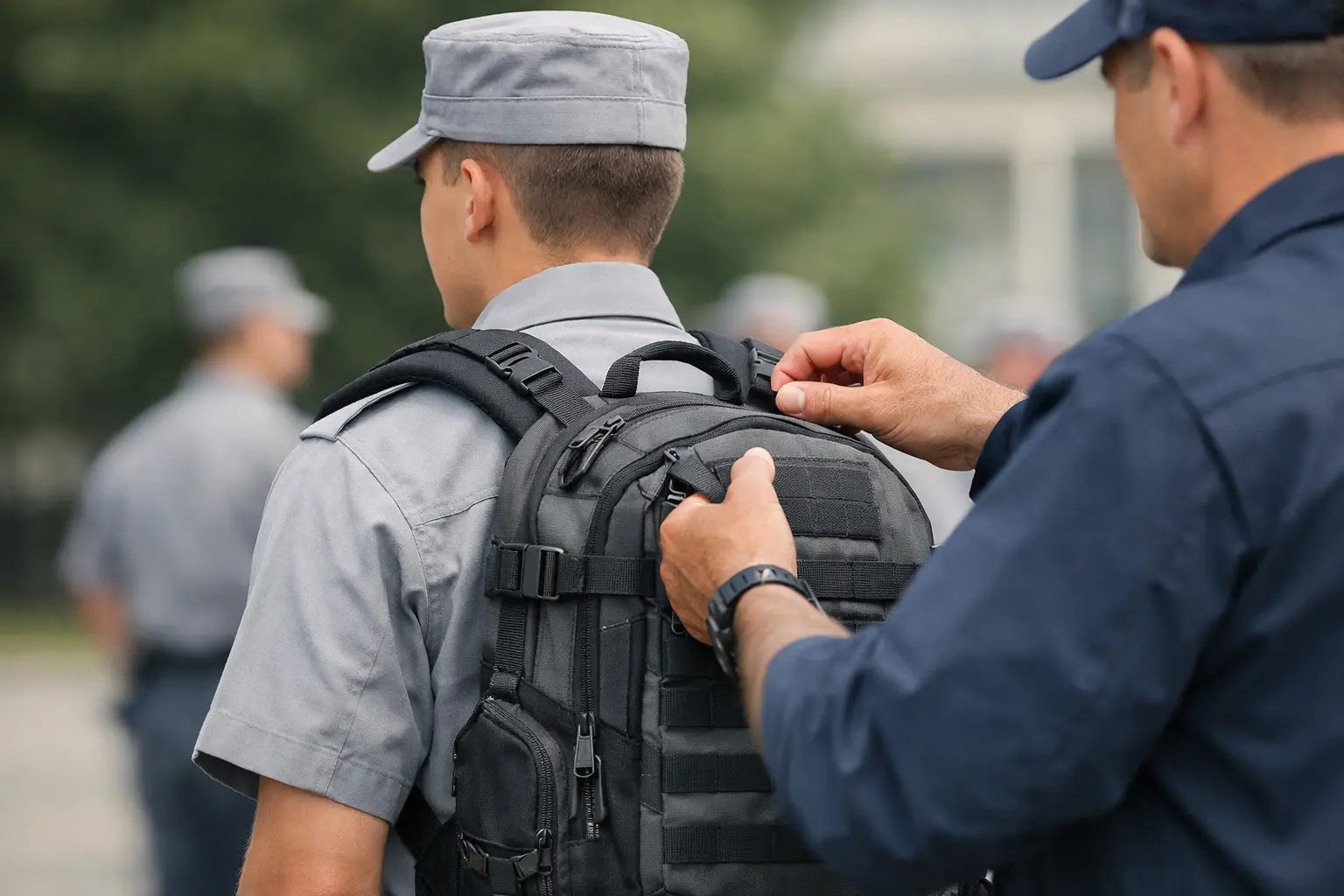
A cadet backpack that looks the part but shifts, rubs or leaves essential kit buried at the bottom will soon become a liability. Knowing how to pick a cadet backpack starts with the activity it must support, then comes down to fit, capacity and a layout that makes sense when the weather turns or timings are tight. A good pack should carry a sensible load securely without becoming oversized, complicated or uncomfortable for the cadet using it.
How to Pick a Cadet Backpack for the Job
Do not begin with camouflage pattern or the number of pockets. Start with the likely use. A compact day pack for weekly detachment evenings and light field training has different requirements from a pack needed for a Duke of Edinburgh expedition, weekend exercise or longer camp.
For school, drill nights and short training sessions, a 20 to 30-litre pack is usually sufficient. It should take waterproofs, a water bottle, notebook, packed lunch, gloves and a few personal items without encouraging overpacking. This size is also easier for younger cadets to manage on public transport and around the detachment.
A 30 to 40-litre rucksack suits full days outdoors, navigation exercises and fieldcraft training where spare layers, food, hydration, first-aid items and wet-weather equipment are needed. It is often the most useful all-round size for active cadets, provided the back system fits correctly.
For overnight expeditions, capacity depends on the required sleeping system, cooking equipment, food and whether group equipment is shared. A 50 to 65-litre pack is common territory, but bigger is not automatically better. Excess space tends to be filled with unnecessary kit, creating a heavier load and poorer balance. Check the unit or expedition organiser's kit list before buying, as they may specify a minimum capacity or require certain equipment to be carried separately.
Prioritise Fit Before Features
The best-made rucksack is the wrong choice if it does not fit the wearer. Cadets grow quickly, so a pack with some adjustment is useful, but it must still sit properly now rather than being bought excessively large in the hope that it will last for years.
A correctly adjusted pack transfers much of its weight to the hips, rather than hanging solely from the shoulders. The hip belt should wrap around the top of the hips and tighten firmly without pinching. Shoulder straps should follow the shape of the shoulders with no significant gap, while the top of the pack should sit close to the upper back rather than pulling backwards.
Look for a back length adjustment where possible, particularly for expedition-sized packs. This allows the shoulder harness to be moved to suit a shorter or longer torso. It is more useful than relying on strap adjustment alone. A chest strap helps stop shoulder straps sliding outward, especially when wearing a waterproof or smooth jacket, but it should not be tightened so much that it restricts breathing.
When trying a backpack, load it with realistic weight. An empty pack can feel comfortable in a shop or at home, yet reveal pressure points as soon as it carries water, clothing and food. Walk around for several minutes, climb stairs if possible and check whether the pack remains stable when bending or turning.
Watch the weight of the pack itself
Heavy-duty materials, large zips and a substantial frame can be worthwhile for regular field use, but they add weight before any kit goes inside. For a younger cadet carrying only day equipment, a lighter, well-padded day pack may be more appropriate than a large military-style rucksack.
Conversely, an expedition pack needs enough structure to carry weight comfortably. A thin, unframed bag may be light on paper but can be tiring and unstable once loaded. Match the construction to the job rather than assuming the lightest or toughest option is always right.
Choose a Practical Capacity and Layout
Capacity tells only part of the story. Two packs with the same litre rating can carry very differently depending on their shape, pockets and compression straps. Tall, narrow packs are generally easier to move through woodland and can be more stable over uneven ground, while wide packs may feel awkward when crawling, boarding transport or moving through confined spaces.
A simple main compartment is often preferable for expedition use because it accepts bulky sleeping bags, clothing dry bags and mess tins more easily. A separate lower compartment can be convenient for a sleeping bag, though it reduces flexibility if all the space is needed for one large item.
External pockets should earn their place. A lid pocket is useful for small essentials such as a head torch, compass, snacks and notebook. Side pockets can carry water bottles, but they need secure retention so bottles do not fall out when the pack is laid down. Stretch mesh pockets are handy for wet waterproofs or a map case, although they are more vulnerable to snagging on brambles than closed fabric pockets.
Avoid choosing a pack solely because it has rows of webbing and numerous compartments. Modular attachment points can be useful for securing a roll mat or adding compatible pouches, but loose external kit catches on gates, branches and vehicle interiors. Keep the outside of the pack tidy and reserve external carriage for items that genuinely need quick access.
Check Fabric, Weather Protection and Hardware
Cadet activities mean wet grass, muddy vehicle floors, rain and repeated use. Look for hard-wearing fabric with reinforced panels at the base and sensible stitching around shoulder straps, grab handles and compression straps. A reinforced base matters because this is where a pack takes most of its abuse when dropped or set down.
Water-resistant fabric helps, but it does not make a rucksack fully waterproof. Seams and zips can admit water during sustained rain. For field training and expeditions, line the main compartment with a pack liner or use dry bags for sleeping kit, spare clothing and electronic items. A rain cover adds another layer of protection, but it can blow loose in high wind and should not be the only waterproofing plan.
Test the zips and buckles before committing. They should operate easily with cold or gloved hands and should not feel flimsy under tension. Compression straps are particularly useful: they reduce movement in a part-filled pack, pull weight closer to the back and can secure awkward loads when used properly.
Colour and pattern should be chosen with the activity in mind. Olive, black and British Forces-style camouflage are practical choices for field use, while a plain, neutral pack may be more suitable for school or travel. Follow unit guidance for dress and equipment standards. A civilian hiking pack can be an excellent technical option, but it may not suit every cadet environment or uniform requirement.
Make Hydration and Access Work in the Field
Water is one of the heaviest regular items a cadet carries, so it needs careful placement. Bottles in balanced side pockets are simple, reliable and easy to monitor. A hydration bladder can be more convenient while walking, provided the pack has a proper internal sleeve and a protected route for the drinking tube.
Do not place all heavy items at the bottom. Pack dense equipment close to the back and around shoulder-blade height where practical, with softer kit filling gaps and lighter items lower down or towards the outside. Keep waterproofs, a warm layer, water, food and navigation equipment accessible without unloading the entire rucksack.
For an overnight pack, use dry bags or clear kit bags to separate categories. This is not about making the pack look tidy. It means a cadet can find a spare pair of socks or a torch in fading light without scattering equipment across wet ground.
Avoid Common Buying Mistakes
The most frequent error is buying too large. A 65-litre rucksack may seem like better value than a 30-litre day pack, but it is cumbersome for routine cadet use and encourages poor load discipline. It is often better to buy for the activity undertaken most often, then borrow or use a separate expedition pack when required.
Another mistake is treating military styling as proof of quality. A dependable cadet backpack needs sound construction, useful adjustment and sensible load-carrying design. Decorative patches, excessive webbing and a tactical appearance do not replace a supportive harness or durable stitching.
Finally, do not overlook the individual wearer. A pack that suits an adult instructor may be unsuitable for a smaller cadet, even if the capacity appears right. If possible, try several sizes and designs with a loaded pack before making a final choice.
A properly chosen backpack becomes familiar kit: easy to pack, stable on the move and dependable when conditions are wet, cold or demanding. Buy for the cadet's actual training programme, set it up carefully, and practise packing it before the first exercise rather than discovering its limitations on the start line.