
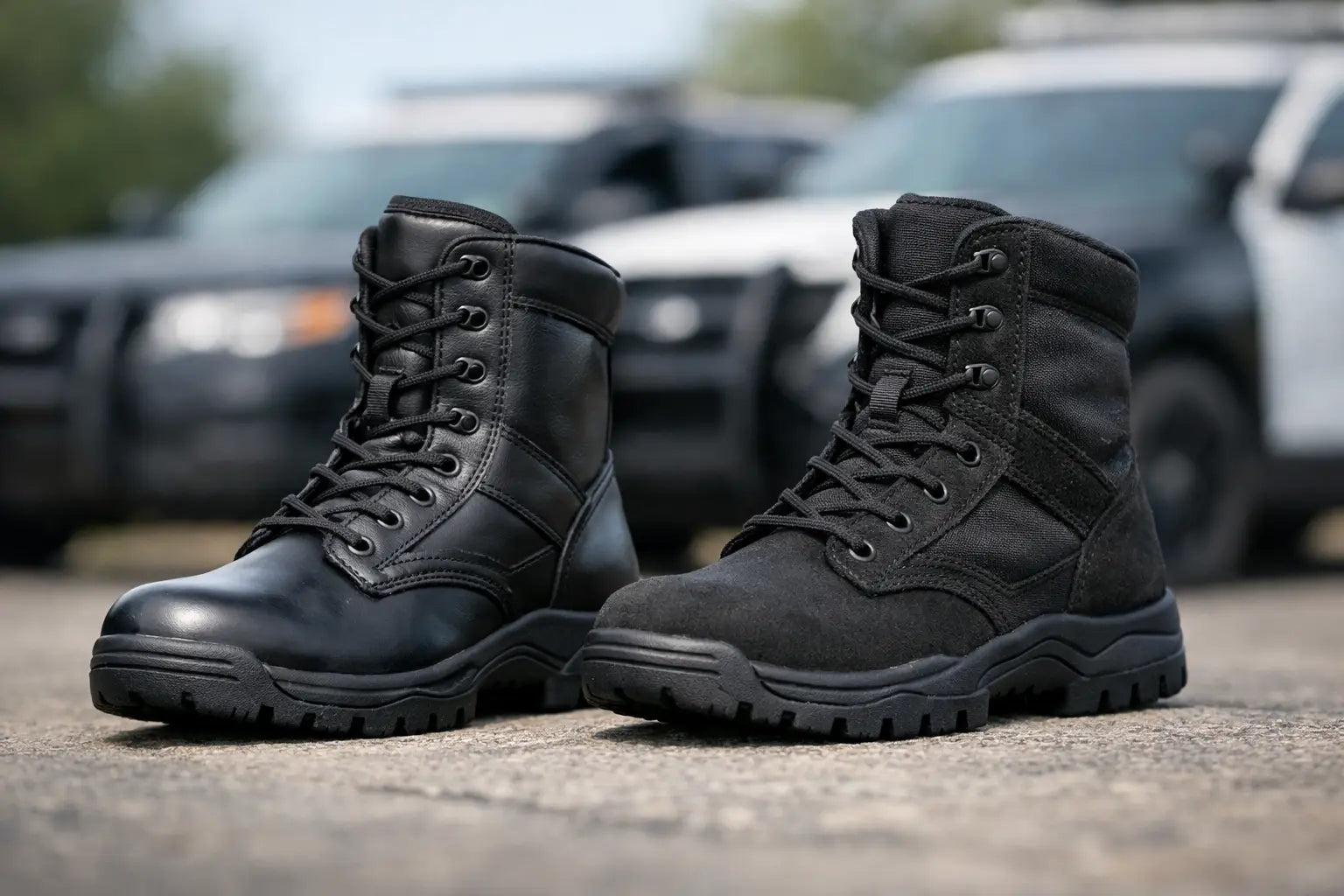
A patrol boot is often worn for far longer than it is judged in a shop. It has to cope with vehicle work, wet pavements, hard standing, uneven ground and the repeated stop-start of a long shift. The choice between leather vs fabric patrol boots affects comfort, drying time, ankle support and how much maintenance the boot will demand once you are off duty.
There is no universal winner. A full-leather boot remains a sound choice for sustained wet conditions, rough ground and users who want a protective, long-service upper. Fabric and leather combination boots are often lighter, faster-drying and better suited to warm weather, vehicle-based work and high-mileage patrols. The right answer depends on where, how and how often you use them.
Leather vs Fabric Patrol Boots: The Main Difference
The material above the sole changes the character of a boot. Full-leather patrol boots use thick hide across most of the upper, usually with a waterproof membrane or treatment behind it. Fabric patrol boots normally use hard-wearing nylon or Cordura-type panels, reinforced with leather around the toe, heel and high-wear areas.
Leather offers natural resistance to abrasion and a degree of structure that fabric cannot fully match. Once broken in, a good leather boot can mould closely to the foot and provide dependable support when carrying weight or moving over loose, uneven surfaces. It also presents a smarter, more traditional appearance where uniform standards matter.
Fabric panels reduce bulk and weight. They allow more air movement through the upper in dry conditions and do not hold as much water after a soaking. Many modern patrol boots combine fabric with leather rather than relying on one material alone, aiming to retain protection where it matters while reducing fatigue over a full shift.
The material is only one part of the build. Sole pattern, midsole stiffness, waterproof lining, lacing system, toe protection and last shape will all affect whether a particular boot works for you. A well-made fabric boot will outperform a poorly fitting leather one every time.
When Full-Leather Patrol Boots Make Sense
Full leather is the traditional hard-duty option for good reason. It is particularly suitable for users who regularly work outdoors in persistent rain, mud, scrub or abrasive terrain. The dense upper is less likely to snag, scuff through or let surface moisture pass quickly when it is properly treated.
For foot patrols over rough ground, leather also provides reassuring structure. That can be valuable when carrying a heavier load, working on slopes, or spending long periods on terrain that constantly rolls the foot. A firmer upper helps hold the heel and ankle in position, though it should never be used as a substitute for a boot that fits correctly.
Leather boots generally reward maintenance. Clean away mud, let the boot dry naturally and apply an appropriate conditioner or proofing treatment as required. With regular care, the upper remains supple, sheds water more effectively and is less likely to crack at the flex points. This makes leather a sensible investment for users who expect regular hard use across several seasons.
The trade-off is weight and drying time. Leather boots can feel warmer during summer work, especially during long periods on tarmac or inside vehicles. If they become fully saturated, they need patient drying. Never force them dry against a radiator, heater or open fire, as excessive heat can shrink, harden or damage leather and adhesives.
Where Fabric and Combination Boots Earn Their Place
Fabric patrol boots are often the more practical choice for fast-moving, mixed-duty work. Reduced weight may not sound significant at the start of a shift, but it becomes noticeable after several miles, repeated stair climbing or long hours on hard surfaces. Less weight on each foot can mean less fatigue over the course of a working day.
They are also useful in warmer and drier conditions. Fabric uppers tend to feel less enclosing than full leather, particularly where a boot uses breathable panels alongside a moisture-managing lining. This does not mean that every fabric boot is cool, nor that every leather boot is hot. Waterproof membranes, sock choice and activity level have a major effect. However, the general advantage remains: fabric tends to manage heat and dry more quickly after exposure to rain or sweat.
For police, security and patrol users who spend much of the day on urban ground, in buildings or moving between vehicles and short foot patrols, a fabric-leather combination can be an efficient compromise. Reinforced leather at the toe and heel protects the areas most likely to take knocks, while fabric keeps the upper lighter and more flexible.
Fabric does have limits. It can show wear sooner when constantly rubbed against rough masonry, vehicle pedals, undergrowth or abrasive ground. It is also more difficult to restore once the outer material is badly damaged. While a waterproof membrane may keep water out initially, saturated fabric can remain wet on the outside and feel cold in poor weather.
Waterproofing Is Not the Same as Staying Dry
A waterproof lining is valuable, but it is not a guarantee of dry feet in every condition. Water can enter over the collar, through damaged seams or because the boot has been worn in conditions beyond its intended use. Sweat can also build up inside a boot, producing the same damp-sock feeling as external moisture.
Leather benefits from regular proofing because a treated upper beads water rather than absorbing it. This protects the leather and helps the breathable membrane work as intended. Fabric boots also need cleaning and reproofing. Dirt, dried mud and oils can reduce the surface treatment's ability to shed water.
For repeated wet-weather work, consider how the boot will dry between shifts. Remove the footbed where possible, loosen the laces and allow air to circulate. Stuffing the boot lightly with plain paper can help draw out moisture, replacing it as it becomes damp. A spare pair of boots is the most reliable solution for anyone working consecutive wet shifts.
Fit, Support and Sole Matter More Than Labels
Do not buy on upper material alone. A patrol boot should secure the heel without pinching the toes, allow enough room for your duty socks and hold the foot firmly across the instep. Try boots later in the day if possible, when feet are naturally a little larger, and wear the socks you expect to use on shift.
A leather boot can feel stiffer at first and may need a measured break-in period. Wear it for shorter walks before committing to a full operational day. Fabric boots frequently feel more flexible straight from the box, but they should still be checked for heel lift and pressure points. Immediate softness does not automatically mean better long-term support.
Consider the sole under your actual working conditions. Deep, open tread suits mud and loose ground but may feel less stable or wear differently on smooth indoor floors. A flatter, more urban-focused pattern can work well on pavements and hard standing, yet may struggle on wet grass or soft ground. Slip resistance, cushioning and torsional support deserve as much attention as the upper.
Choose for the Job, Not the Look
If your work regularly involves wet rural ground, prolonged outdoor exposure, load carrying or abrasive terrain, full leather is usually the stronger long-term choice. It takes more care, but it offers excellent protection and structure when maintained properly.
If your shifts involve high mileage on hard surfaces, warm conditions, vehicle work or frequent movement between indoor and outdoor environments, a fabric-leather patrol boot may reduce weight and improve day-long comfort. It is a practical option, provided the reinforcement, sole and waterproofing suit the task.
For many users, the best answer is not choosing one material forever. A heavier leather pair for winter, field use and poor ground, alongside a lighter fabric pair for summer or urban patrol, gives you the right tool for the conditions. John Bull Clothing's specialist boot range is built around that same principle: dependable kit selected for the job in hand.
Treat your boots as working equipment. Keep them clean, replace worn insoles and laces before they fail, and inspect the sole and stitching regularly. The pair that keeps your feet comfortable, supported and dry enough for your real shift is the pair worth wearing.