
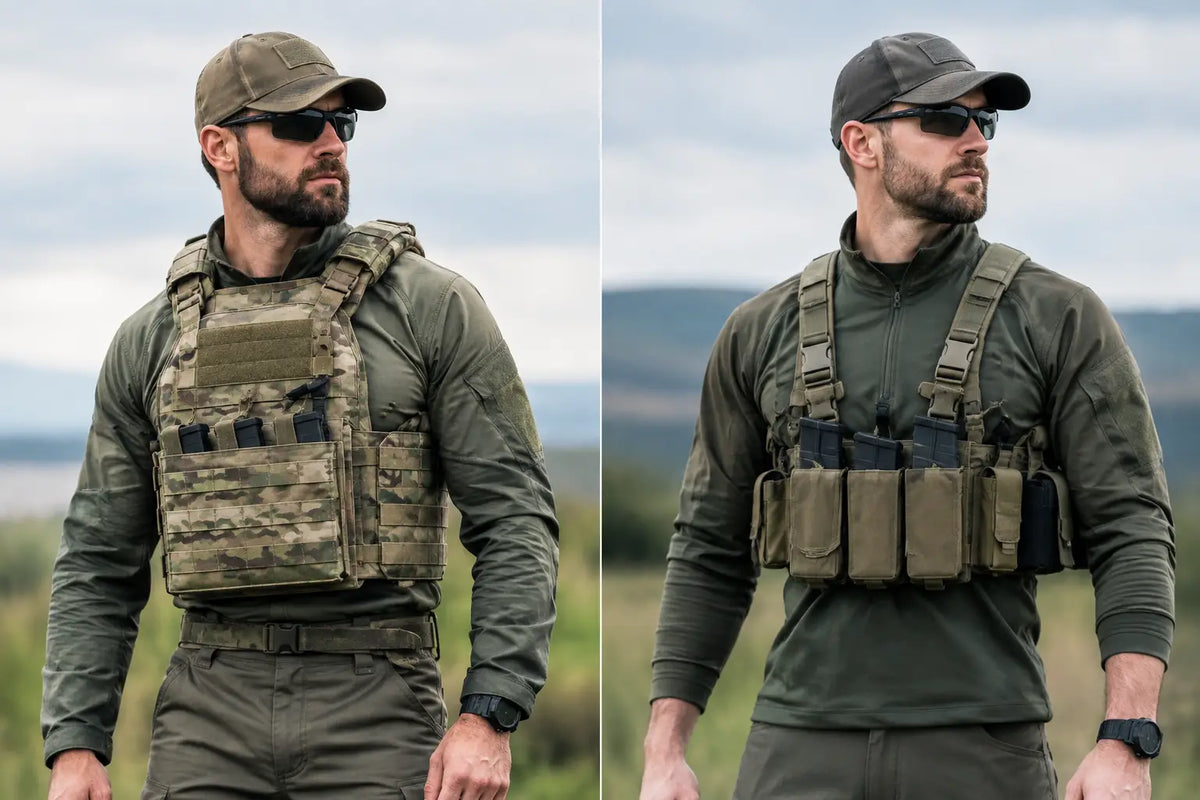
A load carriage choice can feel obvious until the temperature rises, the vehicle door closes, or a day on foot turns into a long one. The plate carrier versus chest rig decision is not about which looks more capable. It is about matching protection, carriage capacity and mobility to the job, the environment and the equipment you genuinely need to carry.
A well-set-up rig should keep essential items secure, accessible and balanced without restricting movement or adding avoidable weight. For military personnel, security staff, police users, cadets and airsoft players alike, the right answer often changes with the task. A carrier and a chest rig are different tools, not direct substitutes.
Plate carrier versus chest rig: the core difference
A plate carrier is designed to hold ballistic armour plates, usually in front and rear plate bags. Many also accept side armour and modular pouches through MOLLE or laser-cut attachment fields. Its principal purpose is protection, with load carriage built around it.
A chest rig is a lighter harness-and-panel system worn across the torso. It carries magazines, radios, medical kit, navigation equipment and other immediate-use items, but does not normally provide ballistic protection. Most are adjustable and can be worn over a combat shirt, smock or lightweight jacket. Some chest rigs can also be clipped to compatible plate carriers, offering a useful degree of flexibility.
That distinction matters. If your role requires certified ballistic protection, a chest rig cannot replace a correctly sized plate carrier and suitable armour plates. Equally, wearing a plate carrier simply because it can carry more kit may be unnecessary when speed, ventilation and endurance are the priorities.
When a plate carrier is the right choice
A plate carrier suits situations where there is a clear requirement for body armour. This may include operational duties, certain security roles, training conducted to a unit requirement, or airsoft events where the user wants armour-style load carriage without relying on it for protection. The carrier provides a stable platform for armour and gives the wearer space to mount essential pouches close to the body.
Fit is the starting point. The plates determine the carrier size, not the other way round. A correctly fitted front plate should cover the vital upper torso area without sitting so low that it interferes with bending, sitting or drawing equipment. The rear plate should sit at a corresponding height. If the carrier is too large, too low or poorly adjusted, it is uncomfortable and can compromise mobility.
A carrier also makes sense when equipment needs to remain stable during rapid movement, prone work or vehicle movement. Magazine pouches, radios, medical pouches and hydration can be configured around the carrier, but restraint is worthwhile. Filling every available row of webbing produces a bulky front profile, increases heat build-up and makes it harder to lie flat or work in confined spaces.
For users carrying armour, comfort comes from proper adjustment rather than excessive padding. Set shoulder straps so the plates sit at the correct height, then adjust the cummerbund for a secure fit that still permits full breathing. Route radio leads and hydration tubes so they do not snag on slings, door frames or seatbelts. Test the complete set-up with the clothing, belt and pack you will actually use.
Where a chest rig earns its place
A chest rig is often the better option for lighter tasks, hot weather, range use, fieldcraft, navigation training and situations where ballistic protection is not required. It keeps the back largely clear for a daysack or larger bergen and usually allows more airflow than a carrier. Over a full day, that difference can be significant.
Chest rigs are particularly effective when the carried load is simple and predictable. A magazine-focused rig with space for a compact medical pouch, radio and a small utility item can be quicker to put on and easier to manage than a fully configured carrier. It also allows the wearer to remove their load carriage without taking off a jacket or disturbing a rucksack harness.
The compromise is capacity and stability. A chest rig loaded with heavy radios, full water bottles and oversized general-purpose pouches can sag, swing and pull on the neck. It may also interfere with access to trouser pockets or belt-mounted equipment. Keep the load close, balanced and limited to immediate-use essentials. Larger sustainment items normally belong in a pack.
A good chest rig should sit high enough to avoid fouling a belt line, but not so high that it restricts shoulder movement or presses into the throat when prone. Adjust the harness evenly, then move through practical positions: standing, kneeling, sitting in a vehicle and lying prone. A rig that feels fine in front of a mirror may prove awkward once a rifle sling, pack straps or waterproof layers are added.
Protection, weight and heat management
The largest factor in the plate carrier versus chest rig choice is the trade-off between protection and burden. Armour plates add considerable weight before magazines, radios, water and mission equipment are included. That weight affects fatigue, posture, speed, heat retention and recovery over long periods.
There is no sensible way to remove that compromise. If protection is required, it must be worn and correctly fitted. If it is not required, a chest rig can reduce unnecessary weight and heat stress. This is especially relevant during summer training, long navigation legs and extended time carrying a pack.
Think beyond the rig itself. A plate carrier beneath a waterproof jacket can become very warm, while a chest rig worn over a smock may make access to pockets difficult. Winter layers can alter strap adjustment, and body armour can change how a rucksack sits on the shoulders. Build your arrangement around the season and the rest of your clothing system, not in isolation.
Load carriage that works under pressure
Whether you choose a carrier or chest rig, equipment placement should follow use, not appearance. Items required immediately should be accessible with either hand where possible. Medical equipment should be clearly identified and reachable without having to remove the rig. Frequently used magazines should sit where they can be drawn without obstructing movement, a sling or a belt kit.
Avoid placing hard, bulky pouches directly over the centre of the chest if you expect to spend time prone. A slim, low-profile layout is usually more practical than a wide array of utility pouches. Similarly, consider what happens when wearing a rucksack. Rear-mounted pouches can conflict with pack harnesses, while shoulder-mounted kit can create pressure points over distance.
For many users, a belt and small pack make a better partner than adding more pouches to the torso. The belt can carry selected tools or sustainment equipment, while the pack takes waterproofs, food, water, batteries and spare layers. This keeps the chest area clearer and makes both a plate carrier and chest rig more manageable.
Choosing for your role and environment
Start with the non-negotiables. If your employer, unit policy or activity requires ballistic armour, select a compatible plate carrier and ensure the armour is appropriate, serviceable and correctly fitted. Do not treat an airsoft-style plate carrier or foam insert as protective equipment.
If armour is not a requirement, consider how much kit you need immediately available. A lightweight chest rig is often enough for range sessions, airsoft, field exercises, dog handling, instructional work and outdoor tasks where a pack carries the bulk of the load. It is also a sensible option for users who need a simple, adaptable platform over different layers of clothing.
Hybrid arrangements can work well. A removable chest rig panel fitted to a carrier allows a user to retain the same magazine layout when armour is needed, then run a lighter configuration when it is not. Compatibility varies between manufacturers, so check buckle spacing, attachment methods and adjustment range before relying on a combined system.
Buy for the work you do most often, not the single most demanding scenario you can imagine. Quality stitching, dependable buckles, sensible pouch retention and a proper fit will serve better than an oversized set-up covered in unused attachments. John Bull Clothing customers looking at tactical load carriage should also consider how their chosen rig works with boots, clothing, gloves, packs and the conditions they expect to face.
The best rig is the one you can wear comfortably for the full task, operate without hesitation and trust to keep essential equipment where it belongs. Set it up simply, test it properly, and adjust it after real use rather than chasing a fashionable configuration.