
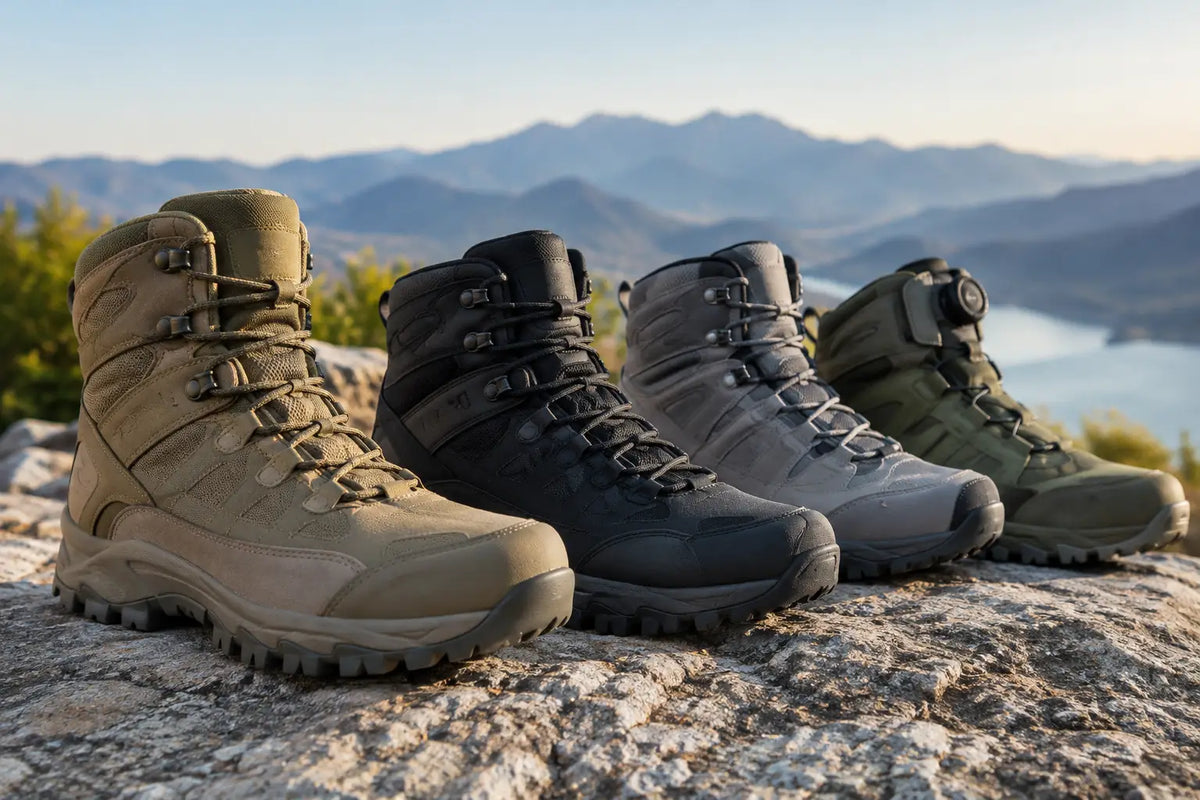
A boot that feels acceptable on the first patrol can become a liability by the end of a long shift, tab or wet weekend in the field. That is why tactical footwear trends are moving beyond appearance and headline features. The useful developments are centred on lower weight, dependable traction, better fit and materials that manage changing conditions without sacrificing the support needed under load.
For military personnel, police, security teams, cadets and serious outdoor users, the right choice still depends on task, terrain and dress requirements. A light patrol boot is not automatically the best boot for carrying weight over rough ground, and a fully waterproof model is not always the most comfortable option in warm weather. The aim is not to chase every new feature. It is to understand which developments have a practical place in your kit.
Tactical Footwear Trends: Less Weight, More Purpose
The strongest shift in tactical footwear is towards reducing unnecessary weight. Traditional leather combat boots remain valued for their durability, ankle structure and protection, particularly in demanding terrain. However, modern designs increasingly combine leather panels with hard-wearing textile uppers, moulded support sections and lighter midsoles.
The benefit is straightforward: less weight at the foot can reduce fatigue over distance. It also makes a difference when moving quickly between vehicles, buildings and uneven ground. For police, security and airsoft users, a lighter boot can improve comfort during long periods on foot without the bulk of a full mountain boot.
There is a trade-off. A lighter boot may offer less resistance to abrasion, less insulation and a softer platform under a heavy pack. For repeated load carriage, rocky ground or prolonged use in harsh weather, a more substantial boot often earns its place. The best approach is to match the boot to the work rather than treating lightweight construction as an upgrade in every situation.
Hybrid uppers are becoming standard
Leather and fabric combinations are now common across duty, patrol and outdoor footwear. Leather remains useful around high-wear areas such as the toe, heel and lower sides of the boot, while nylon or similar technical fabrics can cut weight and improve flexibility.
This construction can shorten the break-in period compared with a traditional all-leather boot. It can also dry more quickly after surface wetting. Yet fabric sections need care, particularly where mud, salt and grit can work into stitching and joins. Clean boots after use, remove insoles to air them, and treat leather sections with the conditioner recommended for that material.
Grip Is Being Designed for Specific Ground
Outsole design is no longer simply about having deep lugs. Manufacturers are paying closer attention to rubber compounds, lug direction, heel braking zones and the way a sole sheds mud. The result is a wider choice of tread patterns aimed at wet grass, loose ground, paved surfaces, ladders and mixed urban terrain.
For field use, look for a sole with meaningful lug depth and open spaces between the lugs. This helps prevent wet mud from packing into the tread. A defined heel edge is useful when descending slopes, while a stable, reasonably broad platform helps when carrying a Bergen or working on uneven surfaces.
For patrol or security work, an aggressive sole is not always the answer. Very deep lugs can feel unstable on hard floors and may wear quickly on pavement. A lower-profile outsole with slip resistance and reliable heel support may suit a daily duty boot better. If your work moves between buildings, vehicles and outdoor areas, a versatile tread is usually more useful than an extreme terrain-specific pattern.
Midsole cushioning now has a clearer role
Modern EVA and polyurethane midsoles are helping tactical boots feel less punishing over long distances. Cushioning reduces repeated impact on hard ground, particularly for users spending full shifts on concrete, tarmac or station floors.
Support remains just as important as softness. An overly soft sole can feel comfortable when first tried on but may become tiring under a loaded pack or on broken ground. Look for a boot that flexes at the forefoot while holding the heel securely. A supportive shank or stabilising plate can also help reduce foot fatigue when terrain is uneven.
Waterproofing Must Be Chosen, Not Assumed
Waterproof membranes remain a major part of tactical footwear trends, but they are not a universal solution. In persistent rain, wet vegetation and cold conditions, a waterproof lined boot can keep feet warmer and reduce the risk of blisters caused by prolonged saturation. For UK field conditions, that protection has obvious value.
The limitation is breathability. Any waterproof boot will retain more heat than an unlined alternative, especially during summer training, indoor work or fast movement. Once water enters over the collar, a lined boot can also take longer to dry. Users who work in hot conditions, expect frequent water crossings or need the fastest possible drying time may prefer a breathable non-waterproof boot paired with suitable socks and spare footwear.
Waterproofing also relies on maintenance. Mud, dried salt and neglected leather can compromise performance over time. Regular cleaning, correct proofing treatment and drying away from direct high heat will do more for a boot's service life than an occasional heavy application of spray.
Fit Systems Are Getting More Attention
A good boot fit is increasingly recognised as a performance issue, not a comfort extra. Modern boots are being made in a wider range of shapes, with more attention to heel hold, toe-room and cushioning around pressure points. This matters because foot shape varies considerably, and the wrong last can cause rubbing even when the nominal size is correct.
Lace systems are also improving. Locking hooks and lower lace zones allow wearers to adjust forefoot volume separately from ankle tension. This is useful when feet swell during long days or when alternating between thin duty socks and thicker cold-weather socks.
Quick-adjust lace systems are appearing on some tactical models. They are convenient, particularly for users changing footwear quickly, but standard laces remain easier to replace in the field. For deployed, remote or extended outdoor use, simplicity and repairability should carry real weight in the decision.
Do not size boots from a quick try-on
Try boots on later in the day when possible, wearing the socks you expect to use. Your heel should remain planted when walking uphill, while your toes need enough room that they do not strike the front on descents. There should be no sharp pressure across the instep or little toe.
Break in new boots before a course, exercise, deployment or long event. Start with short walks, then build up distance and load. A boot that causes a hot spot at three miles is unlikely to improve at fifteen. Address fit early with lacing adjustments, suitable insoles or a different model rather than hoping the material will eventually give way.
Height and Protection Are Becoming Task-Led
The choice between low, mid and high-cut footwear is more deliberate than it once was. Low-cut tactical shoes can work well for vehicle-based roles, range use, fitness work and dry, predictable ground. They tend to be lighter and more flexible, but offer limited protection from water, debris and ankle knocks.
Mid-cut boots are a practical middle ground for many users. They provide more coverage and support without the weight of a full-height boot. High-cut designs remain relevant for wet ground, rough country, load carriage and situations where ankle coverage and protection are priorities.
Protective toe caps, puncture-resistant midsoles and oil-resistant outsoles also deserve consideration for certain roles. These features can add weight and stiffness, so they should be chosen because the working environment requires them, not because they sound more tactical. For security staff operating around warehouses, vehicles or industrial sites, certified protective features may be sensible. For a lightweight field boot, they may be unnecessary.
The Best Trend Is a Boot You Can Rely On
A more disciplined buying approach is perhaps the most useful change in tactical footwear. Buyers are looking beyond colour, brand name and a single waterproof claim. They are considering how far they walk, what they carry, whether they work on hard surfaces, how often they encounter wet ground and whether the boot must meet a unit, employer or uniform requirement.
At John Bull Clothing, that means looking at footwear as part of a complete field setup. Socks, insoles, trousers that sit cleanly over the collar and proper boot care all affect how a pair performs over time. A respected boot is only dependable when it fits the wearer and suits the ground.
Before committing, stand in the boots, walk on an incline if possible, and think honestly about the conditions you face most often. Choose the model that supports the job you actually do, then give it the care and break-in time required to keep you moving when the day runs longer than planned.