
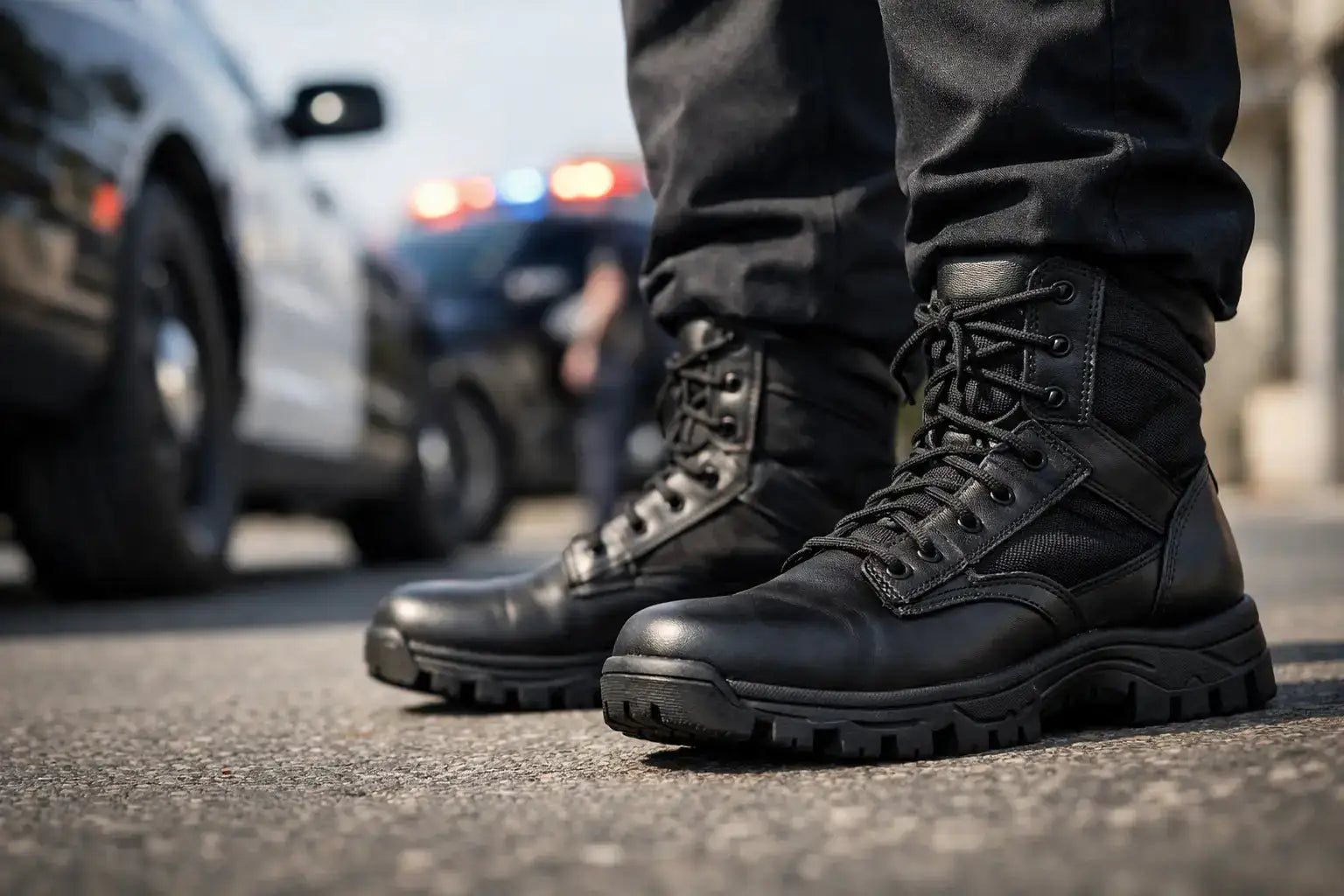
A poor pair of black police boots usually shows its faults before the end of the first shift. Hot spots start early, grip goes vague on wet paving, and by the time you have spent hours on patrol, in a vehicle, or moving quickly over mixed ground, every weakness is obvious. Good boots do the opposite. They stay out of the way, support the job, and keep performing when conditions are less than ideal.
For police officers, PCSOs, security staff and others working long hours on their feet, footwear is not a minor detail. It is core kit. The right boot needs to balance comfort, structure, grip and durability, while still looking professional and staying suitable for daily operational use. That balance matters because the best-looking boot on the shelf is no use if it cannot handle repeated wear, poor weather and hard surfaces.
What black police boots need to do
Police and patrol footwear sits in a particular category. It is not exactly the same as a heavy combat boot, and it is not the same as a lightweight walking boot either. Most users need something that can cope with urban ground, stairwells, wet roads, kerbs, indoor flooring and occasional rough terrain, without becoming clumsy or overbuilt.
That is why flexibility matters, but so does support. A boot that is too soft may feel comfortable in the shop and then start to lack stability after a few long shifts. A boot that is too rigid can feel secure at first, but may become tiring if you spend much of the day driving, kneeling or moving quickly in confined spaces. The best choice usually sits somewhere in the middle - structured enough for support, but not so stiff that it fights your movement.
There is also the issue of presentation. Black police boots need to look smart and serviceable. In many roles, polishability is still relevant, and a clean black finish remains part of a professional appearance. That does not mean every wearer needs a traditional high-shine leather parade-style finish, but it does mean scruffy materials and poor construction tend to show quickly.
Fit comes before features
A long list of technical features means very little if the fit is wrong. This is where many buying mistakes happen. Some people size up to gain space in the toe box, then find the heel slips. Others choose a snug fit that feels secure at first, only to discover pressure points after several hours.
A proper fit should hold the heel firmly, allow room for the toes, and feel supportive across the midfoot without pinching. You should also judge fit with the type of sock you actually intend to wear on duty. A boot that feels right with a thin casual sock may feel very different once paired with a thicker duty or boot sock.
It is also worth remembering that feet swell over the day. If you are buying black police boots for regular shift work, the test is not whether they feel fine for five minutes. The real question is whether they will still feel controlled and comfortable after hours on hard surfaces. For many wearers, that comes down to shape as much as size. Some boots suit narrower feet, others give more volume across the forefoot, and that can make all the difference.
Support, cushioning and fatigue
Long shifts are hard on feet, knees and lower back. That is one reason support and cushioning deserve more attention than marketing claims. A sole unit with decent shock absorption can reduce the constant impact of pavements, station floors and vehicle work. Equally, a supportive midsole and secure upper can help limit fatigue caused by repeated movement and uneven footing.
There is a trade-off here. More cushioning can improve comfort on concrete and tarmac, but very soft soles can feel less stable, especially during quick directional changes. A firmer setup often gives better control and longer service life, but may take longer to break in. The right answer depends on role, body weight, shift pattern and personal preference.
Ankle height matters too. Mid and high-cut black police boots can provide welcome support, especially for wearers carrying kit or spending time on uneven ground. On the other hand, some users prefer slightly lower and more flexible boots for driving and rapid movement. Neither approach is automatically better. It depends on how and where the boots will be used.
Grip and sole design in black police boots
Grip is easy to underestimate until it fails. Wet paving slabs, painted surfaces, muddy verges, stair edges and oily patches can all expose weak traction. A dependable outsole needs a tread pattern that clears well and bites on mixed surfaces, not just deep rural mud.
For most police and security users, black police boots should offer confident grip on urban ground first and foremost. Aggressive lug patterns can be useful, but if they are too bulky they may wear awkwardly on hard surfaces or feel less stable indoors. A well-designed sole for patrol work should give a secure contact patch, predictable traction and decent durability under regular road and pavement use.
Slip resistance is only part of the picture. Sole flexibility affects how naturally the foot moves, while the overall construction affects longevity. Cemented soles can keep weight down and improve comfort, but stitched or more heavily built constructions may suit those who prioritise long-term durability. Again, the best option depends on intended use rather than broad claims.
Leather, linings and weather resistance
Material choice affects comfort, care requirements and lifespan. Full-grain leather remains a strong option for duty footwear because it offers durability, structure and a smart finish. It can also be easier to maintain to a presentable standard than some fabric-heavy designs. For many wearers, that makes leather a practical rather than nostalgic choice.
That said, mixed-material boots have their place. Textile panels can reduce weight and improve breathability, which some users prefer for warmer conditions or high-mileage shifts. The trade-off is often reduced polish-ability and, in some cases, slightly less long-term toughness in high-wear areas.
Water resistance is another point where use case matters. Waterproof linings can be excellent for wet weather, prolonged outdoor patrols and winter use. They help keep feet dry and can make a real difference during long shifts in poor conditions. The downside is that waterproof boots may run warmer, and in hotter periods some wearers will prefer a more breathable non-waterproof option. There is no universal best choice. It depends on your environment.
Break-in, care and service life
Even a good boot may need some break-in time, especially if it uses thicker leather or a firmer build. That does not mean severe discomfort should be expected. A quality boot should begin to settle to the foot, not punish it. If you are getting persistent heel lift, numbness or heavy rubbing, the issue is more likely fit than break-in.
Care has a direct effect on service life. Mud, road salt and constant wet-dry cycles shorten the life of any boot if they are ignored. Cleaning leather, letting boots dry properly between wears, and using appropriate polish or treatment can help preserve both appearance and function. Rotation helps too. If you rely on the same pair every day with no recovery time, linings and footbeds tend to deteriorate faster.
This is where buying purely on price can become false economy. A cheaper boot may look acceptable at first, but if support collapses early or the outsole wears rapidly, replacement costs catch up quickly. Trusted patrol and military-style brands often justify their price through consistency, better materials and more reliable construction.
Choosing black police boots for your role
Not every wearer needs exactly the same boot. A town-centre foot patrol role places different demands on footwear than vehicle-heavy duties, event security or work that mixes built-up areas with rough ground. If most of your day is spent on tarmac and indoor flooring, comfort, cushioning and urban grip will probably matter more than a heavily aggressive outsole. If your work regularly takes you into fields, embankments or poor weather, weather protection and ankle support may move higher up the list.
It is also sensible to think about how the boots work with the rest of your kit. Weight adds up across a shift. A heavy, overbuilt boot may sound reassuring, but it can become tiring if the extra bulk does not actually suit the role. On the other hand, going too light can leave you short on support and durability. The right boot is the one that matches the job, not the one with the longest feature list.
At John Bull Clothing, that practical approach matters. Buyers looking at black police boots are usually not shopping for fashion. They are replacing working kit, improving comfort on duty, or choosing a more dependable pair from a trusted tactical and military supplier. That means the decision should be based on performance, fit and day-to-day reliability first.
A well-chosen boot earns its place quietly. If your feet are still supported at the end of a long shift, the grip has stayed predictable in poor weather, and the finish still looks fit for duty after regular wear, you have probably chosen well.