
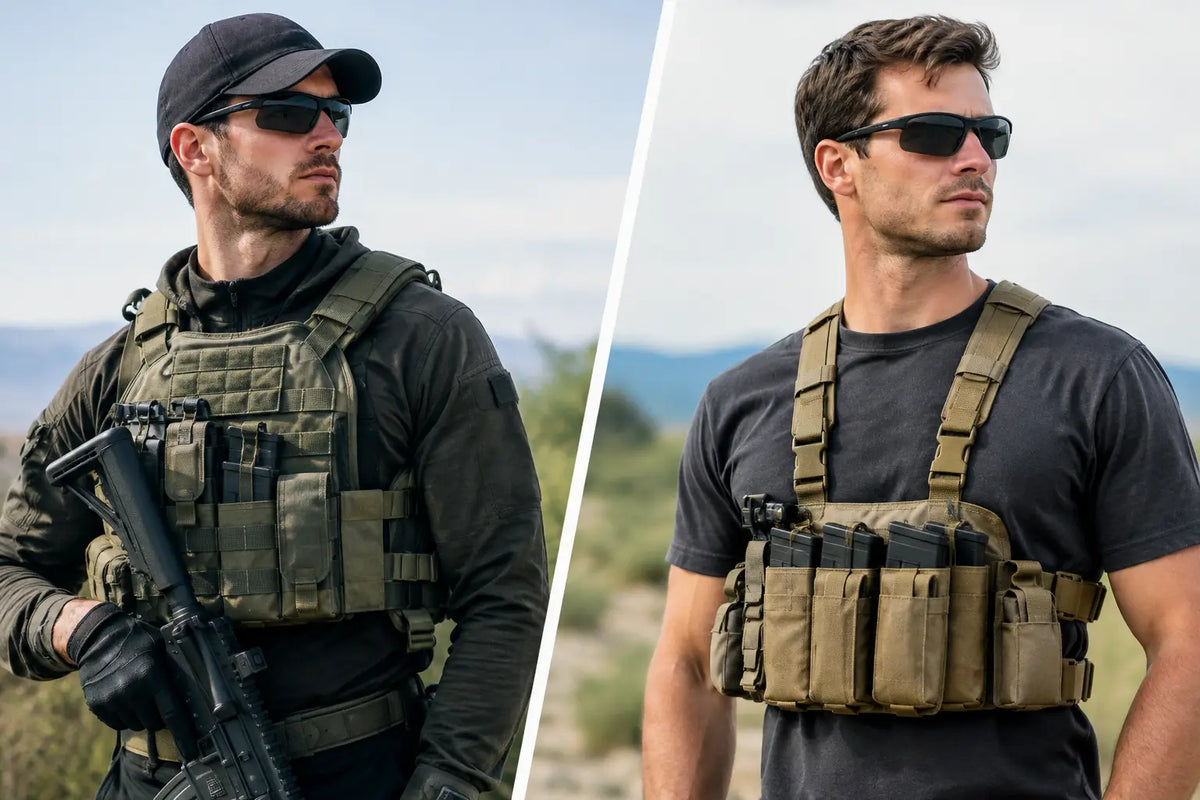
A loadout can look right on the safe-zone table and become a nuisance twenty minutes into a woodland game. When weighing up an airsoft vest vs chest rig, the useful question is not which looks more tactical. It is which carries your ammunition, communications and essentials without restricting your movement, overheating you or slowing a reload.
Both systems have a place. A vest is generally the better answer for players carrying more equipment or wanting a stable, all-round platform. A chest rig is lighter, faster to put on and usually more comfortable in warm weather or during high-tempo games. Your role, replica magazines, site conditions and the rest of your clothing all matter.
Airsoft Vest vs Chest Rig: The Core Difference
An airsoft vest is a broad term. It may mean a traditional fixed-pouch assault vest, a MOLLE tactical vest or a plate-carrier-style setup. The common feature is greater coverage around the torso, with more space to distribute pouches and equipment. Some models also include padding, internal storage or provision for dummy plates.
A chest rig is a smaller harness worn across the front of the chest, normally with adjustable shoulder and waist straps. It carries the items needed immediately - usually magazines, a speedloader, radio, small utility pouch and perhaps a compact medical or dead-rag pouch. Its back remains largely clear.
That difference affects every part of a day’s skirmishing. A vest spreads a larger load and can feel secure once properly adjusted. A chest rig reduces bulk and retains more ventilation, but its capacity is naturally limited. Neither is automatically superior.
Choose a Vest When You Need Capacity and Stability
A vest suits players who carry several rifle magazines, gas magazines, a radio, spare batteries, hydration, smoke-effect devices where site rules allow, and useful admin items. It is also a sensible option for longer milsim events, where food, maps, waterproofs and sustainment kit become part of the load.
The larger platform makes it easier to balance weight across the torso. Instead of hanging everything from a belt, you can position magazine pouches at the front, utility pouches to the sides and a hydration solution at the rear. This matters with heavier metal magazines, especially for GBBR users who may need to carry more weight than an AEG player.
A vest can also offer better retention when moving through dense woodland, climbing obstacles or going prone. A properly fitted MOLLE setup does not shift much, provided pouches are mounted securely and the vest is tightened over the clothing you actually play in.
There are compromises. More material means more heat, particularly beneath a waterproof combat jacket or in summer. A wide front can make the prone position less comfortable, and bulky pouches can interfere with shouldering a rifle. It is easy to turn a useful vest into an overloaded one simply because there is space available.
Traditional fixed-pouch vests are straightforward and often cost-effective. They work well if their pouch layout matches your chosen magazines. MOLLE vests offer more flexibility, but ask more of the user. You need to select compatible pouches, place them sensibly and check the setup before committing to a full game day.
A Vest Works Best for These Roles
A vest is usually the practical choice for a support gunner, a player running a GBBR, an event participant carrying radios and navigation equipment, or anyone who prefers to keep more equipment on the body. It can also suit new players who have not yet settled on a specific role, provided they avoid buying an unnecessarily heavy setup.
For a typical assault rifle player at a Sunday skirmish, the best vest is not necessarily the largest one. Carry enough magazines for the site’s game format, water if required, and a small amount of essential kit. Leave the rest in your kit bag or at the safe zone.
Choose a Chest Rig for Mobility and Simplicity
A chest rig is built around access. Magazine pouches sit high on the front, within easy reach for reloads, while the open sides and back reduce heat build-up. It is a sensible piece of equipment for fast woodland games, CQB sessions and players who want a stripped-back loadout.
The lighter profile is especially useful if you spend time moving, sprinting between cover or working from awkward shooting positions. With no large rear panel, a chest rig also sits more comfortably in a vehicle and works well with a day pack. If you need to add or remove a waterproof layer, it is usually quicker to take off than a fully loaded vest.
For most AEG users, a compact chest rig carrying three to six magazines is enough for a standard game. Add a small general-purpose pouch for a speedloader, battery, dead rag and basic tools, and you have a clean, functional setup. Keep the front as flat as possible so you can get low behind cover and shoulder the rifle properly.
The limitation is obvious once your equipment list grows. A chest rig is not ideal for carrying large bottles, bulky radio equipment or a full day’s sustainment kit. You can pair one with a belt kit or rucksack, but this adds separate components that must be adjusted and managed. A belt may also clash with a holster or become uncomfortable when crouching.
Chest Rigs Suit Lightweight Rifle Setups
A chest rig makes particular sense for players using M4, AK, SA80 or similar rifle platforms with readily available magazine inserts or dedicated pouches. Before choosing one, confirm that the pouch dimensions and retention are suitable for your magazines. Polymer, metal and GBB magazines vary considerably in size and weight.
For CQB, avoid loading the front with oversized utility pouches. The closer a game becomes, the more valuable a compact profile is. You need to move through doorways, get round corners and reload without a pouch catching on the rifle sling.
Fit Matters More Than the Platform
An inexpensive rig that fits correctly will be more useful than a premium vest that rides up, swings when running or prevents a clean cheek weld. Adjust your load-carrying equipment while wearing the layers you normally use at the site. In Britain, that may mean a combat shirt one month and a warm layer with a waterproof outer the next.
Magazine pouches should be reachable with your support hand without looking down. They should retain magazines during a run or when going prone, yet still allow a controlled draw. Test this at home with unloaded airsoft magazines before game day.
Shoulder straps should be snug enough to stop movement but not so tight that they pull on your neck. If a vest has a cummerbund or side adjustment, secure it firmly without restricting breathing. With a chest rig, set the harness high enough that magazines do not sit on your stomach when kneeling, but not so high that they interfere with the rifle stock.
Check how the equipment works with your sling. A two-point sling is often easiest to manage with either platform, but it can snag on antennae, loose straps and overfilled shoulder areas. Tape down excess webbing and keep radio cables routed close to the body.
Build the Loadout Around Your Game, Not the Photograph
A useful setup begins with what you genuinely need during a game. For most players, that means magazines, a means of carrying water, a dead rag, a speedloader if applicable, a small tool or battery solution, and site-required safety equipment. Radios, maps, spare gas and larger utility items may be justified for longer events, but they should not be added by default.
Use this quick check before buying or mounting pouches:
- Can you reload while standing, kneeling and prone?
- Can you shoulder your primary replica on either side?
- Can you run without magazines or pouches bouncing?
- Can you wear the setup for several hours without hot spots or restricted breathing?
Camouflage and colour should also be chosen with the site in mind. Multi-terrain patterns blend well across mixed UK woodland and scrub, while plain olive, coyote or black can be practical choices depending on the environment and your existing clothing. Matching every item is less important than using hard-wearing kit that functions properly.
The Sensible Choice for Most Players
For short, active skirmishes with an AEG, a chest rig is often the most efficient starting point. It is light, affordable to build around and teaches good discipline about what you carry. It also leaves room to add a belt or small pack later if your requirements change.
Choose a vest if you regularly attend longer games, use heavier magazines, need a radio and hydration on-body, or want a more stable platform for a broader equipment load. A modular vest is particularly useful when you play different roles and can adjust pouch placement accordingly.
Do not buy either system purely for capacity. Start with your magazines, fit the platform properly and spend a full day using it before adding more kit. The right choice is the one that lets you focus on the game rather than constantly adjusting your equipment.