
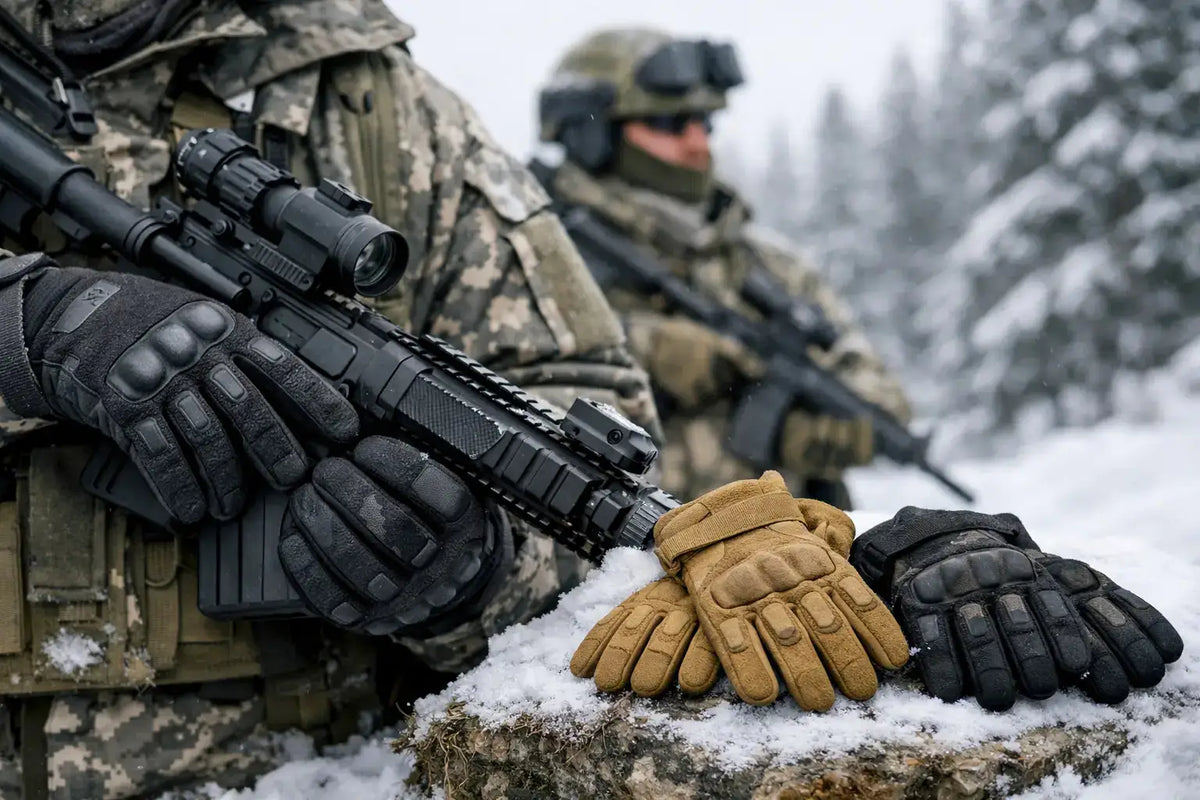
Cold hands do more than make a shift uncomfortable. They reduce trigger control, make buckles and radios harder to operate, and turn routine kit checks into slow work. The best tactical gloves for winter are therefore not simply the thickest pair available. They must keep hands functional when conditions are wet, windy and below freezing, while still allowing the wearer to work safely.
For patrol, fieldcraft, security work, airsoft or winter hill use, glove choice comes down to the conditions, the task and the time spent exposed. A glove that is excellent for standing on a cold range may be too bulky for vehicle checks or navigation. The right answer is often a layered glove system rather than one heavy-duty pair.
What makes a tactical glove suitable for winter?
A proper winter tactical glove balances insulation, weather resistance, grip and dexterity. Get any one of these badly wrong and the glove can become a liability. Warm insulation is of little use if the material holds water. A fully waterproof construction can feel clammy and slow to dry. Thin gloves preserve feel but offer limited protection during static periods.
The first decision is whether the gloves will be used during continuous movement or while largely stationary. On a tab, a brisk patrol or a demanding outdoor task, hands generate heat and a lightly insulated, wind-resistant glove may be sufficient. For sentry duty, wildlife observation, range days or long waits, considerably more insulation is needed.
Winter gloves should also have a close, secure fit through the palm and fingers. Excess material at the fingertips makes it difficult to load magazines, use a torch switch, operate a GPS, manage zips or take notes. A cuff that covers the wrist helps prevent draughts and stops snow entering the glove, especially when worn under an outer jacket sleeve.
The best tactical gloves for winter: choose by task
Rather than looking for one glove to cover every job, start with the work your hands actually need to do. This approach avoids buying an insulated glove that stays in a pocket because it is too cumbersome for daily use.
General patrol and field use
For most moving outdoor work, look for a mid-weight glove with a hard-wearing synthetic leather or reinforced palm, a windproof outer and modest insulation. This type offers useful warmth without sacrificing too much control over weapon slings, webbing hardware, vehicle controls and communications equipment.
A textured palm is worth prioritising. Wet metal, smooth polymer and cold steering wheels can all become slippery. Reinforcement across high-wear areas such as the thumb saddle, palm heel and index finger will also make a noticeable difference over a season of use. If the glove has a hook-and-loop wrist closure, it should sit flat and remain secure under jacket cuffs.
Wet weather and snow
For persistent rain, sleet or snow, weather protection matters as much as insulation. A waterproof-breathable glove can be the right tool when prolonged exposure is expected, but it should not be treated as maintenance-free. Once soaked internally through sweat or water entering at the cuff, a lined waterproof glove can take a long time to dry.
Use a longer gauntlet cuff where snow is likely or where sleeves regularly ride up. Pair it with a shell jacket that can overlap the cuff properly. A removable liner is a practical advantage for drying kit overnight, while a spare pair in a waterproof dry bag gives far more assurance than relying on one expensive pair all weekend.
Fine work, navigation and range tasks
When fine finger control is the priority, a close-fitting softshell or lightly insulated glove is usually the better choice. It will not replace a heavyweight glove during static exposure, but it allows more reliable use of a map, compass, handset, torch, optics and small fasteners.
Touchscreen-compatible fingertips can be useful for navigation apps and phones, although they should be regarded as a convenience rather than a deciding feature. They tend to work less well when wet, dirty or worn. More valuable features are pre-curved fingers, a thin but durable palm and enough grip to keep control of equipment in rain.
Static work and severe cold
If you expect to be standing still for long periods, use an insulated outer glove or mitten over a dexterous working glove. Mittens are warmer because the fingers share heat, but they are not suitable for every task. An over-mitt system lets you remove the outer layer briefly for weapon handling, radio use or detailed work without exposing bare skin.
This is particularly effective on cold exercises and winter camps. Keep the liners on while working, put the insulated over-gloves on as soon as activity slows, and avoid waiting until hands are already cold. Rewarming chilled hands takes time and can be uncomfortable.
Materials and construction worth checking
Leather remains a dependable option for grip and abrasion resistance, particularly on palms and fingers. It needs care after wet use, however, and can stiffen if repeatedly soaked and dried poorly. Synthetic leather is often easier to maintain, dries faster and gives consistent grip, though quality varies between gloves.
Softshell fabrics suit active work because they block wind, shed light rain and breathe better than heavily coated materials. For colder conditions, look for a fleece or brushed lining that does not make the glove overly tight. A glove that fits perfectly unlined may restrict circulation once insulation is added, reducing warmth rather than improving it.
For genuine wet-weather protection, inspect the whole construction. A waterproof membrane does not help much if water can enter through an open cuff, poorly protected seams or a gap between glove and sleeve. In sub-zero conditions, avoid relying on cotton liners. Cotton holds moisture against the skin and becomes cold quickly. Synthetic or merino wool liners are more suitable choices.
Fit, sizing and layering
Winter glove sizing should allow a natural hand position and a little air around the fingers. They should not pull across the knuckles when making a fist, yet they must not leave loose fabric at the fingertips. Test the fit by mimicking the tasks you do most: close a zip, use a clip, grip a tool and operate a phone or radio.
If you plan to wear liners, try gloves with the liner in place. Do not simply buy a larger outer glove and hope for the best. Too much room causes the layers to move independently, which reduces control and can create pressure points. The best fit is usually a thin wicking liner, a dexterous working glove, and an insulated shell or over-mitt held in reserve when activity stops.
Keep gloves attached to your person when not worn. A pair lost in wet grass or dropped from a vehicle is a preventable problem. A simple retention loop, carabiner point or stowage pocket in webbing keeps them accessible without leaving them exposed to rain.
Do not overlook care and spares
Winter gloves need drying, not punishment. Air dry them away from direct high heat, which can damage membranes, shrink leather and weaken adhesives. Remove liners where possible, brush off mud once dry, and follow the maker's care instructions for leather treatment or water-repellent reproofing.
For any extended exercise, deployment or cold-weather trip, carry a spare pair. One pair may be enough for a short walk, but it is not enough insurance for several days of rain, snow and repeated wet work. A dry spare glove can restore comfort and hand function immediately.
John Bull Clothing's tactical and field kit range is suited to building a winter handwear system around the conditions you face, rather than settling for a one-size-fits-all compromise. Choose warmth for static exposure, dexterity for active work and a dry reserve for when the weather wins.