
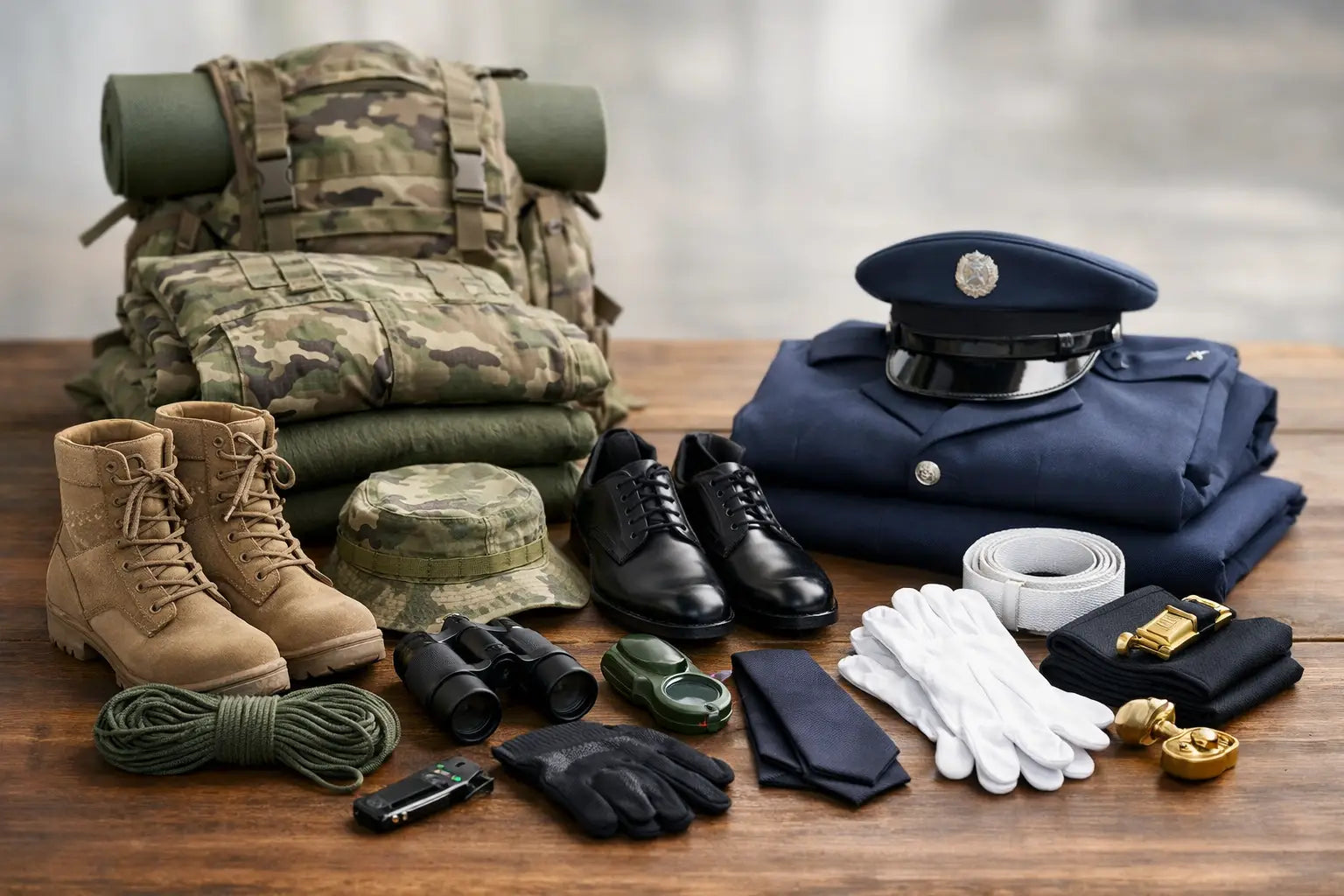
A poorly packed bergan becomes obvious long before first light: wet feet, a missing mess tin or no dry layer when the temperature drops. This cadet kit list example is built around the practical requirements of parade nights, field training and camps, helping cadets and parents separate essential kit from items that can wait.
Requirements differ between the Army Cadet Force, Combined Cadet Force, Sea Cadets and RAF Air Cadets, as well as between individual detachments and schools. Unit joining instructions always take priority. Do not buy uniform, badges or specialist equipment until staff have confirmed what is issued, authorised and required for the activity.
Cadet kit list example: start with the activity
There is no single bag that suits every cadet occasion. A weekly parade night needs a correctly prepared uniform and a few small personal items. A weekend exercise needs a much more deliberate load plan, with protection from rain, cold and mud. Camp may require both field kit and smart uniform, plus civilian clothing for travel.
The sensible approach is to maintain three groups of equipment: parade kit, field kit and personal administration. Keep them together where possible, but pack only what the joining instructions call for. Carrying unnecessary weight makes navigation, drills and routine tasks harder, particularly for younger cadets.
Parade night kit
For a standard evening at the detachment, the priority is a clean, correctly fitted uniform. Depending on the organisation and dress ordered, that may include combat clothing or formal uniform, a beret or other headwear, belt, boots and appropriate rank slides or insignia. Cadets should check that clothing is clean, pressed where required and free from loose threads before leaving home.
Boots deserve more attention than most new cadets expect. They need to fit with the socks that will be worn, provide ankle support without pinching and be worn in gradually. Highly polished footwear may be expected for certain parade dress, while field footwear is selected for grip, weather resistance and comfort. One pair is not always ideal for both roles, so follow staff direction before investing in a second pair.
A small notebook and pen are useful for orders, timings and training notes. Bring a refillable water bottle if permitted, especially during warmer months. Long hair should be secured in accordance with unit dress regulations, and any required medication must be managed through the unit's stated procedure.
Field training and exercise kit
For an overnight exercise, shelter, warmth, hydration and dry clothing matter more than having every tactical accessory available. A cadet should be able to find key items in the dark without emptying the whole pack. Use dry bags or strong plastic bags inside the rucksack to separate a sleeping system, spare clothes and wet kit.
A dependable field load commonly includes:
- A correctly sized rucksack or bergen, with a waterproof liner and name label.
- A season-appropriate sleeping bag, roll mat and bivvy bag or shelter items if directed.
- Waterproof jacket and trousers, plus warm layers that still insulate when damp.
- Spare socks, underwear and a dry base layer reserved for sleeping.
- A water bottle or hydration system, mess tins or mug, eating utensil and any food stated on instructions.
- Head torch with spare batteries, personal first-aid items where authorised, and wash kit.
Cadets should not pack knives, fire-lighting equipment, stoves, ration heaters, medicines or similar items unless their unit has specifically authorised them and explained how they will be used. Safety rules, age restrictions and site rules apply. The same applies to camouflage face paint, webbing and tactical pouches: they may be useful on a particular exercise, but they are not automatic essentials.
How to pack a cadet field bag properly
Pack by function, not by appearance. Place the sleeping bag and night kit in a waterproof compartment at the bottom of the rucksack. Put heavier items close to the back and roughly between shoulder-blade and waist height. Waterproofs, water, a warm layer and lunch should be accessible without a full repack.
Keep one set of dry clothing sealed away for the evening or journey home. That reserve is not for convenience. If a cadet has spent the day in persistent rain, dry socks and a warm base layer are basic welfare items. A separate bag for muddy boots or wet clothing also prevents the rest of the load becoming damp.
Every item should be marked clearly with the cadet's name and, where appropriate, their detachment. Camps bring together large numbers of similar olive, black and camouflage items. A name label on a water bottle, sleeping bag, rucksack and kit bag saves time and prevents kit going missing.
Before departure, fit the rucksack while wearing the intended clothing. Adjust shoulder straps, waist belt and chest strap so the load sits close to the body without restricting breathing or movement. A bag that is comfortable in a hallway can feel very different after a mile over uneven ground. If it is too heavy, remove duplicate or non-required items before leaving, rather than hoping it will become easier to carry.
What parents should buy first
New cadets do not need to purchase a full field load on day one. Initial costs can be controlled by starting with the items most likely to be used: well-fitting boots if not issued, suitable socks, a water bottle, modest rucksack, waterproof layer and basic personal kit. Ask the detachment whether a sleeping bag, bergan, uniform or protective equipment can be borrowed for a first camp or exercise.
Quality matters most where failure affects comfort and safety. Boots, waterproofs, sleeping bags and rucksacks are worth choosing carefully. A recognised military or outdoor brand may cost more initially, but correct fit, durable materials and usable weather protection are more valuable than a low price on an item that fails after a few wet weekends.
John Bull Clothing supplies British Forces-style clothing, boots, load-carrying equipment and field essentials suited to cadet use, but suitability still depends on the unit's dress and equipment instructions. Check sizing charts, consider room for layers, and avoid buying rank, qualification badges or regiment-specific items without clear authorisation.
Final checks before leaving home
Lay the complete kit out the evening before. Compare it line by line with the joining instructions, then check the forecast, travel plan and return time. Charge a mobile phone if one is permitted, but do not treat it as a torch, map, watch or emergency power source unless staff have said it is acceptable.
Have a proper meal, fill water containers only when instructed, and arrive in the required dress at the stated time. Cadet training is designed to build self-reliance, and good preparation is part of that training. A well-chosen kit list gives a cadet the confidence to focus on the exercise, support their section and get the most from the day.