
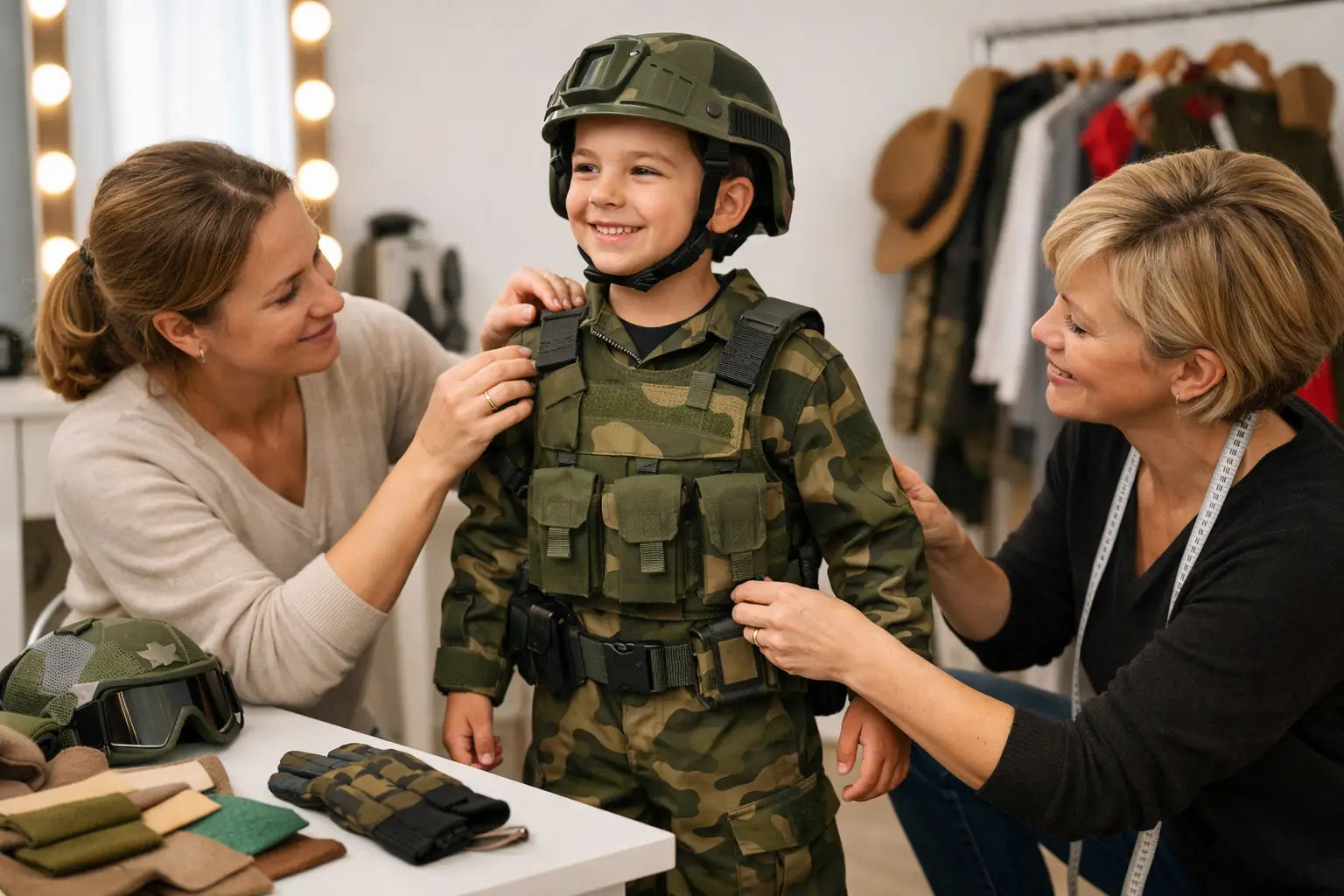
A children's army costume needs to stand up to more than the school photograph. It may be worn for fancy dress, a themed party, outdoor play or a history event, often with plenty of running, crawling and getting in and out of the car along the way. The best choice looks the part without becoming restrictive, over-warm or loaded with accessories that will be left behind before lunchtime.
Choose the right children's army costume for the occasion
Start with where and how it will be worn. For a one-off party, a lightweight camouflage jacket and trousers, or a simple all-in-one outfit, may be all that is required. Comfort and easy movement matter more than a fully detailed appearance. A child should be able to sit down, use the toilet independently and put on a coat over the costume if the weather turns.
For outdoor play, a more durable camouflage clothing set is usually the better option. Separate trousers and a jacket give more flexibility across the seasons, and they can be worn again for camping, woodland walks or airsoft-style play where appropriate for their age. This is where practical kids' camouflage clothing earns its place over thin dress-up fabric.
Cadet activities are different again. A costume is not a substitute for approved cadet uniform or field clothing. Check the requirements set by the unit before buying, particularly for parades, training evenings and organised field exercises. Units may specify dress, boots, badges and headwear, while some items may be issued.
Fit comes before camouflage pattern
Children grow quickly, so it is tempting to buy several sizes up. Too much extra length in the sleeves or trouser leg can become a snagging risk and makes active play awkward. Aim for enough room to layer a T-shirt or fleece underneath, but not so much that cuffs cover the hands or hems drag under shoes.
Use the garment's measurement guide rather than relying only on the age printed on the label. Compare chest, waist and inside-leg measurements where possible. Adjustable waistbands, belt loops and cuff fastenings are useful because they extend the useful life of the clothing without leaving the child swimming in it.
Trousers deserve particular attention. A comfortable waistband and a sensible rise make a major difference when a child is climbing, crouching or sitting on the floor. Cargo pockets are handy for small essentials, but oversized or heavily loaded pockets can pull lightweight trousers out of position.
Keep layers simple
A base layer should be soft and breathable. In mild weather, a cotton T-shirt is usually sufficient beneath a lightweight jacket. In colder conditions, add a fleece or insulated layer, then choose the outer camouflage layer according to the weather. A costume that feels acceptable indoors can quickly become uncomfortable in a warm hall, so avoid piling on layers unless they are genuinely needed.
Fabric and construction make the difference
There is a clear trade-off between inexpensive fancy-dress material and hard-wearing camouflage clothing. Thin fabric can be perfectly suitable for a short indoor event, especially when budget and storage space are priorities. It is less suitable for repeated outdoor use, where knees, seat panels and sleeve cuffs receive the most wear.
For clothing likely to see regular use, look for practical stitching, secure fastenings and fabric with enough weight to cope with a muddy garden or a woodland path. A jacket with a full front fastening is easier for younger children to manage than one that must be pulled over the head. Machine-washable fabric is equally useful - camouflage is meant to be used, not kept pristine.
Camouflage patterns vary in colour and style, but the decision does not need to be complicated. Traditional British Forces-inspired patterns have a recognisable military look and work well for themed dress. For outdoor use, choose the colourway that suits the season and setting, while remembering that visibility should always take priority over blending into the background.
Build the outfit around safe, useful kit
A complete look does not require every possible accessory. In fact, too much kit can make a child's costume uncomfortable and harder to supervise. One suitable headwear item, a belt or lightweight webbing-style accessory, and a small pack are generally more than enough for a convincing outfit.
Footwear should be chosen for the ground, not just the look. Properly fitting boots with supportive soles are worthwhile for wet grass, tracks and longer walks, but they need to be worn in gradually. For a school event or party, clean trainers or everyday shoes may be the more comfortable and sensible option. Avoid adult boots that are too heavy or loose around the heel.
A small backpack can carry a drink, snack and spare layer, but keep it light. Straps should sit securely without rubbing the neck, and loose webbing ends should be tucked away. If the child will be near roads, in woodland or out after dusk, add a bright layer or reflective item over the costume. It may not match the theme, but it makes sound practical sense.
Do not use real weapons, realistic imitation firearms or sharp tools as costume accessories. For public events, choose clearly non-realistic props only where the organiser permits them. Official-looking rank slides, medals and insignia are best avoided for fancy dress too. They have meaning to serving personnel, veterans and cadets, and the outfit does not need them to look smart.
Comfort checks before the day
Do a full try-on before the event rather than opening the costume on the morning itself. Check that the child can move freely, fasten the jacket, reach pockets and walk up stairs. If boots, headwear or a pack are part of the outfit, test those at the same time.
Before ordering or setting the kit aside, confirm these practical points:
- The sleeves and trouser hems clear the hands and ground.
- The waistband is comfortable when sitting and crouching.
- Any fastenings can be managed without help.
- Headwear stays secure without pressing on the ears or forehead.
- The outfit has a warm or waterproof layer available if it is being worn outside.
Looking after kids' camouflage clothing
Wash the clothing after muddy use and follow the care label rather than assuming it can take a hot wash. Close zips, hook-and-loop tabs and buttons before laundering to reduce snagging. Drying naturally helps preserve shape and avoids unnecessary wear on printed camouflage finishes.
For storage, make sure the garment is clean and dry before putting it away. A jacket and trousers kept together in a labelled bag are easy to find when the next school dress-up day is announced. Remove batteries from any light-up accessory and check belts, buckles and straps before reuse.
John Bull Clothing's selection of kids' camouflage clothing is suited to families who want military-inspired kit that can be used beyond a single event. Choose the level of durability to match the job at hand, keep the outfit comfortable, and leave room for the child to enjoy wearing it.