
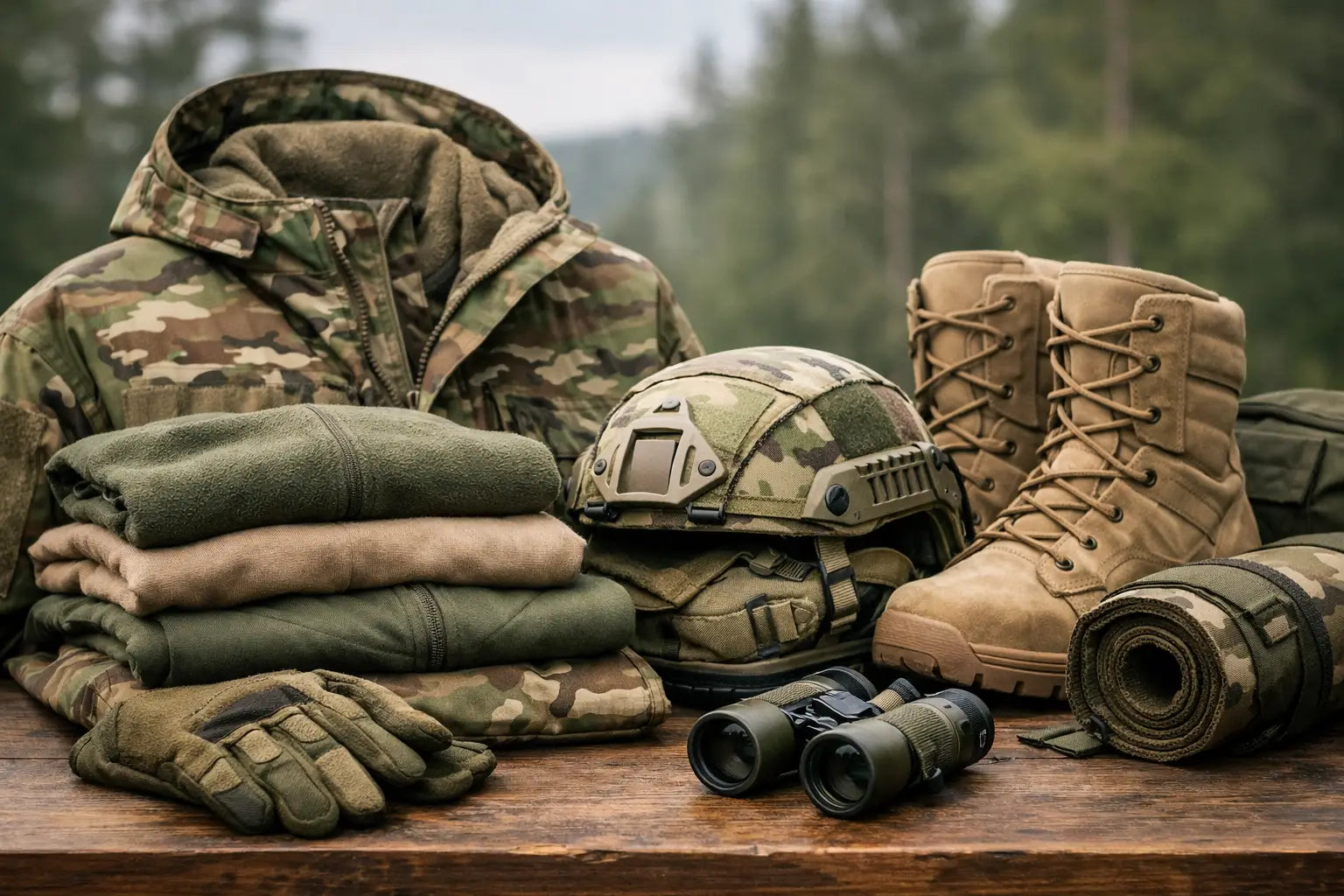
A wet wind across a training area can make a mild forecast irrelevant. The right answer to how to layer military clothing is not simply adding more garments. It is building a system that manages sweat, retains warmth when stationary and keeps rain and wind out without restricting movement or interfering with webbing, body armour or a daysack.
The best combination depends on the task. A soldier on stag, a cadet on exercise, a patrol officer working outdoors and an airsoft player moving through woodland all face different levels of exertion and exposure. Start with the conditions, your expected activity level and the kit you will carry, then layer accordingly.
How to Layer Military Clothing Properly
A practical military clothing system has three working layers: a base layer next to the skin, an insulating layer for retained warmth and an outer shell for weather protection. In genuinely cold conditions, a fourth layer - a static insulation jacket - can be carried in a pack and put on when movement stops.
This approach is more effective than relying on one heavy jacket. Heavy insulation is useful when you are still, but it can quickly cause overheating during tabs, hill work or a high-tempo task. Once clothing is damp with sweat, warmth drops sharply when you slow down.
The key is to be slightly cool before stepping off, rather than already warm and sweating. Use zips, cuffs, vents and collar adjustments before adding or removing a complete garment. That keeps your clothing system working without unnecessary stops.
Base layer: move moisture away from the skin
The base layer has one job: moisture management. Choose a close-fitting technical top in polyester, merino wool or a blended fabric designed to wick moisture. Long sleeves offer useful protection from cold, abrasion and sun, while short sleeves may suit hard exertion in milder conditions.
Avoid ordinary cotton T-shirts for cold or wet work. Cotton absorbs moisture, dries slowly and can leave you chilled once activity drops. It is acceptable for casual wear in dry, warm weather, but it is a poor choice for prolonged field use where conditions can change.
Merino is particularly useful for lower-intensity work, travelling and multi-day use because it remains comfortable over long periods and manages odour well. Synthetic base layers usually dry faster and are often the better option for repeated high-output activity. Neither is automatically better - select for the job and the weather.
Base layer bottoms are worth considering in winter, but they must work with combat trousers and knee protection. If they bunch at the knee, retain too much heat or make trousers restrictive, use them only for static duties, sleeping systems or very cold conditions.
Mid layer: build warmth without bulk
The mid layer traps warm air. A lightweight fleece, grid fleece, military jumper or softshell can provide useful insulation while allowing moisture to move outwards. For most active use, this layer should be breathable and low bulk, particularly when worn under combat jackets, smocks or load-carrying equipment.
A fleece is reliable, quiet and still insulates when slightly damp. It is often the sensible choice for working in cool, dry or changeable conditions. A softshell can add abrasion resistance and a degree of wind protection, but some versions are less breathable than fleece. Under body armour or a rucksack, that difference matters.
Insulated jackets using synthetic fill or down are best treated as stop layers. Carry one for rest periods, harbour areas, range days, vehicle work or cold-weather camps. Synthetic insulation continues to perform better if wet. Down offers excellent warmth for its weight, but requires more care in persistent rain and should be protected by a suitable outer layer.
Outer shell: stop wind and rain
Your shell layer protects the system from weather. A waterproof jacket and trousers are the obvious choice for sustained rain, while a windproof smock or jacket may be more comfortable in cold, dry conditions. The outer layer must be large enough to cover the layers beneath it without pulling across the shoulders or limiting arm movement.
Waterproof does not always mean comfortable during hard movement. Even quality breathable fabrics can struggle to shift moisture when you are working hard under a bergen, webbing or armour. Use pit zips, front zips and adjustable cuffs early. If it is safe and practical to do so, vent before you start sweating heavily.
For wet ground, waterproof trousers can be as valuable as the jacket. They protect legs during static periods, kneeling and work in soaked vegetation. During high exertion, however, full waterproof trousers can become too warm. Some users carry them in a dry bag and put them on only when the rain becomes sustained or when stopping.
Make Layers Work With Military Equipment
Clothing that performs well on a walk can fail under issued or tactical equipment. Webbing, plate carriers, chest rigs and rucksack hip belts compress insulation, especially over the shoulders and lower back. This reduces warmth and can create pressure points.
Keep bulky items out from beneath load-bearing kit where possible. A thin fleece or technical mid layer works better under webbing than a thick insulated jacket. Save your larger insulated layer for when you remove the pack or stop moving. Ensure chest pockets, map pockets and radio access remain usable once your layers are in place.
Collars and hoods also deserve attention. A high collar is valuable in wind, but it should not obstruct a helmet strap, headset or weapon mount. Hoods need enough adjustment to move with your head, rather than turning independently and blocking peripheral vision. Test this before heading out, not after the weather closes in.
Gloves, headwear and socks are part of the layering system too. Heat loss through the head and hands is noticeable when stationary, while wet feet will affect comfort, concentration and mobility. Carry a warm hat, a spare pair of gloves and dry socks in a waterproof pouch. These small items take little room but can make a significant difference.
Adjust for Activity, Not Just Temperature
A common error is dressing for the first five minutes outside. Instead, dress for the work rate you expect after half an hour. On a fast march or steep ascent, a base layer and windproof may be enough even in cold weather. On a sentry position, range detail or static observation task, you may need a fleece, waterproof shell and insulated layer.
Wind chill changes the calculation. A dry day with strong wind can feel colder than a wet but sheltered one, making a windproof layer essential. Rain changes it again, particularly if you are stopping regularly. In hot conditions, the priority switches to sun protection, airflow and hydration. A lightweight wicking top with combat shirt sleeves or a loose field shirt may be more appropriate than any insulating layer.
Camouflage and dress requirements may also limit choices. For military personnel, always follow unit policy and issued clothing instructions. For cadets, airsoft players and outdoor users, choose camouflage clothing that suits the environment while keeping safety and weather protection ahead of appearance.
Check Your Layering System Before You Go
Before an exercise, patrol or day outdoors, put the whole system on with the equipment you will actually use. Check that you can shoulder a rifle or training replica safely, read a map, access pockets, bend, kneel and reach overhead without exposed wrists or a riding-up waistband.
Pay attention to these practical points:
- Base layers should sit flat and dry quickly.
- Mid layers should insulate without restricting movement under webbing.
- Shell layers should cover the lower back and remain functional with a rucksack on.
- Zips, cuffs and vents should be easy to operate with gloves.
- Spare insulation and dry socks should be packed where they stay dry and can be reached quickly.
The aim is not to wear every layer you own. Carry what the forecast, terrain and task justify, keep a dry warm layer in reserve, and make adjustments before discomfort becomes cold stress.