
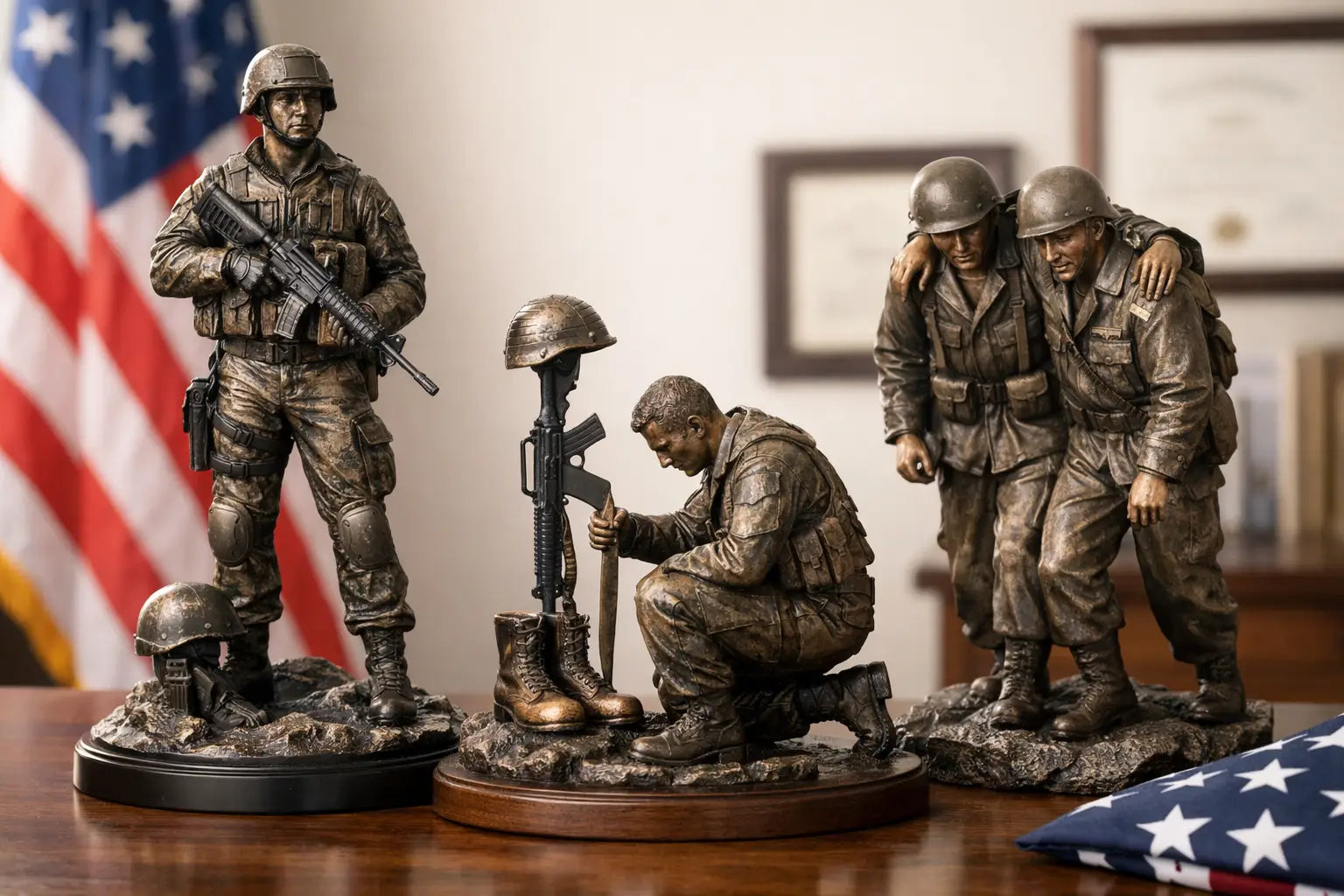
A military statue is not a novelty gift to be chosen on the strength of a quick joke or a generic camouflage pattern. The right piece marks service, belonging and a specific point in a career. This military statue gift guide is designed for buyers choosing a presentation item for a promotion, retirement, passing out parade or regimental occasion, where the detail needs to feel appropriate.
Start with the occasion, not the ornament
The occasion should set the tone. A passing out gift can be forward-looking and encouraging, while a retirement presentation should recognise years of service without becoming overly sentimental. A promotion gift often works best when it has a clean, formal appearance that will suit an office, study or home display.
For a birthday or Christmas gift, there is more room for humour and personality. A figure posed with field kit, a rifle or a patrol pack may suit a recipient who enjoys the practical side of soldiering. For formal presentations, restrained military styling usually carries more weight than a novelty design.
Consider where it will be presented as well as where it will be displayed. A mess function, unit dinner or family gathering may call for a statue with a plaque-ready base. A smaller piece can be the better choice for a colleague leaving a troop or detachment, particularly if several people are contributing to the gift.
Match the military statue gift guide to the recipient
The most effective presentation gifts show that the buyer understands the recipient's connection to service. That does not always mean reproducing every item of clothing or equipment precisely. It means selecting a figure whose branch, role and general style make sense.
An Army-inspired figure may be appropriate for a serving soldier, veteran, cadet instructor or someone with a long family connection to the Forces. Where a recipient has strong regimental identity, a regiment frame, badge or engraved inscription can provide the specific detail that a general military statue cannot. This is often more meaningful than trying to make one ornament represent every posting and role.
For police, security or tactical enthusiasts, take care not to assume that military imagery is automatically the right fit. Some will appreciate the fieldcraft and equipment detail; others may prefer a more neutral presentation piece. The best choice depends on what the recipient actually values, rather than the buyer's idea of what looks tactical.
Serving personnel and veterans
A serving member of the Forces may prefer a clean representation of military life, particularly if the statue is intended for a desk or office. Veterans often appreciate a piece that recalls a period of service, but avoid treating their experience as a stereotype. If their service included difficult deployments, a formal statue with a simple inscription is normally a safer and more respectful choice than a highly dramatic combat scene.
Cadets and younger recipients
For cadets, focus on achievement. A presentation statue can mark completion of a course, a promotion, a first camp or sustained commitment to the organisation. Choose a manageable size and a durable finish, especially if it is likely to be moved between a bedroom, family home and unit display. The significance comes from the recognition, not from making the piece look excessively operational.
Choose a style that will stand the test of time
Most military presentation statues sit somewhere between ceremonial and field-inspired. Neither is automatically better. The choice should reflect the recipient and the intended setting.
Ceremonial styles tend to have formal posture, polished finishes and clear uniform detailing. They suit promotions, retirements and official presentations because they look at home beside framed certificates, challenge coins and photographs. They are also less likely to date if the recipient changes jobs, moves home or creates a more formal display area later on.
Field-inspired figures offer more movement and equipment detail. A posed patrol figure, for example, can appeal to those who value kit, outdoor work and the day-to-day reality of soldiering. The trade-off is that a detailed pose may be less suitable for a formal occasion, and equipment can become less recognisable as patterns and issue items change over time.
Look carefully at the base. A stable, weighted base gives a statue a proper presentation feel and makes it easier to display safely. A plain base leaves room for an engraved plate, while a moulded or highly decorated base may look impressive but offer less practical space for a message.
Materials, finish and display practicalities
Presentation statues are commonly made from resin or similar cast materials. A well-finished resin piece can provide sharp uniform features and a substantial appearance without the cost and weight of metal. It should still be handled as a display item rather than treated like field kit. Fine parts such as rifle barrels, aerials, straps and outstretched hands are more vulnerable during transport and cleaning.
Bronze-effect and antique finishes are dependable choices for most homes and offices. They complement wood, dark shelving and regimental frames without demanding attention from every corner of the room. A brighter painted figure can work well for a younger recipient or an informal display, but check that the colours support the overall look rather than making the item feel toy-like.
Size matters more than many buyers expect. A larger statue creates presence for a retirement or major service milestone, but it needs a clear shelf, mantelpiece or cabinet. A compact piece is easier to post, wrap and display on a desk. Before buying, think about the available space and whether the recipient travels or moves regularly with service life.
Personalisation should add meaning, not clutter
An engraved plate can turn a good military gift into a lasting presentation piece. Keep the wording short enough to read at a glance. A name, rank, unit or regiment, date and the reason for presentation are usually sufficient. Long messages often become difficult to fit and lose their impact once reduced to a small plaque.
A formal example might read: "Presented to Sgt A. Smith on retirement, with thanks for loyal service." For a passing out or promotion, the wording can be more direct: "Congratulations on your promotion" followed by the date and unit. Check spellings, rank abbreviations and dates against an official source before ordering. This is the detail recipients notice first.
If an engraved plate is not available, present the statue alongside a regiment frame, photograph or handwritten card. The combination gives context without altering the item itself. It is particularly useful where the gift is being given by family members who want to recognise a specific achievement but do not need every service detail on public display.
Avoid the common gift-buying errors
The first mistake is choosing an item that is too generic for a major occasion. A statue can be general in style, but the presentation should acknowledge the individual through an inscription, card or accompanying regimental item.
The second is assuming all military recipients want combat imagery. Some do, particularly those who enjoy tactical equipment and fieldcraft. Others will value a formal soldier figure or a quieter commemorative piece. If you are uncertain, consider the items they already display. A house full of regimental photographs and challenge coins suggests a different preference from someone whose interest centres on camping, airsoft or surplus clothing.
The third is leaving the purchase until the last moment. Presentation gifts often need time for engraving, checking and careful wrapping. Allow sufficient time before the parade, dinner or leaving function, especially if the gift is being sent to a BFPO address or shared among several contributors.
Finally, do not overcomplicate the gesture. A well-chosen statue in a suitable finish, presented with accurate wording, has more impact than an elaborate collection of unrelated military-themed items.
Presenting the gift properly
The presentation is part of the gift. Keep the statue protected in its original packaging until the occasion, then remove price labels and check the surface for dust or marks. If a plaque has been fitted, read it once more before handing it over. A simple gift bag or protective box is usually preferable to excessive wrapping, particularly for a formal unit event.
When the gift is being presented publicly, a short statement is enough. Name the achievement, acknowledge the recipient's contribution and explain who is giving it. There is no need to turn a straightforward presentation into a speech unless the occasion calls for one.
John Bull Clothing's military presentation range is best approached in the same way as dependable kit: choose for purpose, check the detail and select something that will serve its role well. Give the recipient a piece they will be pleased to keep in view, not just something they feel obliged to find space for.