
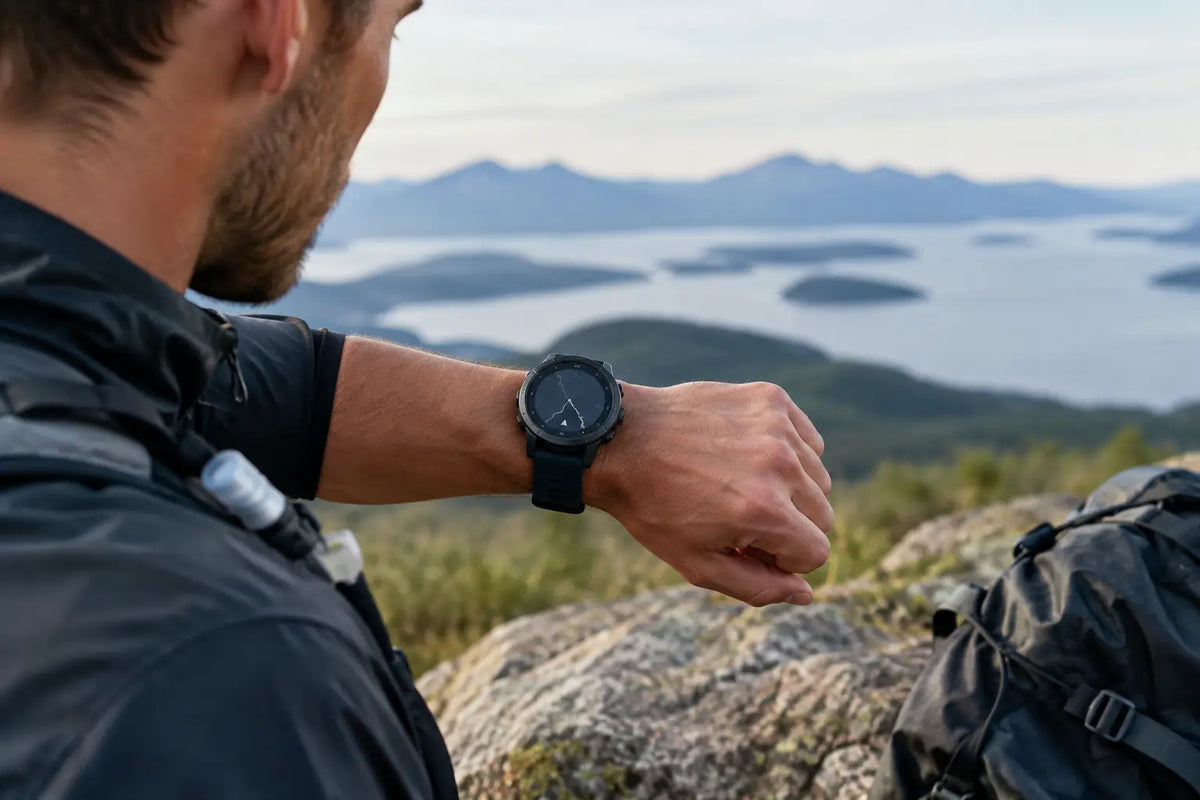
A fitness watch has to earn its place on the wrist. For service personnel, cadets, patrol staff and committed outdoor users, it is not simply a step counter. The right Suunto fitness watches can record the work put into a loaded march, show a route when weather closes in, and help identify whether recovery is keeping pace with training.
That does not mean every feature is useful to every wearer. A watch chosen for gym sessions and road running may be a poor fit for long days on the hills, while a large navigation-led model can be more capability than is needed for daily PT. The sensible approach is to start with the task, then choose the battery life, mapping, sensor package and case size that support it.
What Suunto fitness watches are built to do
Suunto has long been associated with dependable outdoor instruments, compasses and training technology. Its fitness watches generally combine activity tracking with GPS positioning, heart-rate monitoring, training analysis and recovery data. On selected models, that extends to offline mapping, barometric altitude information, navigation tools and solar-assisted charging.
For a user who trains across different environments, this breadth matters. A watch can log a run around camp, monitor heart rate during circuits, track a weekend tab, and retain a navigable route for a hill day. It reduces the need to carry separate devices for basic training data and outdoor navigation, although it should not be treated as a substitute for a map, compass and sound judgement.
The practical value lies in recording consistent information over time. One hard session is only one hard session. A watch becomes more useful after several weeks of use, when pace, heart rate, sleep, training load and recovery trends can be viewed together.
Choose the watch around the job
The best model depends on where it will be used and what information is genuinely needed. It is easy to buy on specification alone, then find that the watch is too large under sleeves, requires charging too often, or has functions that are never used.
For PT, gym work and running
For routine fitness training, prioritise reliable GPS, comfortable fit, clear pace and heart-rate screens, structured workout support and recovery guidance. A lighter case is normally preferable for daily use, particularly for runners who wear a watch all day as well as during training.
Heart-rate data is useful for setting effort rather than chasing a pace that does not match the session. On easy runs, it helps prevent a supposed recovery day turning into another hard effort. During intervals, it provides a useful record of how quickly the body settles between repetitions. Wrist-based heart-rate sensors are convenient, but a chest strap remains the better option when accurate readings during fast intervals, strength work or cold-weather training matter.
If gym work is the main focus, avoid overvaluing outdoor mapping functions. A straightforward Suunto model with strong activity tracking and good battery performance may be the more sensible purchase.
For loaded marches, hill days and expeditions
A different set of priorities applies when distance, terrain and time outside increase. GPS battery modes, route navigation, altitude information and weather awareness become more relevant than detailed gym metrics. Watches in Suunto's outdoor and adventure-focused ranges are better suited to users who regularly spend full days moving over ground.
Battery claims should always be read in context. Continuous GPS tracking, high-accuracy positioning, navigation screens, notifications and cold temperatures all affect runtime. A watch that is more than adequate for a two-hour run may need careful settings management on a multi-day exercise or expedition. Learn the battery modes before departure, not when the low-power warning appears.
Offline mapping can be particularly useful for confirming position, checking the shape of the ground ahead and following a prepared route. It is not a reason to leave navigation fundamentals behind. Keep a paper map protected from the weather, carry a compass, and make sure the route is understood before moving out. Electronics fail, batteries run down and wet gloves make small screens harder to operate.
For patrol, security and everyday wear
Comfort, discretion and durability usually matter most for patrol and security users. A case that catches on cuffs or webbing soon becomes a nuisance, and a bright display can be unsuitable in low-light situations. Consider the physical size of the watch, the strap material, button operation with gloves and whether the display is readable without constantly increasing brightness.
A watch with GPS and health tracking may be useful off duty or during training, but check local policy before wearing any connected device on site, during exercises or in controlled areas. Location recording, route syncing and mobile notifications can create avoidable security concerns. Switch off features that are not required, and follow unit, employer and site instructions.
Features worth paying for
Not every specification carries equal value. The following features are worth assessing carefully when comparing Suunto fitness watches:
- GPS accuracy and satellite support: Useful for pace, distance, route recording and navigation, especially under tree cover or around steep ground.
- Battery modes: Essential for long days outside. Look at the stated GPS runtime in the mode you will actually use.
- Mapping and route guidance: Valuable for hillwalking, trail running and field navigation, but less important for indoor training.
- Barometer and altitude data: Helpful in mountainous terrain and for observing weather changes, provided the watch is correctly set and interpreted.
- Heart-rate and recovery tools: Best for managing regular training and avoiding repeated hard sessions without enough rest.
- Case size and strap fit: Often overlooked, yet critical if the watch will be worn under combat clothing, gloves or a jacket cuff.
Training data is only useful if it changes decisions
The common mistake is collecting every available figure without acting on any of it. Use the watch to answer practical questions: Is easy running actually easy? Has the weekly load risen too quickly? Is sleep poor enough to adjust tomorrow's session? Is a route taking longer than planned?
Training load and recovery scores are guides, not orders. They cannot account fully for a night shift, a heavy pack, stress, minor illness, poor nutrition or physical work completed outside formal training. If the watch suggests a rest day but the body feels good and the training plan is controlled, it may be reasonable to train. Equally, a favourable score should not override fatigue, pain or a developing injury.
For loaded conditioning, compare like with like. A five-mile run without weight should not be judged against a five-mile tab carrying kit. Record the activity consistently, note load where the watch or training log allows it, and use the information to spot trends rather than chase a single impressive result.
Getting the setup right before the first session
A few minutes of setup prevents misleading data later. Enter accurate age, height, weight and maximum heart-rate information where known. Set up sport modes so that the screens display the data needed during the activity, rather than forcing a scroll through fields that do not matter.
For running, pace, distance, elapsed time and heart rate are usually enough. For navigation, add a route screen, battery status, altitude and time of day. For a loaded march, distance, duration, heart rate and a clear GPS track are more useful than a crowded display.
Wear the watch securely above the wrist bone during exercise. It should not slide around, but overtightening can be uncomfortable and may affect readings. If using a chest strap, wet the contact areas before starting and check that the strap is compatible with the chosen watch.
Update software before an important trip, download required maps while connected to Wi-Fi, and test route guidance locally. This is the same principle as checking boots, torches and hydration systems before an exercise: do not make first use the moment it matters.
A sensible buying decision
For most users, the strongest reason to choose a Suunto watch is the combination of training data and outdoor capability. The right choice is not necessarily the most expensive model. A runner who rarely leaves paved routes may gain more from a lighter watch and a chest strap than from full mapping. A hillwalker, instructor or trail runner may consider navigation, altitude tools and extended battery life worth the additional cost.
At John Bull Clothing, the useful standard for any piece of kit is straightforward: it should suit the task, work reliably when required and justify the space it takes up. Apply the same standard to a fitness watch. Select the features you will use in training and on the ground, keep your navigation basics current, and let the data support better decisions rather than distract from them.