
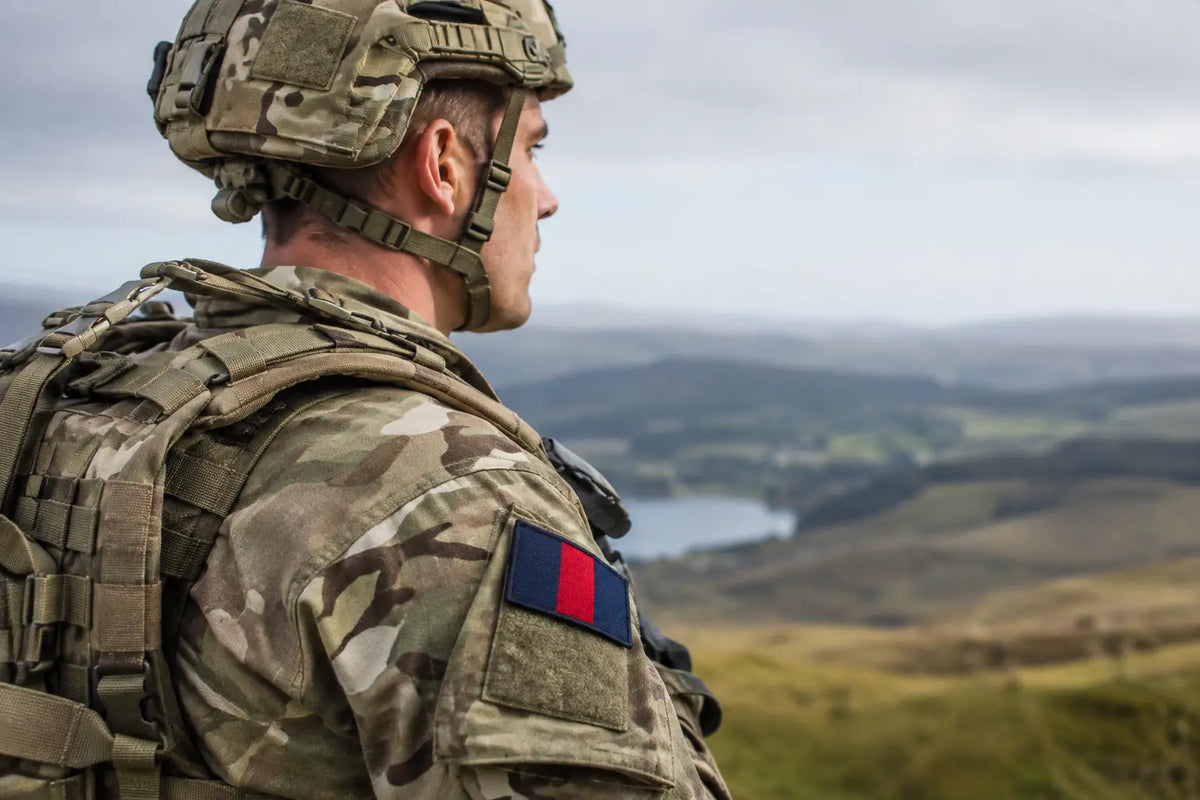
A small coloured patch can carry a great deal of military information. If you have asked, what does TRF patch mean, the short answer is that TRF stands for Tactical Recognition Flash. It is a formation-identification patch worn on British Army combat clothing, designed to show the wider formation or organisation a soldier belongs to at a glance.
For serving personnel, veterans, cadets and collectors, getting the detail right matters. A TRF is not simply a decorative morale patch, and it is not automatically a badge for an individual regiment. Its colours, shape and wear location have a specific purpose within the British Army’s system of recognition.
What does TRF patch mean?
TRF means Tactical Recognition Flash. It is a coloured insignia, usually made from woven cloth or embroidered material, that identifies a British Army formation. Depending on the item and period of issue, this may mean a division, brigade, command, specialist formation or other recognised organisation.
The idea is straightforward: combat dress is designed for field use, not for displaying the full range of ceremonial insignia seen on Service Dress. A clear colour patch helps personnel identify friendly formations quickly, particularly when units are working alongside one another during exercises, deployments and large-scale training.
Most current-style TRFs are made with a hook-and-loop backing so they can be fitted to compatible sleeves or blanking panels. Older examples may be sewn-on or use a different construction. Before buying one for uniform use, check the relevant dress instructions for your unit. The correct pattern, placement and method of attachment can vary.
What a TRF tells you
A TRF normally identifies the soldier’s higher formation rather than their cap badge regiment or corps. For example, a soldier might wear a TRF representing the brigade or division they are assigned to, while their rank slide, stable belt, tactical recognition details and other authorised insignia provide further context.
That distinction prevents a common mistake among new collectors and airsoft users. A TRF is not always interchangeable with a regiment or corps badge. The Royal Logistic Corps, Royal Engineers, infantry regiments and other arms each have their own identities, but personnel from different cap badges can serve under the same formation and therefore wear the same formation TRF.
The flash design is usually based on a distinctive arrangement of colours and geometric shapes. These are selected to be recognisable without relying on lengthy text. A simple square, rectangle, stripe, chevron or divided design is practical at distance and can be reproduced in subdued forms where required.
Full-colour and subdued TRFs
You may see both full-colour and subdued versions of the same TRF. Full-colour patches are more easily recognised and may be used on appropriate barrack, training or non-tactical dress. Subdued versions reduce visibility and may be used on combat clothing where a bright patch would be unsuitable.
This is not just a matter of appearance. Operational requirements, local orders and theatre-specific instructions determine what can be worn. If you are buying for service use, do not assume that the most visible or commonly advertised version is the authorised one for your role.
For reenactment, display or military-inspired clothing, the choice is more straightforward, but accuracy still counts. Match the patch to the garment era and intended impression. A modern hook-and-loop TRF on older combat clothing can look out of place, even if the formation name is correct.
Where is a TRF patch worn?
On modern British Army combat clothing, TRFs are commonly worn on the upper arm, often on the sleeve area designed for patches. The exact side, position and combination with other badges are governed by current dress regulations and unit instructions.
Do not rely on one photograph found online. Images from exercises may show temporary arrangements, different clothing systems, attached personnel or older dress conventions. A soldier serving with one formation may also be wearing a deployment-specific identifier, a multinational exercise patch or an authorised specialist badge. These can make the layout appear inconsistent to anyone unfamiliar with the setting.
The practical rule is simple: for genuine uniform wear, follow your chain of command and the current dress policy. For cadet, airsoft or outdoor use, fit the patch securely and keep the arrangement sensible. Avoid presenting a personal loadout as current issued dress if it is not.
TRF patches compared with other military patches
Military patch terminology can be confusing because several items are worn in similar places. A TRF is best understood by separating it from the other common identifiers.
A formation sign is a broader term for the insignia of a formation. In many cases, the TRF is the tactical or combat-clothing version of that identifier. The terms are sometimes used loosely, particularly by collectors, but a current product description should identify the intended style clearly.
A regimental or corps badge represents an arm, service or regiment. This is often most recognisable as a cap badge, collar dog, shoulder title or embroidered insignia. It does not necessarily replace a TRF because it answers a different question: who is the soldier’s regiment or corps, rather than what formation are they serving under?
A DZ flash is associated with airborne forces and worn behind a parachute qualification badge. It has a different purpose and should not be confused with a formation TRF merely because it is a small coloured cloth item.
A rank slide shows rank and is normally worn on a shoulder or chest tab, depending on the garment. A union flag patch identifies nationality. A morale patch is generally unofficial and often used on privately purchased tactical equipment. None of these is a substitute for an authorised TRF.
Choosing the right TRF
The first question is what you need the patch for. A serving soldier should source the correct current issue pattern specified by their unit. A veteran may want the formation associated with a particular posting or deployment. A collector may be looking for a dated example, while an airsoft or reenactment user may need a patch that matches a chosen kit period.
Check the formation name, colour layout, size and backing before ordering. There can be similar-looking patches for different brigades, divisions or historic formations. Product photographs are useful, but read the description as well. A patch described as subdued, desert, MTP-compatible, legacy or ceremonial may not suit the same use as a full-colour modern item.
Fit also matters. Many current combat shirts and smocks use hook-and-loop sleeve panels, but not all garments have matching fields. If your jacket has no panel, sewing may be possible for a display or non-issued garment, though it is not a sensible alteration to make to service clothing without approval.
At John Bull Clothing, military patches and insignia are best treated like any other piece of kit: buy the right item for the job, not simply the one that looks closest. Formation detail is part of the uniform system, and the right TRF gives a jacket, display board or field setup the accuracy it deserves.
Why the small details matter
TRFs are practical identifiers, but they also record service history. A particular flash can bring to mind a posting, a brigade exercise, a formation change or years spent alongside people from different cap badges. That is why veterans and families often seek them out for framed displays and presentation pieces.
For those building a military kit setup, a TRF should be the finishing detail, not the starting point. Begin with suitable clothing, boots and field equipment for the intended use, then choose insignia that is accurate, securely fitted and appropriate to the setting. A well-chosen TRF is a small patch with a clear job: showing where a soldier fits within the larger formation.