
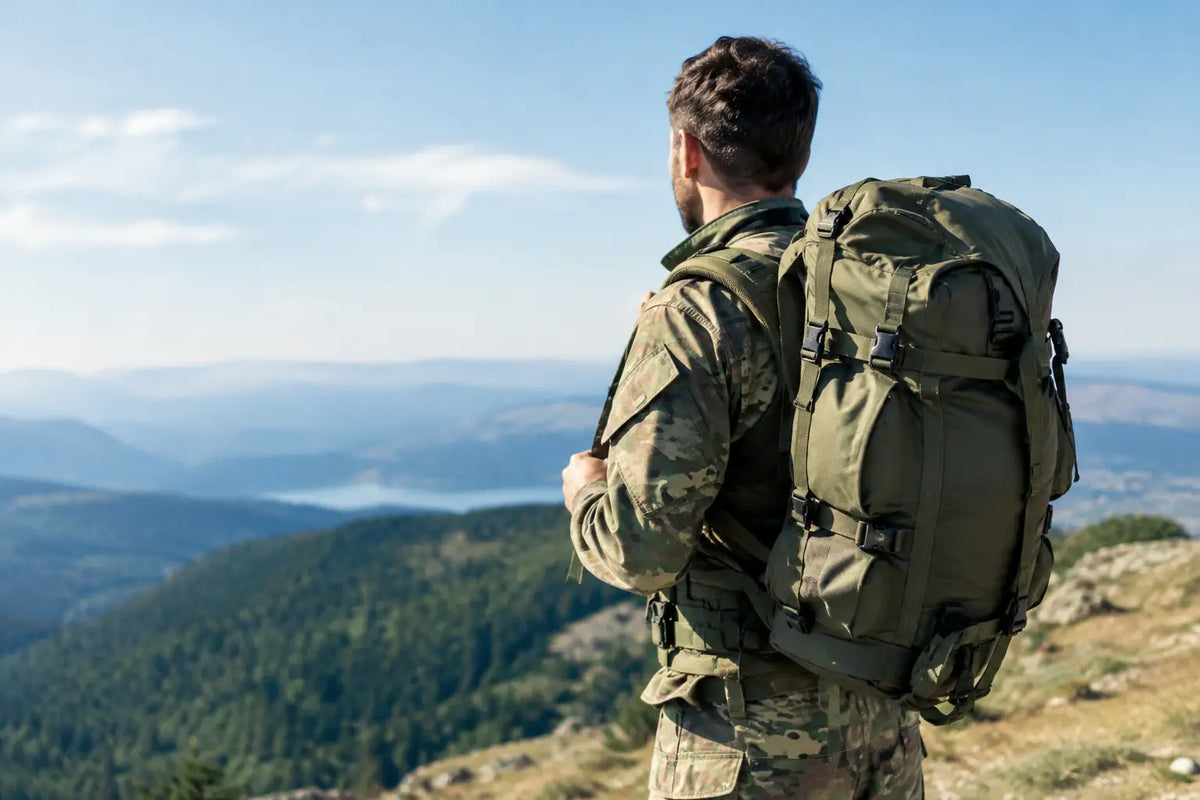
A wet waterproof, a sleeping system, ration pack, spare socks, water, stove and a full day’s equipment soon expose the limits of an ordinary backpack. So, what is a bergen used for? In practical terms, it is a large military-style rucksack built to carry substantial kit over distance, while keeping the load controlled enough to move, work and live in the field.
For British Forces personnel, cadets and anyone familiar with military kit, a Bergen is a familiar piece of load-carrying equipment. For hillwalking, bushcraft, airsoft events and expedition use, the same design principles make it a dependable option when a small day sack simply will not do.
What is a bergen used for in the field?
A bergen is primarily used to carry the equipment needed for an overnight exercise, deployment, patrol, camp or extended period outdoors. Its job is not just to hold more gear. A properly fitted bergen transfers much of the weight from the shoulders towards the hips, keeps essential equipment organised and protects the contents from mud, weather and hard use.
Typical bergen loads include a sleeping bag and bivi equipment, spare clothing, wash kit, rations, cooking equipment, hydration, navigation tools, first-aid items and field layers. Depending on the role and setup, it may also carry waterproofs, cold-weather kit, camouflage items, repair equipment and mission-specific equipment.
The capacity makes it suitable for situations where self-sufficiency matters. A patrol or exercise may require kit for one night; an expedition may require several days of food and a larger sleep system. The right pack size depends on the duration, season, issued equipment and how much is carried externally on webbing or a belt order.
The word "Bergen" is commonly used in the UK as a general term for a large military rucksack. It is associated with the Bergans-style packs that influenced military load carriage, but people now often use it to describe several styles of high-capacity field pack.
Why a bergen differs from an ordinary rucksack
A standard backpack is generally designed for commuting, school use or light day walking. It may be comfortable with a jacket, lunch and water bottle, but it is not always designed to carry 15kg, 20kg or more over rough ground. A bergen is made with a different task in mind.
The most obvious difference is capacity. A day sack may hold 20 to 35 litres, while a full-size bergen commonly provides around 80 to 120 litres once side pouches are included. That extra space accommodates bulky essentials such as a sleeping bag, insulated clothing and longer-duration food supplies without forcing the wearer to lash every item to the outside.
Support is equally important. A useful bergen has padded, adjustable shoulder straps, a substantial hip belt and a back system that spreads the load. Some use internal frames or stiffened back panels; others follow a simpler military pattern. Neither approach is automatically better. A framed pack can offer excellent support with heavier loads, while a simpler design may be easier to repair, less fussy and better suited to those who prefer a traditional field pack.
Military-style fabrics, reinforced stitching, compression straps and hard-wearing buckles are also part of the appeal. These details are functional rather than decorative. They help the pack cope with being put down on wet ground, packed into vehicles, dragged through undergrowth or used repeatedly on exercise.
Common uses beyond military service
A bergen remains a practical choice beyond service life. Veterans often favour familiar military load carriage for camping, fishing, shooting and travel where hard-wearing kit is preferred over lightweight hiking equipment. Cadets use bergen-style rucksacks for training weekends, fieldcraft and expeditions, although capacity should always be sensible for the individual carrying it.
Outdoor users may choose one for multi-day hillwalking, wild camping or Duke of Edinburgh-style expedition activity. A bergen is particularly useful when a tent, sleeping kit and cooking equipment are all being carried. However, it is worth weighing up the trade-off: military packs are generally durable and spacious, but can be heavier than modern specialist trekking rucksacks of a similar capacity.
For airsoft and tactical users, a bergen can move spare layers, food, water and sustainment kit to a base or staging area. It is not usually the best pack to wear throughout a fast-moving game. A smaller assault pack or chest-mounted setup is often more appropriate once the main load has been dropped.
Choosing the right size bergen
The biggest bergen is not always the right bergen. Too much spare capacity encourages unnecessary packing, and unnecessary packing becomes unwanted weight after the first mile. The aim is to select enough volume for the task, then pack only what supports the task.
A smaller bergen or patrol pack can suit an overnight exercise, a winter day in the hills or a training weekend with limited sleeping equipment. A full-size bergen is more appropriate for multi-day field use, cold-weather loads, expeditions or occasions where food and water must be carried for longer.
Season changes the calculation. Winter clothing, a warmer sleeping bag and extra fuel take up considerably more room than a summer setup. Equally, a person using compact modern camping equipment may need less capacity than someone carrying traditional issue-style kit. Think about the actual packing list before choosing a size, rather than working from a single litre figure.
Fit should be treated as seriously as volume. Adjust the shoulder straps, hip belt, chest strap and load-lifter straps with the pack loaded, not empty. The pack should sit close to the back without swinging or pulling the wearer backwards. Most of the load should be supported by the hips, while the shoulder straps stabilise it rather than taking all the strain.
How to pack a bergen properly
A bergen performs best when its contents are packed with balance in mind. Heavy equipment should sit close to the back and around the middle of the pack, rather than low down or hanging away from the body. This keeps the centre of gravity controlled and reduces the effort needed to stay balanced on uneven ground.
Bulky but lighter kit, such as a sleeping bag or spare insulation, usually works well at the bottom. Heavier food, water or cooking equipment can go above it and close to the spine. Frequently needed items should be placed where they can be reached without emptying the whole pack. Waterproofs, gloves, a head torch, map case, first-aid kit and a brew kit are no use buried beneath the sleep system when conditions change.
Use dry bags or waterproof liners for clothing, sleeping equipment and electronics. Many bergens use water-resistant fabric, but no rucksack should be assumed fully waterproof after prolonged rain, immersion or repeated hard use. A pack cover can help in rain, but internal waterproofing gives more reliable protection if the cover snags, blows loose or water enters through the back system.
Side pouches and external straps are useful, but they should not become a place for loose, dangling equipment. Secure external items tightly, avoid obstructing movement and check that nothing interferes with access to a vehicle, a helmet or other worn equipment. Before setting off, tighten compression straps to stop the load shifting.
Features worth looking for
When selecting a bergen, start with the back system and carrying comfort, then look at the practical details. A padded hip belt, strong adjustment points and durable shoulder straps matter more than extra pockets if the pack will carry serious weight.
Useful field features include a separate lower compartment for sleeping kit, removable side pouches, compression straps, a lid pocket for small essentials and attachment points for a roll mat or shelter. Tough zips and buckles are preferable to complicated fittings that can fail or be difficult to operate with cold hands or gloves.
Camouflage or olive drab finishes suit military, cadet and field use, while a plain colour may be better for general outdoor travel. The choice is situational. The priority is a pack that matches the environment, carries the intended load and remains comfortable for the distance involved.
A bergen earns its place when the load is planned, the fit is set correctly and the equipment inside has a purpose. Choose capacity for the job, keep the weight disciplined, and it will provide the dependable carrying space needed when a day sack is no longer enough.