
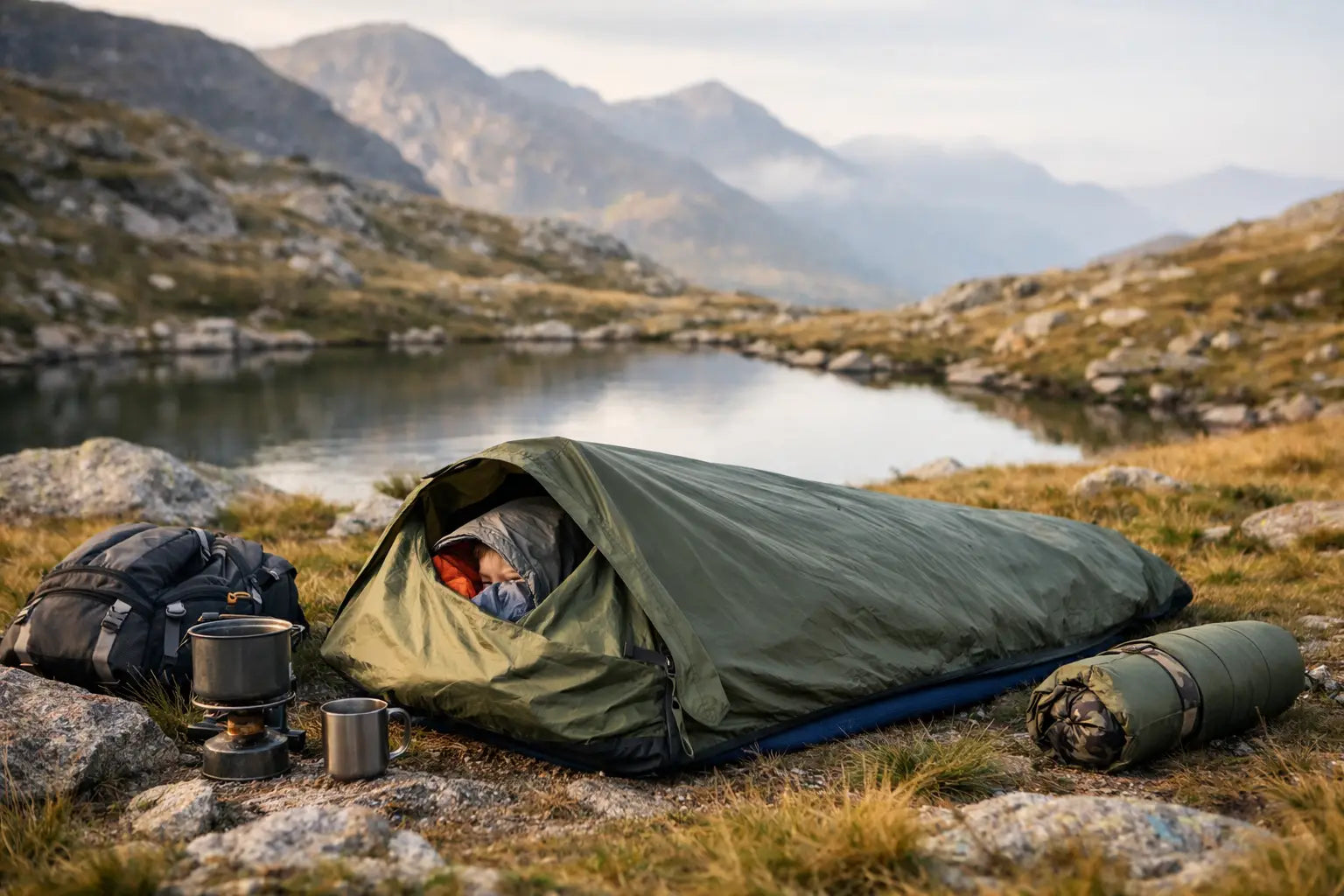
A soaked sleeping bag can turn a routine night in the field into a cold, uncomfortable and potentially unsafe one. So, what is a bivvy bag? It is a compact, weather-resistant cover that goes around a sleeping bag and sleeping mat, adding a final barrier against rain, wind, ground moisture and dirt.
For military personnel, cadets, hill walkers and anyone building a practical sleeping system, a bivvy bag is straightforward kit with a serious job. It can be used under a tarp, in a basha setup, inside a shelter, or on its own when weight, speed and discretion matter. The right model keeps your insulation drier and gives you more options when the weather changes.
What Is a Bivvy Bag Used For?
A bivvy bag, sometimes called a bivouac bag, is essentially a waterproof outer shell for your sleep system. You slide your sleeping bag inside it before bedding down. Most have a drawcord or zip opening at the head, allowing you to close it down in poor conditions while retaining enough space to breathe safely and manage ventilation.
Its main purpose is to protect the sleeping bag. Down and synthetic insulation both perform poorly when wet, although down is particularly vulnerable. A bivvy bag helps prevent rain, dew and wet vegetation from reaching the insulation, while also reducing heat loss from wind passing over the sleeping bag.
It is not necessarily a replacement for a tent. A tent provides more living space, better insect protection and usually more reliable protection in sustained rain. A bivvy bag is the lighter, simpler option when you need to travel efficiently, sleep in a confined position or put up a low-profile overnight shelter.
How a Bivvy Bag Works in the Field
Most bivvy bags use a waterproof, breathable fabric. The waterproof layer stops external moisture entering, while the breathable membrane is designed to let water vapour from your body escape. This matters because every sleeper produces moisture overnight. Without ventilation, condensation can build inside the bag and dampen the sleeping system from within.
Breathability is helpful, not magic. In cold, wet or very humid conditions, a bivvy bag may still develop condensation, particularly if the opening is fully closed or wet clothing is brought inside. Good field routine makes a difference: wear dry sleep clothing where possible, keep the face opening clear, and avoid placing the bag directly in pooled water or long wet grass.
A bivvy bag also protects against abrasion and grime. This is useful when sleeping on rough ground, in woodland or under a simple tarp. It reduces wear on the outer fabric of your sleeping bag and makes it easier to pack away a clean, serviceable sleep system the following morning.
A bivvy bag is only one part of the system
A common mistake is to focus on the bivvy bag and overlook the mat. Ground contact drains body heat rapidly, even in conditions that do not feel particularly cold. A proper sleeping mat is therefore as important as the sleeping bag itself. The bivvy bag protects against moisture below, but it does not provide meaningful insulation from the ground.
For a dependable setup, match the bag with a mat of suitable insulation, a sleeping bag appropriate for the forecast temperature, and a tarp or basha when prolonged rain is likely. In exposed ground, selecting a sheltered location is often more valuable than adding extra kit.
Emergency Bivvy Bags vs Reusable Bivvy Bags
Not every bivvy bag is designed for the same role. The two broad types are emergency bags and reusable field bivvies.
An emergency bivvy bag is usually very light, compact and made from reflective material or thin waterproof plastic. It is intended for unplanned stops, casualty care, vehicle kits or emergency reserve equipment. These bags are useful because they take up little space, but they are prone to condensation, less durable and not especially comfortable for regular overnight use.
A reusable bivvy bag is made from stronger, breathable fabric and is designed to form part of a regular sleeping system. These are the better choice for exercises, wild camping, expeditions, fishing overnighters and tactical use. They pack larger than an emergency bag, but provide substantially better durability, comfort and weather resistance.
Some reusable designs are simple envelope-style covers. Others have shaped hoods, side zips or mesh panels around the face. A hooded design gives better coverage in rain, while a zip can make entry and exit easier. The trade-off is usually weight, pack size and the potential for water ingress if the zip is not well protected.
When to Carry a Bivvy Bag
A bivvy bag earns its place when a full tent is unnecessary, impractical or too bulky. On a military exercise, it may sit beneath a basha as part of a straightforward harbour setup. On a hill day, it can provide emergency shelter if progress stops because of injury, poor visibility or a sudden deterioration in weather.
It is also useful in a vehicle-based kit, patrol pack or bug-out load, provided you understand its limits. A bivvy bag will help retain warmth and shed rain, but it cannot compensate for inadequate insulation, poor site choice or exposure to severe wind.
For short, dry summer trips, a lightweight bivvy may be all that is required. In winter or on higher ground, it is usually wiser to treat it as one element of a more capable shelter system. Conditions, duration and the consequences of being held up should guide the decision.
How to Use a Bivvy Bag Properly
Start with your site. Avoid hollows where cold air and water collect, dry stream beds, exposed ridgelines and ground beneath dead branches. Look for level ground with natural shelter from the prevailing wind, but do not camp so close to water that dew, flooding or damp ground becomes a problem.
Lay down your sleeping mat first, then place the sleeping bag inside the bivvy bag. In most cases, the mat stays outside the bivvy. This gives you a more stable sleeping surface and prevents the bag becoming unnecessarily tight. Some users place a shorter mat inside for extra protection, but this can restrict movement and increase condensation if the fit is already close.
Before settling in, loosen boots, organise essential kit within reach and make sure the head opening is operating correctly. Keep a torch, water, map and any required communications equipment accessible. If rain is expected, rig a tarp above the bivvy where terrain and circumstances allow. It gives you room to change, cook away from the sleeping area and keep the face opening better ventilated.
Never cook inside a bivvy bag, and never use a stove, fuel burner or solid-fuel heat source in an enclosed sleep setup. The fire and carbon monoxide risks are real. Equally, do not seal your face fully inside the bag. Maintain an opening for fresh air and manage the hood to stop rain entering.
Choosing the Right Bivvy Bag
The best choice depends on how you will use it, rather than simply selecting the lightest option. For regular field use, prioritise a durable waterproof and breathable fabric, taped seams and enough internal room to accommodate your existing sleeping bag without compressing its loft. If your insulation is squashed, it traps less warm air and will feel colder.
Look closely at the head closure. A well-designed hood should protect the upper body without forcing you to leave a large opening in bad weather. Check the zip arrangement, storm flap and drawcord operation with gloves on if you expect to use it in colder conditions.
Pack size is relevant, but it should not override performance. A minimal emergency bag is sensible as reserve equipment. For planned overnights, a proper breathable bivvy bag is generally the more reliable investment. Military-style sleeping systems are often designed around modular use, so check dimensions before combining different bags, mats and liners.
Care is simple. Air the bivvy bag after use, brush off mud before packing it away and dry it fully at home. Avoid storing it damp in a compression sack. Periodically inspect seams, fabric and drawcords, and follow the manufacturer's cleaning instructions so the waterproof treatment is not damaged.
A bivvy bag will not make poor weather disappear, but it can turn a basic sleeping bag into a far more capable field system. Choose one that suits the conditions you genuinely expect, practise setting it up before relying on it, and keep the rest of your sleep system equally well matched.